Is Posting Daily on Social Media Necessary? A Realistic Cadence Plan
Posting daily is rarely required. Here are realistic starting cadences by network, a weekly batching routine and how to schedule a full week in one sitting.
On this page
- Key takeaways
- What posting every day actually gets you
- Realistic posting frequency by network
- Choose your cadence in four questions
- A weekly batching routine you can keep
- Schedule the whole week at once with Post to All
- Keep a daily presence without a daily post
- When to post more, and when to post less
- Frequently asked questions
Posting daily on social media is not required to build an online presence, and for most people and small businesses it is not the best use of time. What matters more is a cadence you can keep for months, with posts good enough that people want the next one. Daily posting can make sense on fast-moving networks or for Stories, but a steady three to five posts a week on your main network usually beats a daily streak that burns out in a month.
This guide covers what daily posting gets you, realistic starting cadences by network, a weekly batching routine and how to schedule a whole week in one sitting.
What posting every day actually gets you
Daily posting has real benefits:
- More chances to be seen. Each post is another opportunity to reach people who do not follow you yet.
- Faster learning. More posts mean more data about which topics and formats work.
- Habit. For some people, posting every day is easier than deciding which days to post.
It also has costs:
- Quality drops. When the schedule demands a post, filler goes out.
- Burnout. Many accounts post daily for a few weeks, stop completely, then restart. The gaps hurt more than a slower, steady pace.
- Less time for everything else, including replying to comments, which often builds more loyalty than another post.
The networks do not publish a minimum posting frequency. A slower schedule with stronger posts is a valid choice.
Realistic posting frequency by network
Use these as starting points for a single account, not as rules from the platforms. Adjust them to your audience and your capacity.
| Network | Sustainable starting cadence | Notes |
|---|---|---|
| 3 to 5 feed posts or Reels a week, Stories on most days | Stories are a low-effort way to show up daily | |
| TikTok | 3 to 5 videos a week | Works well with batch recording |
| YouTube | 1 long video a week or every two weeks, plus 2 to 4 Shorts | Long videos take the most time; Shorts can come from them |
| 2 to 3 posts a week | Fewer, more considered posts usually fit the audience | |
| 3 to 5 posts a week | Often reuses Instagram material | |
| X and Threads | Daily or several times a day, if you enjoy the conversation | Short text and replies keep it light |
A small business with one person running social might start with three posts a week on its main network and reuse each one on two others. A creator whose income depends on reach will usually post more often on short video.
Choose your cadence in four questions
- How many hours a week can you give social media, honestly, in a busy week?
- How long does one post take you, from idea to scheduled? A photo with a caption might take 20 minutes; an edited video might take two hours.
- Divide the first number by the second. That is your realistic weekly post count before replies and engagement.
- Which one network matters most? Put most of your posts there and repurpose for the others.
Start at or slightly below that number for a month. If it feels easy and the results justify it, add one post a week. If you miss slots, drop back.
A weekly batching routine you can keep
Batching means doing similar tasks together instead of starting each post from scratch. A routine for one person or a small team:
- Monday, 30 minutes: plan. Pick the week’s topics, one per slot, using recurring themes so you are not starting from nothing. Check upcoming dates, launches and events.
- Tuesday, 1 to 2 hours: create. Shoot all the photos and videos in one session. Change your shirt or location between takes if you want variety.
- Wednesday, 1 hour: edit and write. Trim videos, design graphics and write every caption, including versions for each network.
- Thursday, 20 minutes: schedule. Load the whole week into your scheduler and check dates, times and links.
- Every day, 15 minutes: engage. Reply to comments and messages, and comment on a few accounts in your field.
A few habits keep the routine working:
- Keep an idea list. Add questions customers or followers ask you, and you will never face an empty week.
- Make one piece, use it several times. One video can become a Reel, a Short, a TikTok and a still image with a quote.
- Keep a small buffer. Two or three evergreen posts ready to go cover a week when everything else falls apart.
For a full planning template with owners, deadlines and statuses, see how to create a social media calendar.
Schedule the whole week at once with Post to All
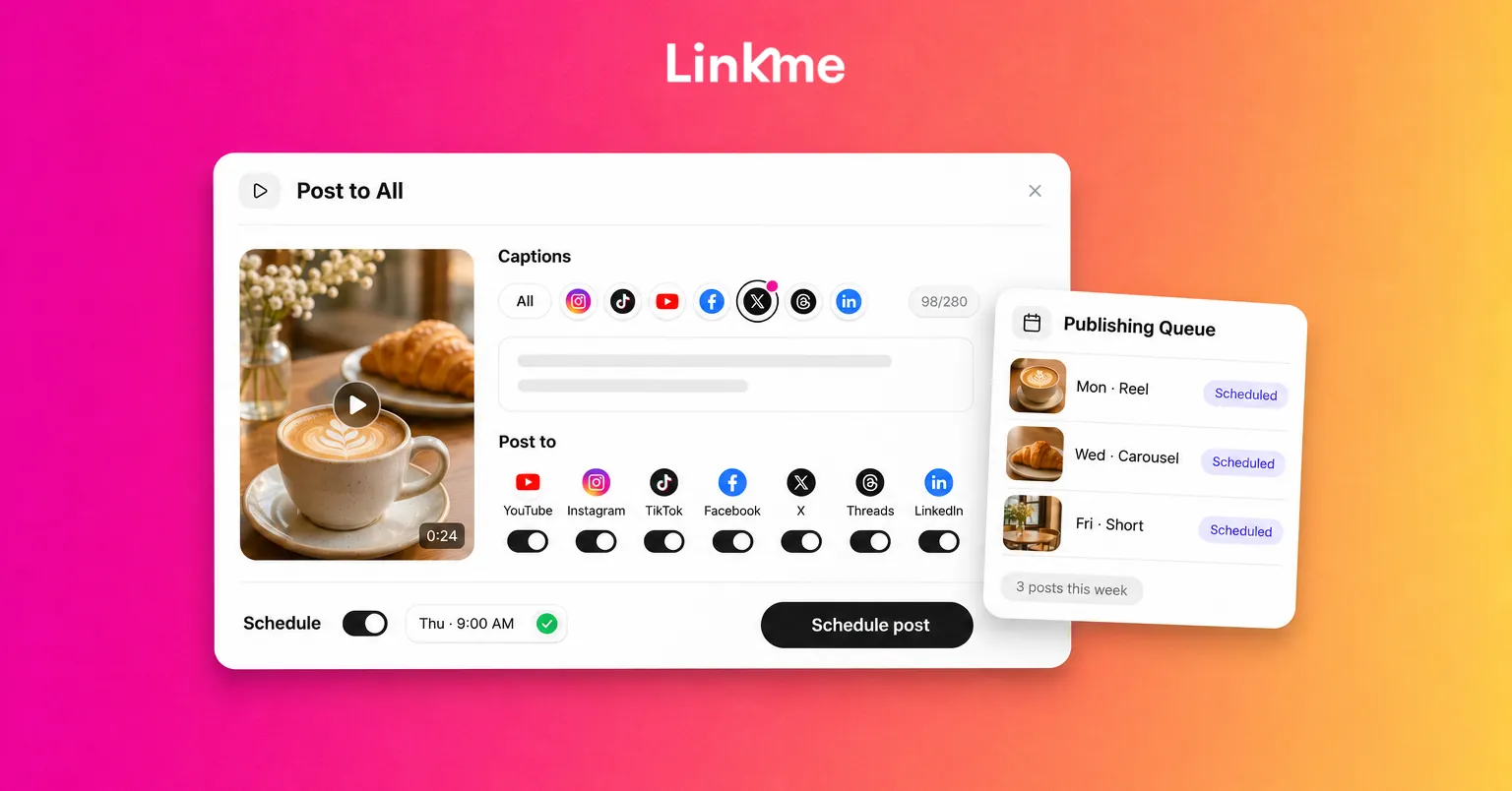
Scheduling is what turns a plan into a cadence that runs while you get on with other work. With Linkme Post to All, you:
- Upload once. A video, an image or a carousel, added one time for every network.
- Write one caption or one per network. Each network’s limit is checked as you type, from 280 characters on X to 5,000 on YouTube.
- Pick the accounts and a time. Post to YouTube, Instagram, TikTok, Facebook, X, Threads and LinkedIn, now or on a schedule.
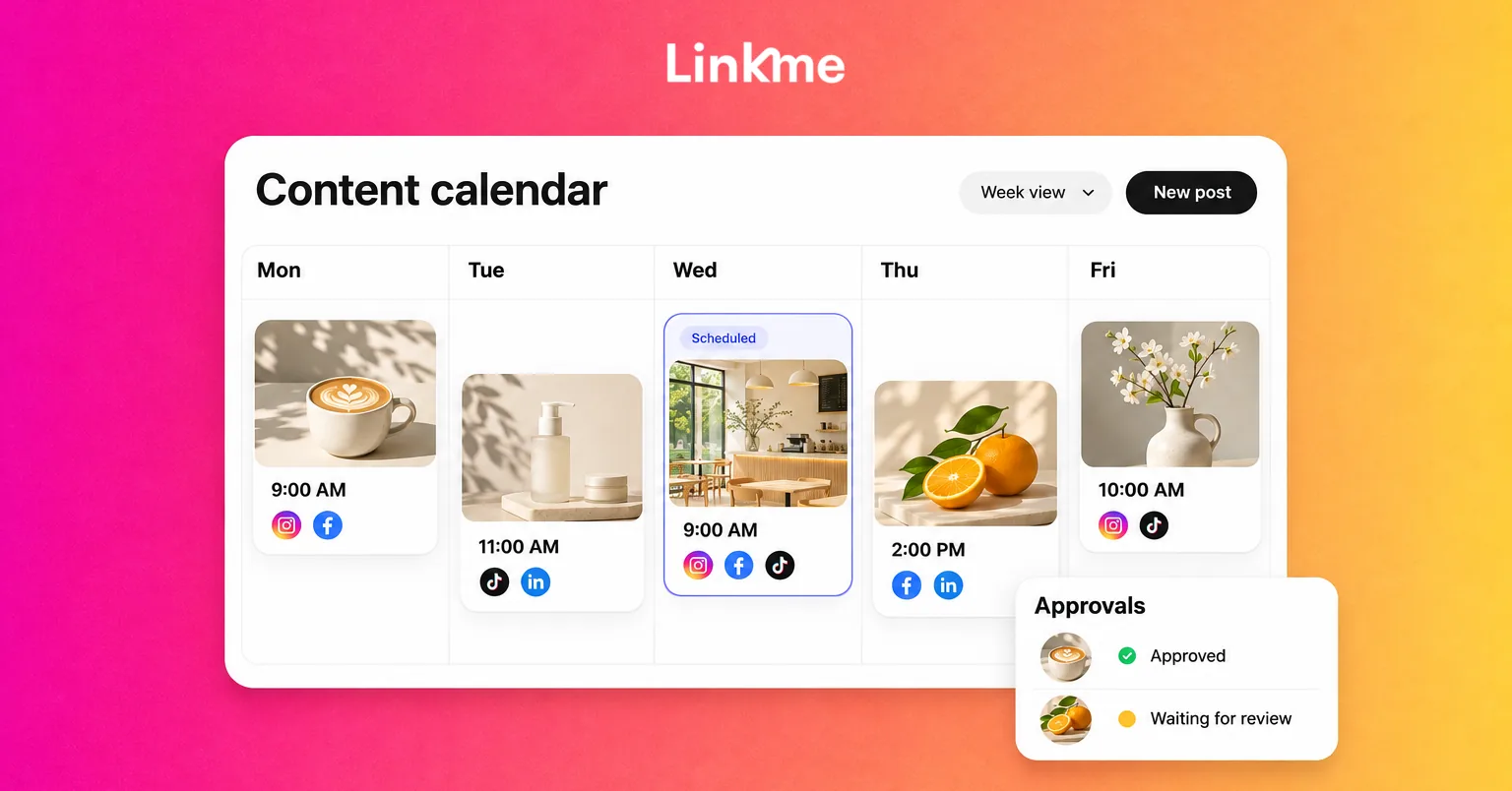
- Check the calendar. Every scheduled post appears by day, week or month, and you can edit a scheduled post before it goes out.
- Confirm it went out. Each network shows a status. If one misses, the post is marked Partially posted and Retry failed platforms sends it again to just that network.
The free plan includes 10 posts in total, and Linkme Plus and Pro have unlimited posts. If you are adapting posts for each network rather than copying them, the guide to cross-posting on social media covers what to change.
Keep a daily presence without a daily post
You can show up every day without publishing every day:
- Reply to every comment in the first hours after a post goes out.
- Use Stories for quick, unpolished updates: a work in progress, a poll, a behind-the-scenes clip.
- Comment thoughtfully on posts from people in your field. It puts your name in front of their audience.
- Answer messages the same day where you can.
This keeps your account active and builds relationships, which a scheduled post alone cannot do.
When to post more, and when to post less
Post more when:
- Your posts consistently reach people beyond your followers.
- You have more good ideas than slots.
- You can add a post without lowering quality or skipping replies.
Post less when:
- Engagement per post is falling as volume rises.
- You are recycling ideas just to fill the calendar.
- You are skipping replies or rushing edits to keep up.
Review once a month. Compare posts by topic and format rather than counting how many went out.
Frequently asked questions
Is it bad to post on social media every day?
No, if you can keep the quality up and enjoy it. It becomes a problem when daily posting leads to filler or burnout. A steady slower schedule is better than a daily streak followed by weeks of silence.
How often should a small business post on social media?
A common starting point is three to five posts a week on the main network, with the same material adapted for one or two others. Adjust based on what your audience responds to and how much time you have.
Does posting more often help with the algorithm?
More posts give a network more chances to show your content, but each post still has to earn attention on its own. Posting more often does not make up for posts people do not engage with.
Can I post the same content on every network?
You can reuse the same idea and media, but adapt captions, hashtags and formats to each network. Tools that let you write a separate caption per network make this fast.
Building an online presence is a long game. Pick a cadence you can keep, batch the work and let your scheduler do the daily posting for you.