Free Apple Watch Scam: How to Spot Fake Giveaways and Impersonators
Linkme's old invite promotion has ended and it does not give away Apple Watches. How prize scams work, how to spot impersonators and how brands protect followers.
On this page
- Key takeaways
- Linkme’s old invite promotion has ended
- How the free Apple Watch scam usually works
- Red flags of fake giveaways on Instagram and other networks
- Impersonation accounts: how to check if an account is real
- What to do if you have been targeted
- How a brand protects its followers from giveaway scams
- What about Linkme’s ambassador program?
- Frequently asked questions
If you came here looking for a free Apple Watch for inviting friends to Linkme, that old invite promotion has ended, and Linkme does not give out Apple Watches. Any message today that promises you a free Apple Watch, from Linkme or anyone else, in exchange for invites, a shipping fee or your card details should be treated as a free Apple Watch scam.
Prize scams are some of the most common fraud on social media because they copy the look of real giveaways. This guide explains how they usually work, the red flags to check before you reply, what to do if you have already been targeted, and how a brand can protect its followers from impersonators.
Linkme’s old invite promotion has ended
Years ago, Linkme ran an invite promotion when it was a different kind of app. That promotion has ended, and there is no Apple Watch, console or other prize for inviting people. If someone sends you a prize offer in Linkme’s name, it is not from Linkme.
Today Linkme is a social media platform for businesses, teams and creators: link in bio pages with QR codes, posting to many networks at once, DM automations, a social inbox, lead capture and analytics.
How the free Apple Watch scam usually works
The details change, but the pattern is consistent:
- The hook. A post, story or comment announces a giveaway of a popular product, often using a real brand’s name, photos and logo.
- The entry. You are asked to follow, like, tag friends or share. This spreads the scam and builds a list of engaged targets.
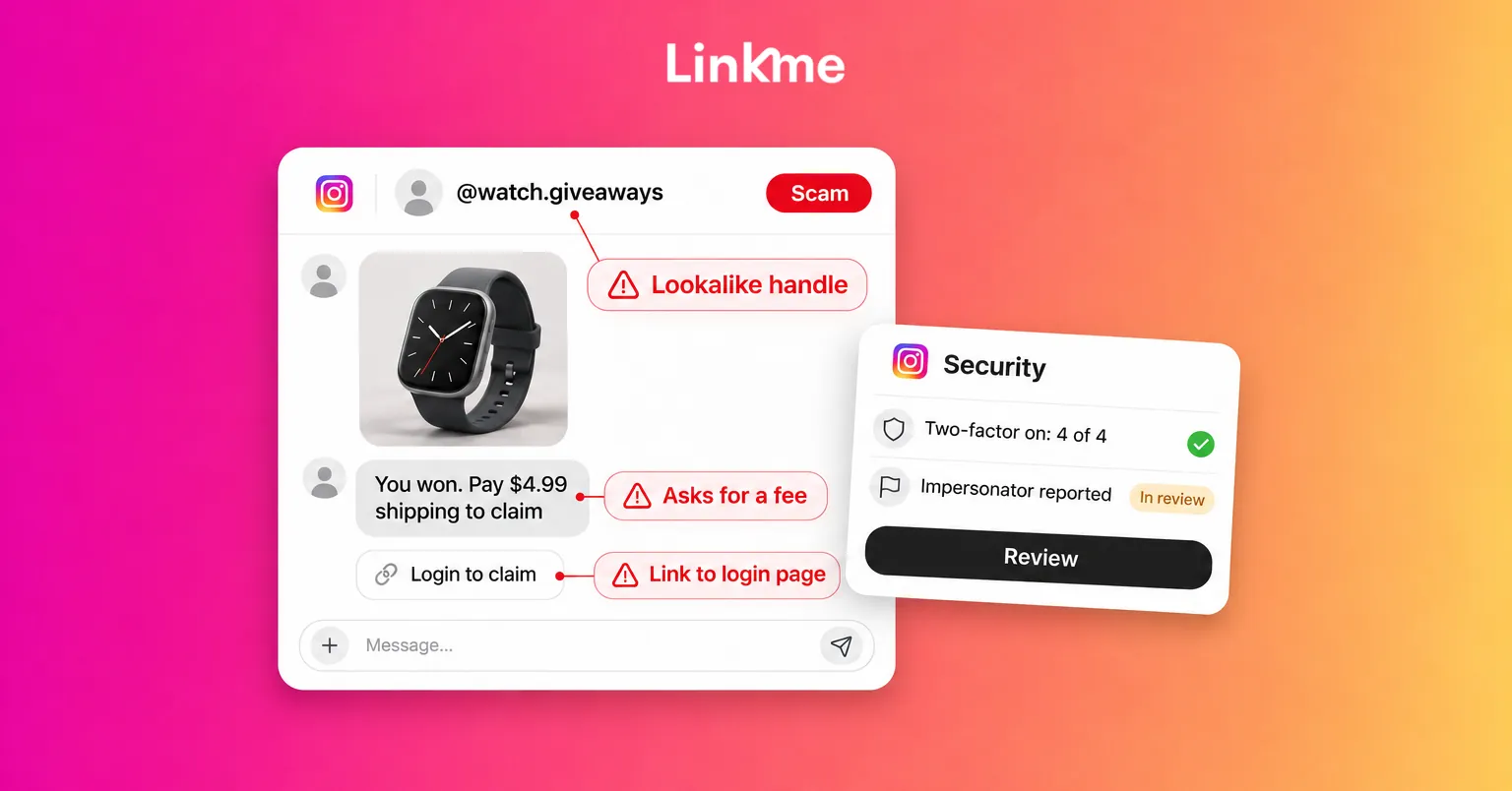
- The win. A DM or comment reply tells you that you won, usually from an account with a handle almost identical to the real one.
- The catch. To claim the prize you must pay a small shipping or processing fee, enter card details, sign in through a link or send a gift card. Some versions ask for personal details instead, to use in later fraud.
The FTC’s guidance on fake prize, sweepstakes and lottery scams is direct: legitimate prizes do not ask you to pay a fee or give your bank account or card number to collect them.
Red flags of fake giveaways on Instagram and other networks
| Red flag | What it usually means |
|---|---|
| You “won” a contest you never entered | Mass messaging, not a real draw |
| A fee for shipping, taxes or processing | The fee is the scam |
| Payment by gift card, wire transfer or crypto | Payment methods that are hard to reverse |
| A link to “verify” your account or log in | A phishing page that steals your password |
| A deadline measured in minutes or hours | Pressure so you do not check |
| A handle with extra letters, underscores or numbers | A lookalike of the real account |
| A brand-new account with few posts but many followers | Bought followers on a throwaway account |
| No official rules or terms anywhere | No real sponsor behind it |
One red flag is enough to stop and check. Several together mean you can be fairly sure it is a scam.
Impersonation accounts: how to check if an account is real
Before you reply to any “you won” message, check the account from its profile, not from the DM:
- Compare the handle letter by letter with the account you follow. Search for the brand and see which result has the long posting history.
- Look at the history. A real account has years of posts, consistent tagged photos and comments from real customers. An impersonator often has a handful of recent posts copied from the original.
- Check where the link in bio goes. The real brand links to its own site or its official link in bio page. A lookalike domain or a shortened link to a form is a warning sign.
- Look for the giveaway on the official account. A real brand announces its giveaway and its winners on its own account. If the giveaway only exists in your DMs, it is not real.
- Do not rely on a badge alone. A verification badge helps, but some accounts that look official are not, and some official accounts do not have one. Use it together with the other checks.
What to do if you have been targeted
- Do not pay and do not click any further links in the conversation.
- Report the account in the app. Instagram’s impersonation report form is meant for the person or business being impersonated, or someone authorized to act for them. If you are a follower, report the account or message as a scam in the app.
- Report the fraud to the FTC at ReportFraud.ftc.gov if you are in the US, or to your local consumer protection agency.
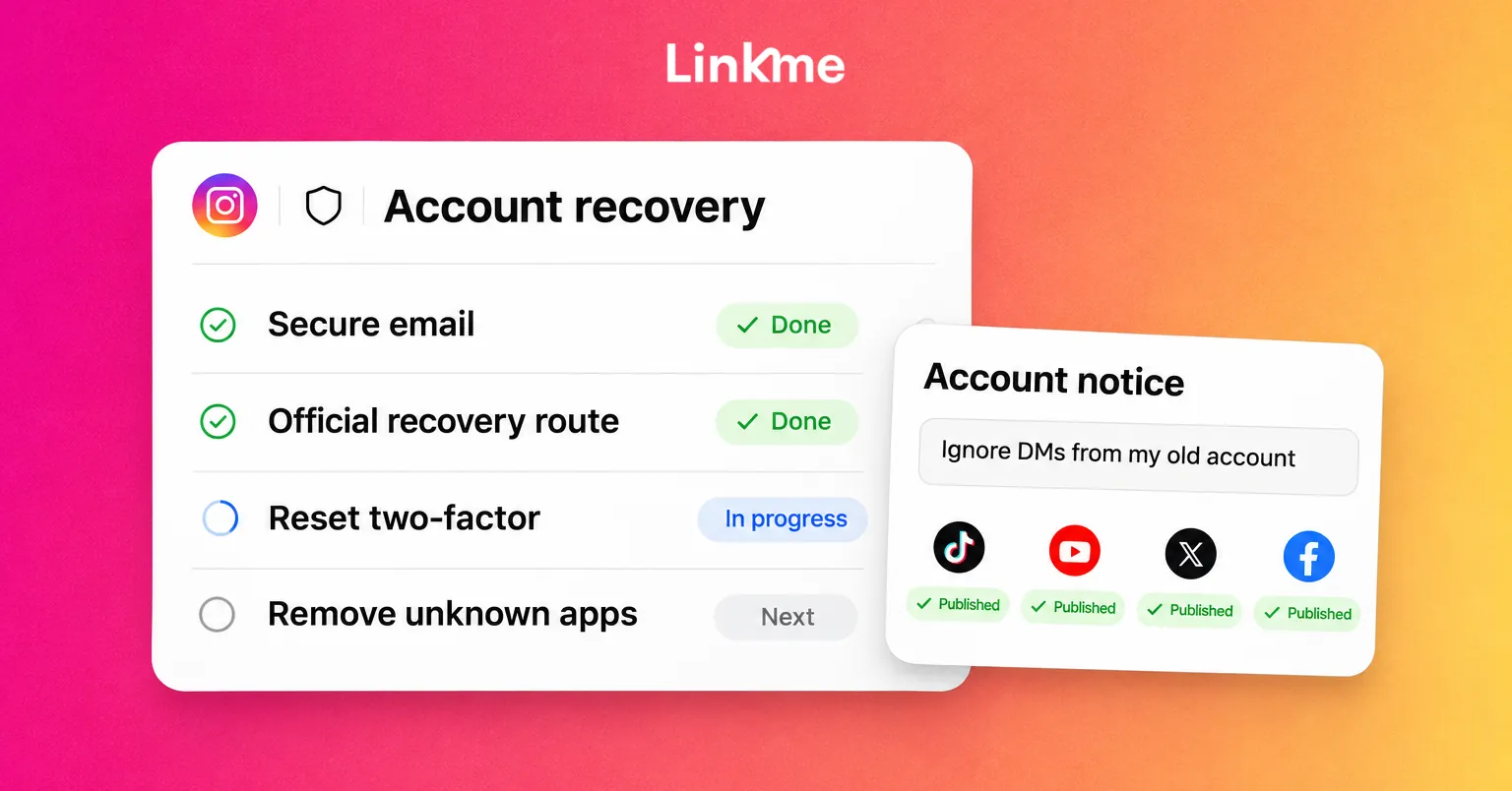
- Secure your account. If you entered your password anywhere, change it, turn on two-factor authentication and sign out of sessions you do not recognize.
- Call your bank if you shared card details, so it can block the card and watch for charges.
- Warn your friends if you tagged them in the giveaway, since they may be targeted next.
How a brand protects its followers from giveaway scams
If your brand runs giveaways, or is popular enough to be copied, impersonators will eventually use your name. You cannot stop every copycat, but you can make them easy to spot.
Publish official rules for every giveaway
Write rules before launch: who can enter, how to enter, the dates, how the winner is picked and how they will be contacted. Link the rules from the giveaway post and from your link in bio page. A follower who can read the real rules can spot a fake message quickly.
Say how you contact winners, and never ask for payment
State in the post and in the rules that the official account announces winners publicly and will never ask for a fee, card details or a login. Pin a short reminder during the giveaway window, when copycats are most active.
Keep one official place that lists your accounts
A single page that lists every official account and the current giveaway gives followers a way to check. A Linkme page can hold your links, events and rules in one place, and the Plus plan adds a Linkme verification badge and a total followers display.
Report impersonators fast and lock down your own logins
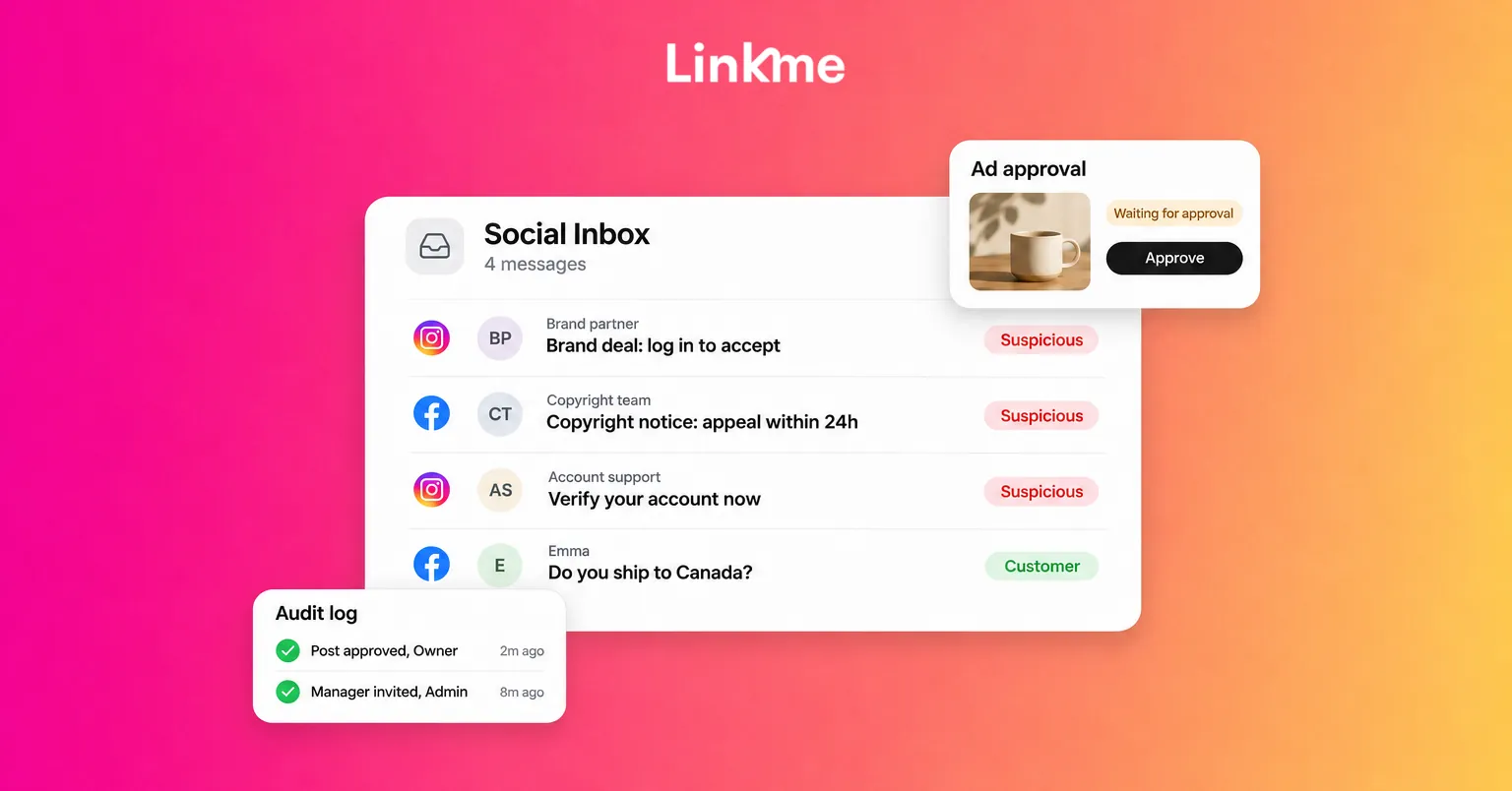
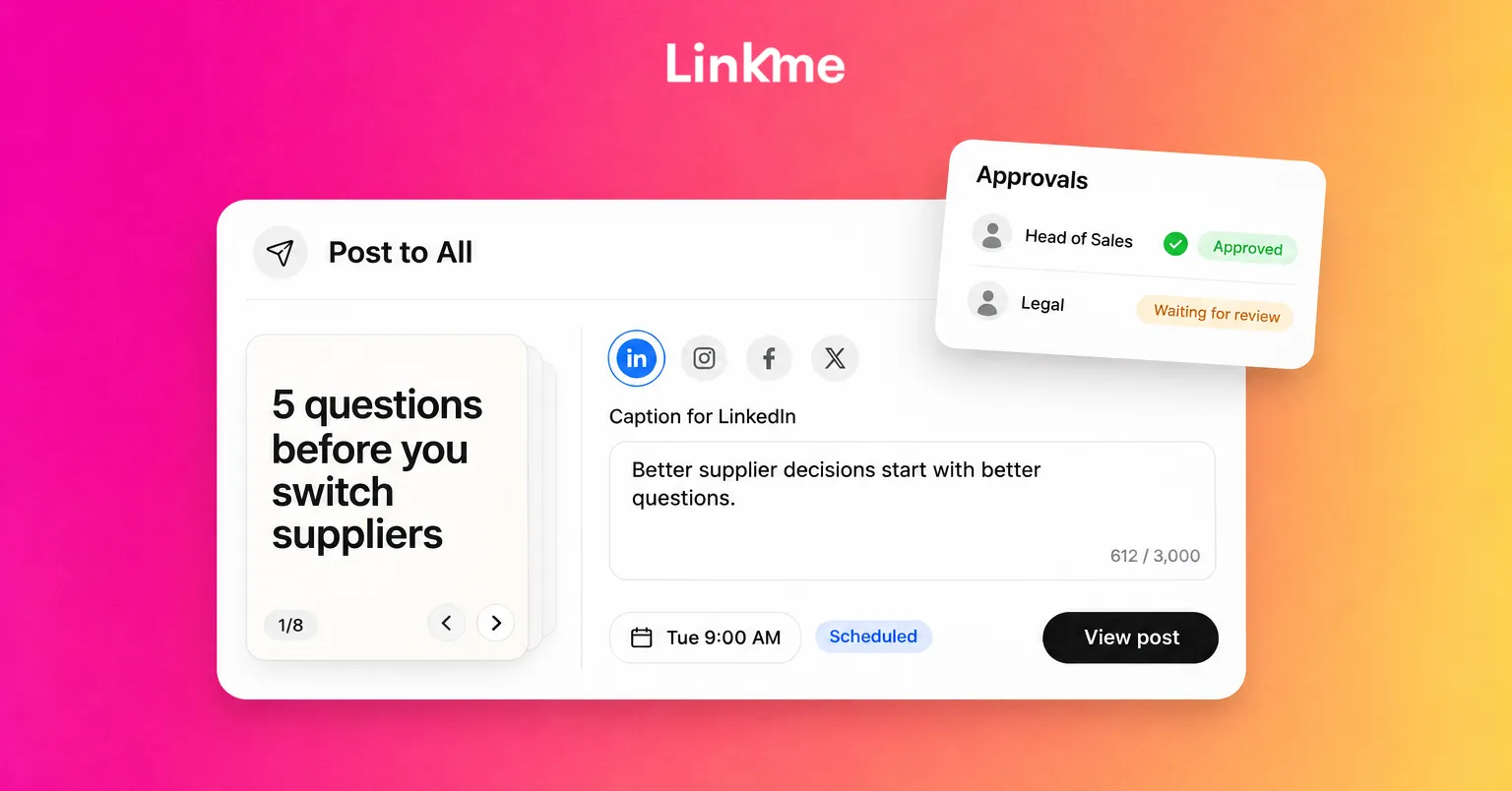
Assign someone to search for lookalike handles during every giveaway and report them through each network’s impersonation process. Protect the real accounts too, because a hijacked official account does far more damage than a copycat. In Linkme, every teammate signs in with their own login, owners and admins can see who has two-factor turned on, and the audit log shows who changed what, as covered on Ads, Team & Security. Posts can also require approval before they publish, so a giveaway announcement goes out only after the right person has checked it.
What about Linkme’s ambassador program?
Linkme does run an ambassador program, but it is not a prize scheme. It is invite only, and you can apply at ambassador.link.me to work with the Linkme team on helping celebrities and influencers grow on social media. It is not a prize draw, so treat any message that offers you a watch or another prize for invites, or asks you to pay a fee to claim one, as a scam.
Frequently asked questions
Is Linkme giving away free Apple Watches?
No. Linkme’s old invite promotion has ended, and Linkme does not give out Apple Watches or other prizes for invites. Any message that says otherwise is not from Linkme.
How can I tell if an Instagram giveaway is fake?
Check whether the giveaway appears on the brand’s official account, compare the handle with the real one, look at the account’s posting history and read the rules. A request for a fee, card details or a login is the clearest sign of a scam.
What should I do if I paid a fake giveaway fee?
Contact your bank or card provider right away, report the account to the platform, report the fraud to the FTC at ReportFraud.ftc.gov if you are in the US, and change any password you entered on a link from the scammer.
How do brands stop impersonators during a giveaway?
Publish official rules, state that winners are announced publicly and never asked to pay, list official accounts on one page, search for lookalike handles daily during the giveaway and report them through each network’s impersonation process.