Social Media ROI: How to Measure and Improve It
The social media ROI formula, how to define return and cost, attribution with UTM tags and pixels, and an owner report structure that people trust.
On this page
Social media ROI is the value your social activity returns compared with what it costs, usually expressed as a percentage. To measure social media ROI credibly, you need three things agreed before the month starts: what counts as a return, what counts as a cost, and how each result is traced back to social. This guide gives you the formula, a practical attribution setup with UTM tags and pixels, and a reporting routine owners will trust.
The social media ROI formula
The standard formula is:
ROI = (Return − Cost) ÷ Cost × 100
If a month of social activity cost $4,000 and produced $10,000 in attributable revenue, ROI is (10,000 − 4,000) ÷ 4,000 × 100 = 150%.
For paid campaigns, marketers often use return on ad spend instead: revenue from the ads divided by the ad spend. It answers a narrower question, whether the media paid for itself, and leaves out salaries and production.
Define the return
Pick the return that matches the business:
| Business type | Return to count | How to value it |
|---|---|---|
| Online store or merch | Completed sales | Revenue, net of refunds |
| Service business | Qualified leads, booked appointments | Average value of a closed lead × close rate |
| Venue or event | Tickets, reservations, sign ups | Ticket revenue or average spend per guest |
| Creator | Product sales, brand deal fees | Settled revenue and contracted fees |
Avoid valuing likes or followers in dollars. They can be leading indicators, but they are not a return.
Count the full cost
Include ad spend, the hours your team spends planning, creating, publishing and replying, software, freelance and creator fees, and production costs such as shoots and editing. If you leave out time, organic social will always look free and paid will always look expensive by comparison.
Build attribution you can defend
Social media attribution is the work of connecting a sale or lead back to the post, ad or link that started it. No setup is perfect, but a consistent one is far better than guessing.
Tag every link with UTM parameters
Google Analytics reads UTM parameters on the destination URL to tell you which campaign sent a visit. Google’s guide to campaign URLs recommends always setting utm_source, utm_medium and utm_campaign, and using utm_content to tell creatives apart. Values are case sensitive, so agree on a naming convention:
utm_source: the network, lowercase (instagram, tiktok, linkedin)utm_medium:socialfor organic,paid_socialfor adsutm_campaign: the campaign name (spring_menu)utm_content: the post or creative (reel_chef_hook_a)
Never put personal information in UTM values.
Put pixels where social traffic lands
Network pixels let Meta, TikTok and others see which visitors came from their ads and what they did afterward. They are essential for optimizing paid campaigns, but they report through each network’s own attribution rules, so expect the numbers to differ from your analytics and your sales records.
Use one landing page you can read
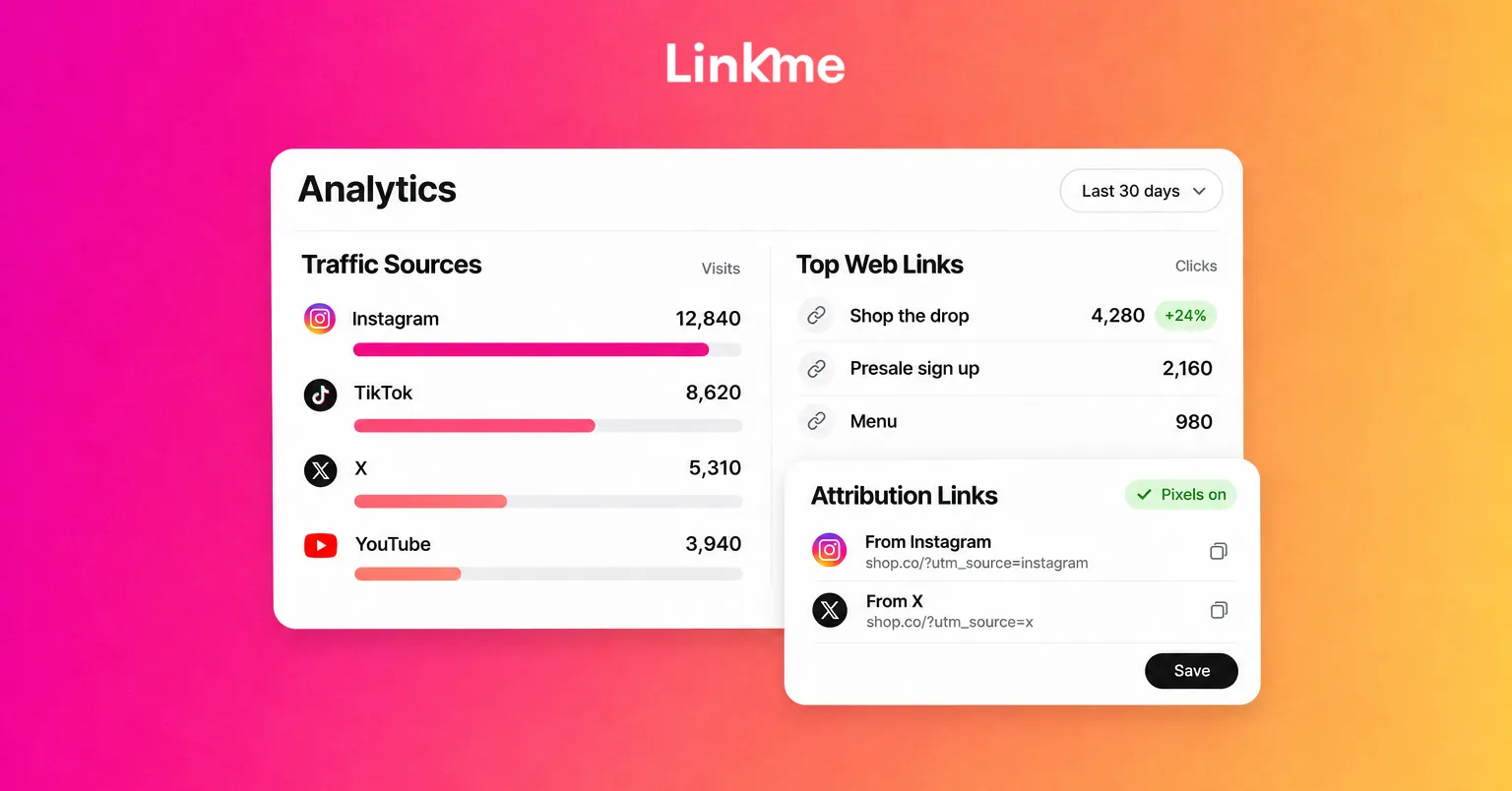
When every post points to a different URL, attribution gets messy. Many teams send social traffic to one page that carries the current offer, booking link and sign up. On a Linkme page, you can add your Meta Pixel ID, TikTok Pixel ID and Google Analytics Measurement ID once, and Attribution Links send visitors from Instagram, X or your own utm_source to a different URL for the same link, so each source keeps its own trail.
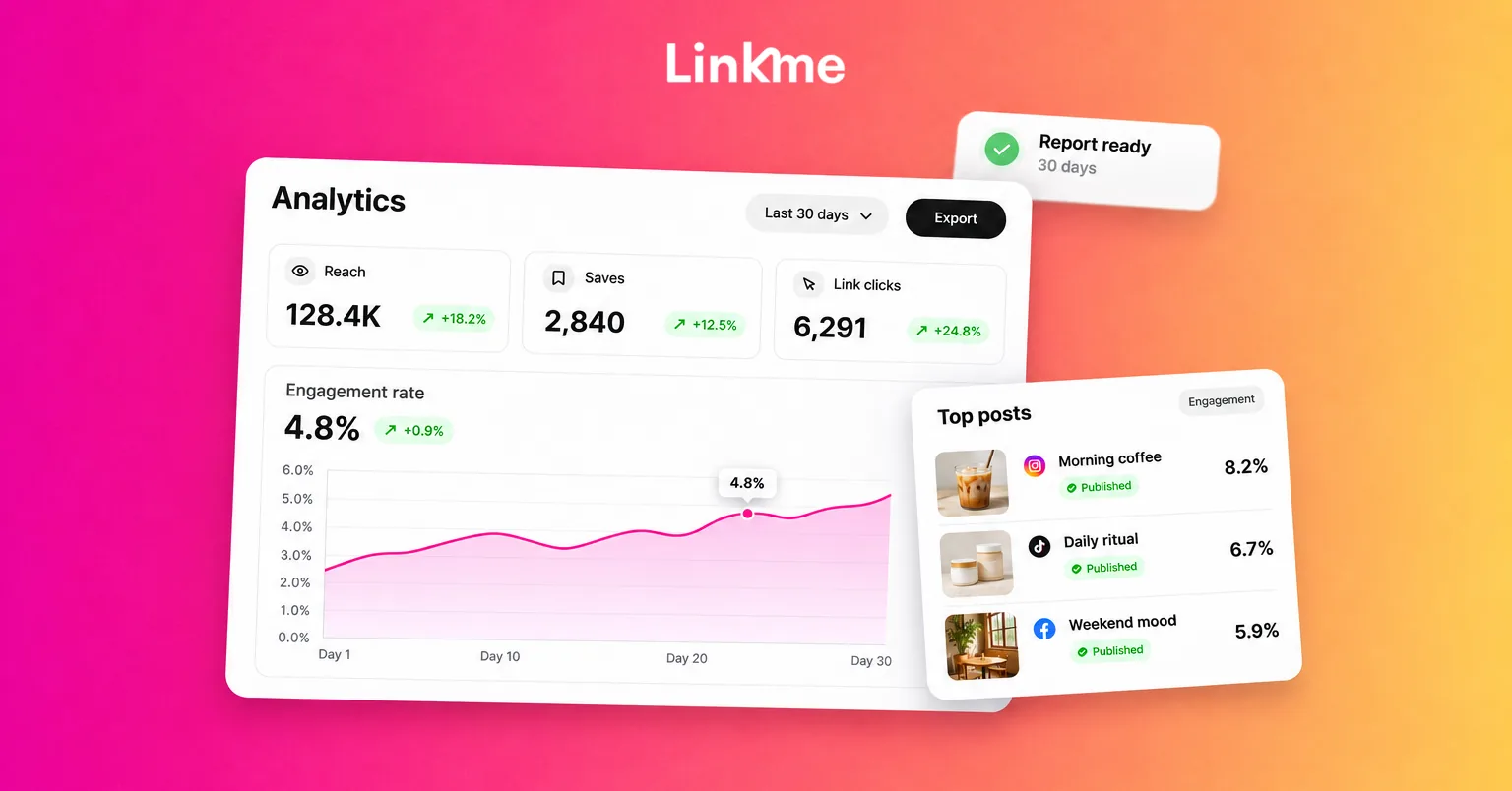
The page’s own analytics then show profile views, link clicks, traffic sources and the countries and cities visits come from, and Top Web Links ranks every link by the clicks it earns. These figures come from your Linkme page, not from the social apps, so they will not match the follower or view counts each network reports.
Measure social media ROI by stream
Split the calculation so each part answers one question.
Organic social
Count leads, sign ups and sales that arrive through your tagged organic links, valued as defined above. Set them against the time and production cost of organic content. Organic ROI is often understated because some people see a post and buy later through search or a direct visit; note that limitation rather than inflating the figure.
Paid social
Use the network’s reported conversions to optimize, but report against a source you control. In Linkme, ads launched from Linkme on networks such as Meta, Google and TikTok show spend, results and return side by side. Verified revenue counts sales on your Linkme pages from people who clicked an ad launched from Linkme, and Return is Verified revenue divided by the spend on those ads. The network’s own reported return shows separately, so you can see where the two disagree. Details are on the ads, team and security page.
Sales on your page
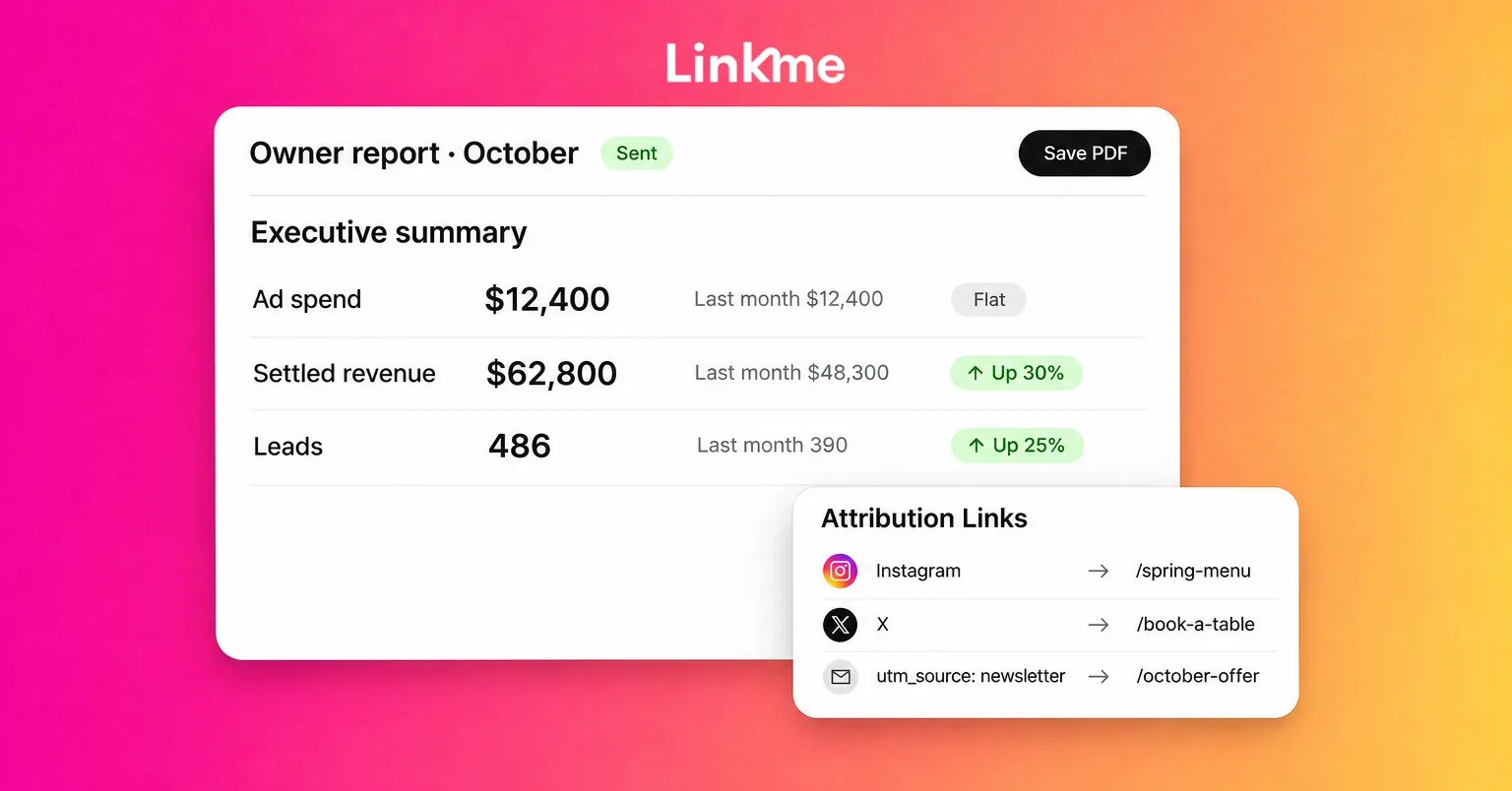
If you sell merch, digital products or courses from your page, settled revenue is the cleanest return figure: money that actually settled, not orders that may be refunded. Linkme includes settled revenue, by page, in a scheduled owner report.
Report ROI to owners
A good owner report answers the same questions every period, in the same order:
- What did we spend? Ad spend and the main costs.
- What came back? Revenue, leads and sign ups, each with its source.
- How did that compare with last period?
- Which pages, campaigns or locations led?
- What will we change next period?
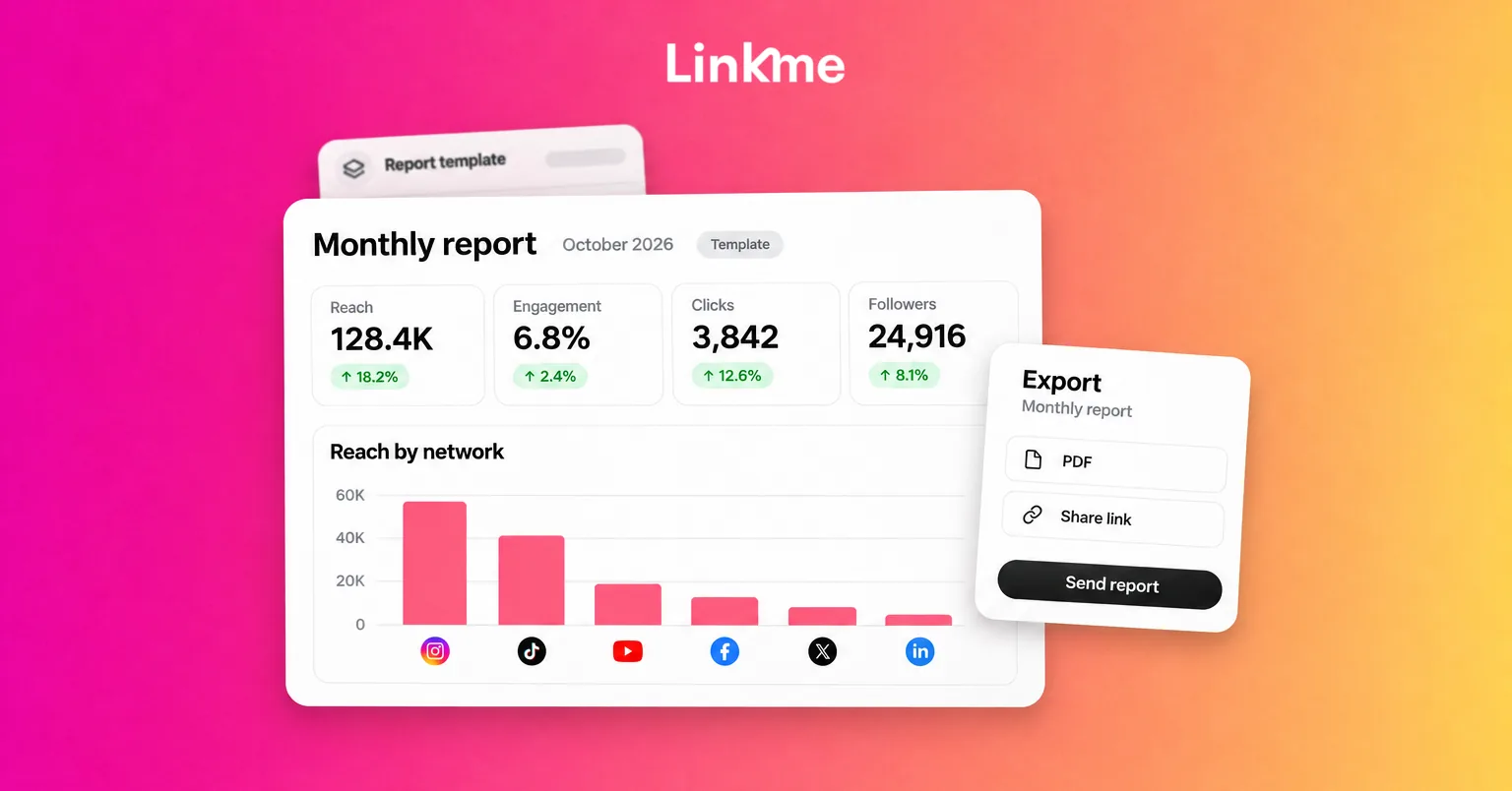
On Linkme Business, Reports show an executive summary with each figure against the previous period, and on plans that include reports by page, By page compares your locations or brands side by side with leads, posts and a trend. You can send weekly or monthly owner emails on a schedule, save any month as a PDF or export a CSV. For a broader template, see the guide to social media reporting, and for which numbers deserve a place in the report, the guide to social media metrics.
How to improve social media ROI
Once you can measure it, improving ROI is a matter of moving money and time toward what returns the most:
- Cut the bottom fifth. Drop the formats, campaigns or networks that consistently return least, and reinvest in the leaders.
- Fix the page before buying more traffic. If clicks are high and sales are low, the landing page is the problem.
- Reuse proven creative. A post that sold organically is a strong candidate for a paid test.
- Shorten the path. Fewer steps between the post and the purchase or sign up usually lifts conversion.
- Capture people who are not ready to buy. An email sign up turns some of today’s clicks into future revenue.
Frequently asked questions
What is a good social media ROI?
Any ROI above zero means social returned more than it cost, but what counts as good depends on your margins, sales cycle and how completely you count costs. Compare your ROI with your own previous periods and with your other marketing channels rather than with a generic benchmark.
How do you measure social media ROI for organic posts?
Tag organic links with UTM parameters, value the leads and sales they produce, and compare that value with the time and production cost of the content. Accept that some influence, such as people who buy later without clicking, will not be captured.
Why do my ad platform numbers differ from my own analytics?
Each network uses its own attribution windows and rules, and may count conversions your analytics cannot see, or miss ones it can. Report the network’s figure and your own side by side, and use your own sales records as the final word.
What is the difference between ROI and ROAS?
ROI compares the full return with the full cost, including time and tools. ROAS divides ad revenue by ad spend only. ROAS is useful for judging individual campaigns; ROI tells you whether social as a whole is worth the investment.
Linkme brings page analytics, owner reports and Verified revenue for ads into one place, so the numbers behind your social media ROI come from the same source every month. Book a demo to see it with your own pages.