Remote vs Hybrid Social Media Teams: Which Model Fits Your Business
Does your best content happen in a physical place? Compare remote and hybrid social teams on capture, replies and approvals, then pick the model that fits.
On this page
- Key takeaways
- Remote vs hybrid work: the definitions for a social team
- How the two models compare
- Content capture: the deciding factor
- Response coverage: who answers while things are happening
- Approvals: in the room or in the record
- Collaboration: avoid two classes of teammate
- Which model fits your business
- How Linkme supports either model
- Frequently asked questions
Choosing between remote vs hybrid social media teams comes down to one question: does your best content happen in a physical place? If it does, as it does for venues, sports teams and events, you need people on site and a hybrid model usually wins. If your content can be planned, shot in batches and edited anywhere, a fully remote team gives you a wider hiring pool and fewer handoff problems. This guide compares the two models on the work a social team actually does, then helps you pick one by type of business.
Remote vs hybrid work: the definitions for a social team
General remote vs hybrid work debates focus on offices and commutes. For a social media team, the more useful definitions are about where the work happens:
- Fully remote: everyone plans, creates, edits, approves and publishes from wherever they are. Content comes from planned shoots, product photography, user-generated content, design work or footage sent in by others.
- Hybrid: some people, or some days, are on site to capture content and run live coverage, while editing, scheduling, reporting and community work happen remotely.
- In-house social media team: the people are your employees rather than an agency. An in-house team can be remote, hybrid or office-based, so this describes who employs them, not where they sit.
A hybrid marketing team is not just “remote plus some office days.” The on-site part should exist because the content requires it.
How the two models compare
| Area | Fully remote | Hybrid |
|---|---|---|
| Content capture | Planned shoots, batch production, assets sent in by others; weak on live moments | Strong on events, game days, store moments and behind the scenes |
| Response coverage | Easy to spread across time zones for longer coverage | On-site staff are busy during live moments; remote teammates cover replies |
| Approvals | Must be fully asynchronous and written | Can happen in person, but should still be recorded in the tool |
| Collaboration | Relies on briefs, shared calendars and comments | Mix of in-person planning and remote handoffs; risk of two classes of teammate |
| Hiring | Wider talent pool, any location | Limited to people near your sites, at least for capture roles |
| Cost | Lower travel and space costs | Travel or local staff for capture days |
Neither column is better in general. The right model depends on how much of your content depends on being there.
Content capture: the deciding factor
Ask what your audience engages with most. If the answer is the atmosphere of a match, the crowd at a concert, a dish coming out of the kitchen or a new display in a store, someone has to be there with a phone at the right moment. Remote editors can make that footage look great, but they cannot create it.
If the answer is product shots, tutorials, educational carousels, founder videos or customer stories, the work can be scheduled. A remote team can book a shoot day once a month, capture everything in batches and spend the rest of the month editing and publishing.
A simple test: list your ten best-performing posts from the last quarter. Count how many needed someone on site at a specific time. If it is more than a few, plan for hybrid.
Response coverage: who answers while things are happening
Live moments create comments and DMs at the exact time your on-site people are busiest. Hybrid teams handle this by splitting roles: the person at the venue captures and posts, and a remote teammate watches comments and messages.
Remote teams have the opposite strength. Spread across time zones, they can cover replies for more of the day without anyone working late.
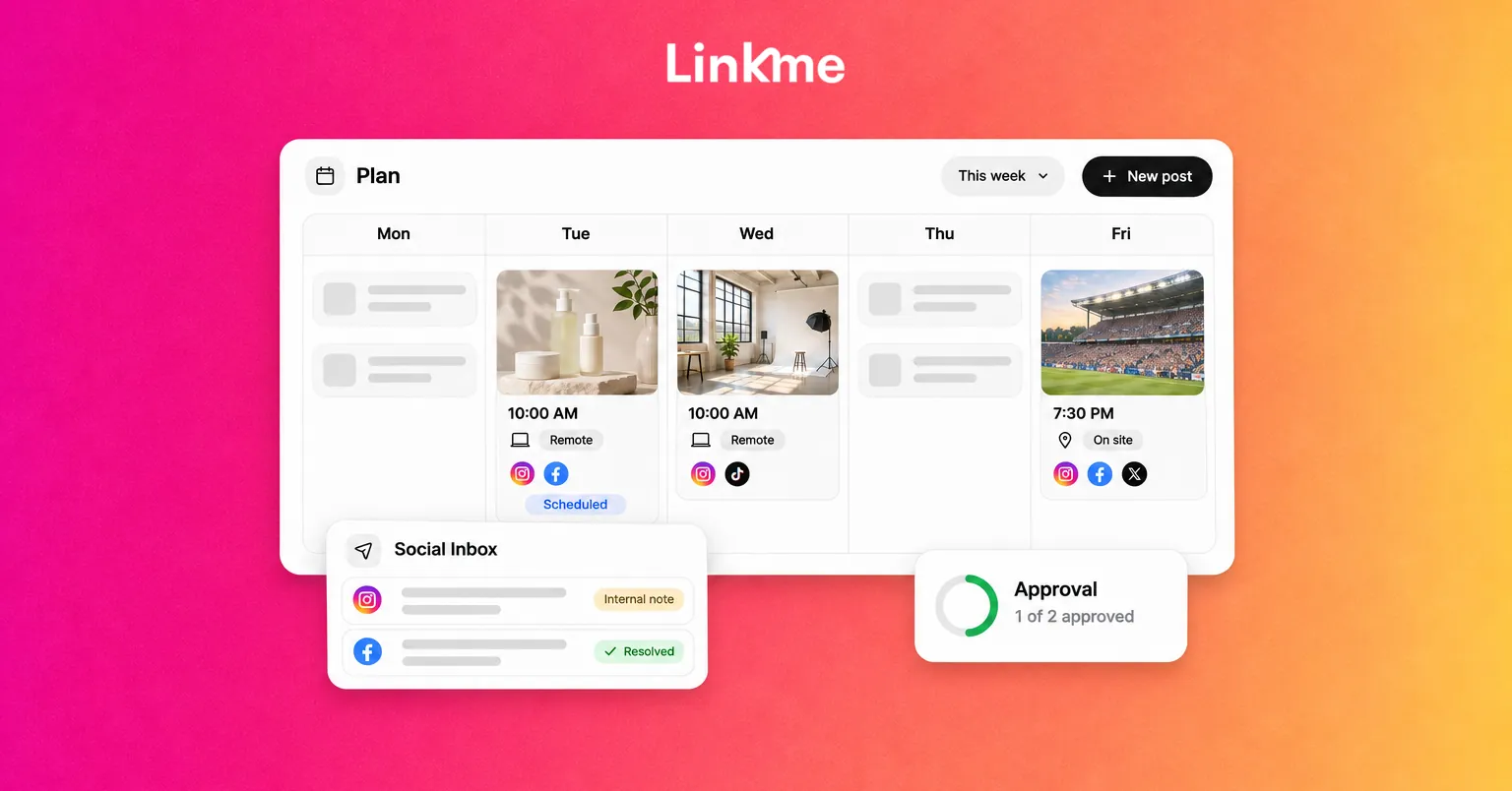
Either way, put conversations in one shared place. Linkme’s Social Inbox brings Instagram and Facebook comments and DMs together, with internal notes the customer never sees, saved replies and Resolve. Conversations cannot be assigned to a specific teammate, so agree who covers which hours and use internal notes to hand context over.
Approvals: in the room or in the record
Hybrid teams are tempted to approve things verbally because the reviewer is standing nearby. That works until someone asks later what was approved and when. Remote teams have no choice but to approve in writing, which is one of their hidden advantages.
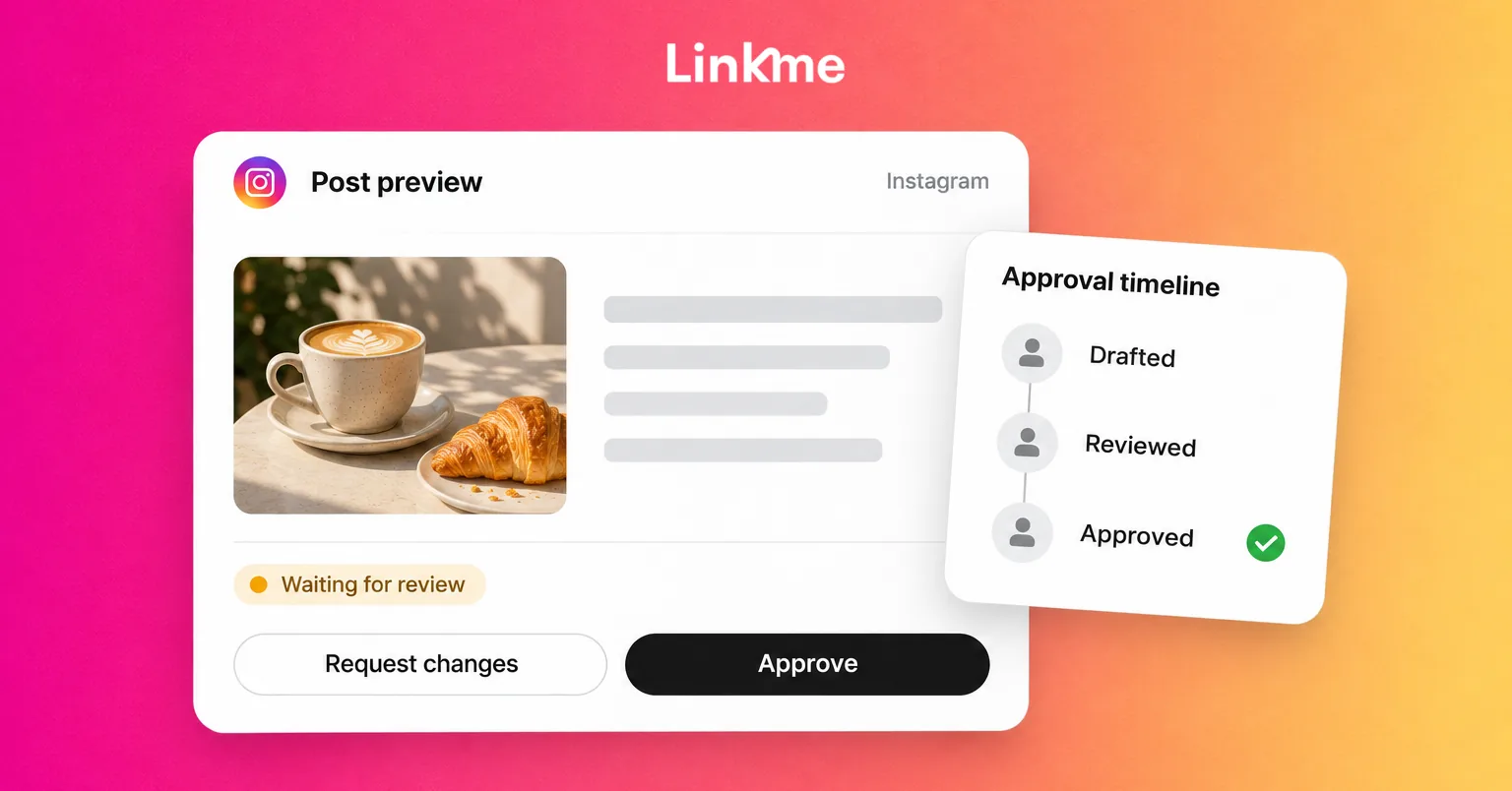
Keep approvals in your publishing tool regardless of model. In Linkme, a post can ask for or require approval, waits in Needs attention until an owner or admin approves it, and keeps its scheduled time. Changing the caption or time after approval sends it back for review, so what was approved is what goes out.
Collaboration: avoid two classes of teammate
The most common hybrid failure is that on-site people make decisions in conversation and remote people find out later. Fix it with three rules:
- Decisions go in writing, in the brief or the post, not only in a hallway.
- One shared calendar, so everyone sees the same plan.
- Meetings default to video, even when some people are in the same room.
Fully remote teams need the same written discipline from day one, which is why they often run smoother than hybrid ones once established. For a look at the tools that support this, see social media collaboration tools for teams.
Which model fits your business
Venues, sports teams and events: hybrid
Game days, shows and nights out are the content. Put at least one capture person on site for every major moment, with a remote editor and a remote community manager. Plan the predictable posts, such as lineups, schedules and ticket reminders, in advance so on-site staff can focus on what is happening. Teams in this category can see how others structure it on the sports teams solution page.
Retail, restaurants and multi-location brands: remote core, local contributors
A central team plans campaigns and handles editing, approvals and replies remotely. Each location has a manager who captures and posts local updates within agreed rules. Technically hybrid, but the on-site part is spread across many people who are not full-time social staff.
E-commerce, software and service brands: fully remote
Content is planned, product-led or educational. Batch shoots, remote editing and asynchronous approvals work well, and a wider hiring pool usually matters more than presence on site.
Creators and personal brands: whatever fits the creator
The creator captures; editors, managers and community help can be anywhere. Treat it as remote with one on-site person who happens to be the talent.
How Linkme supports either model
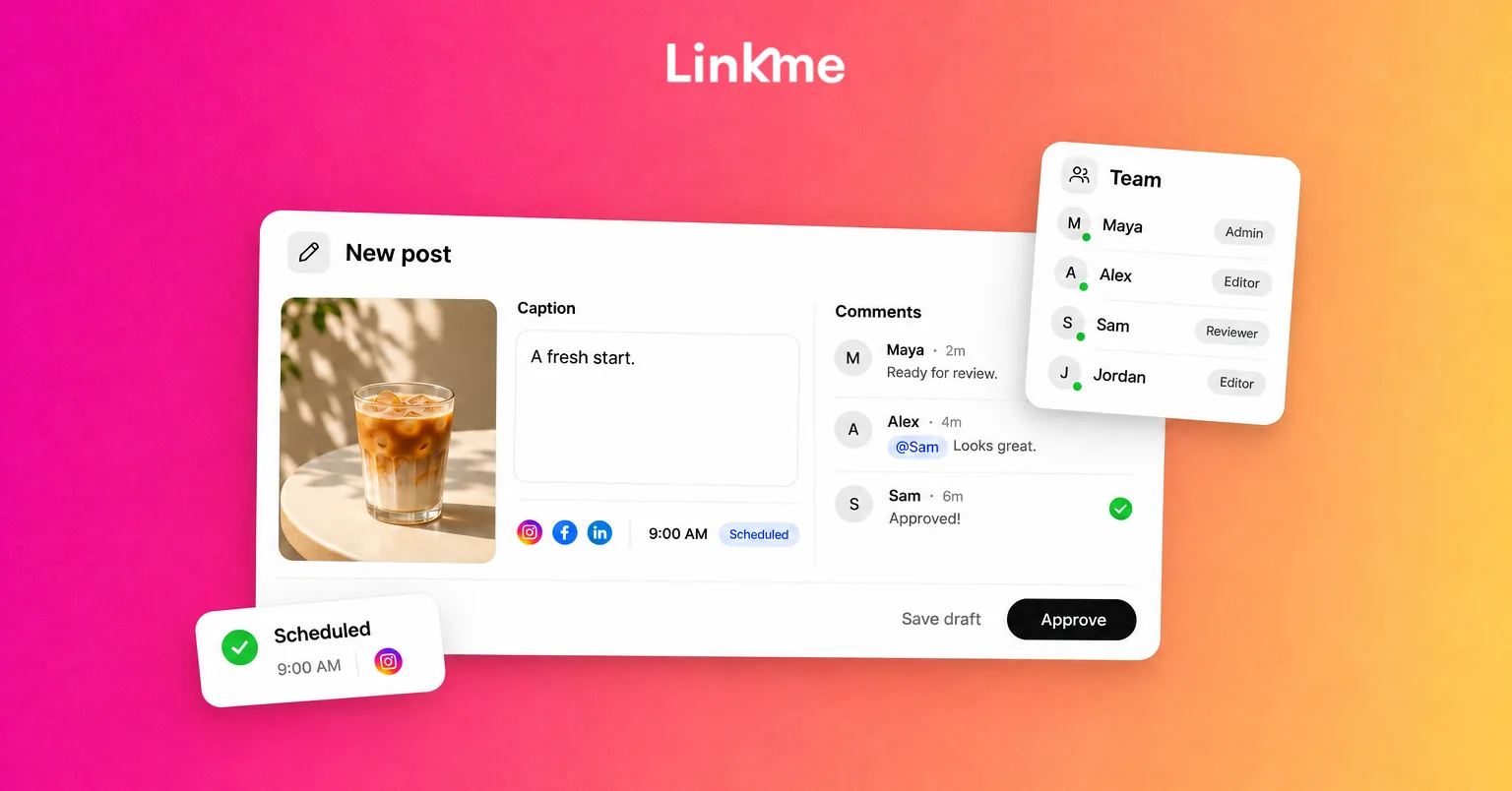
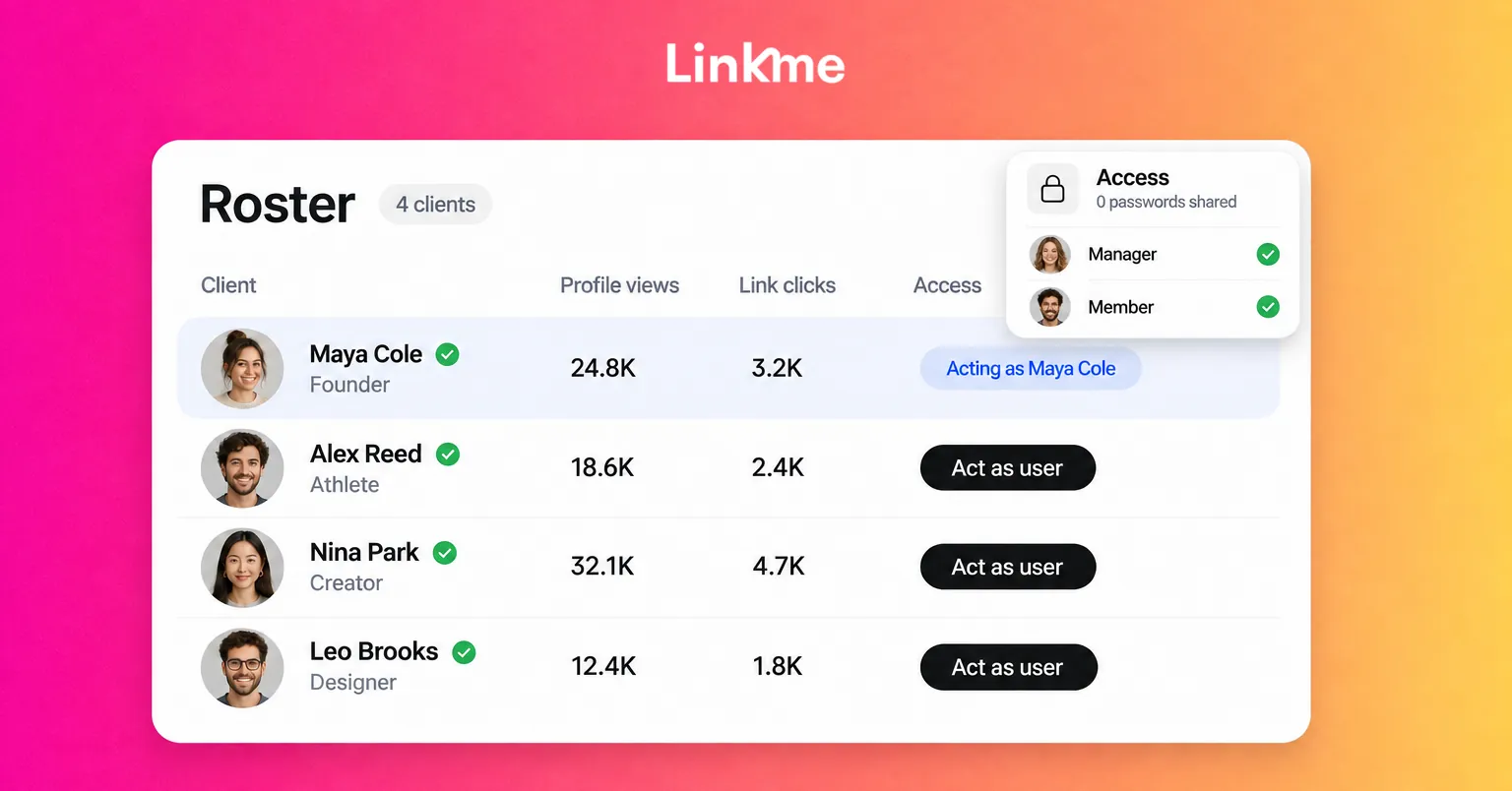
The tools a social team needs do not change with the model. What changes is who uses them from where. With Linkme for social media teams, the social media manager plans the week on a shared calendar, an owner or admin approves each post, Post to All publishes it to the networks you choose at its scheduled time, and Analytics shows views, link clicks and engagement for every brand side by side. Each person has their own login and role, so on-site staff can submit posts for approval while remote reviewers sign them off, without anyone sharing a password.
Frequently asked questions
Is a remote or hybrid social media team better?
It depends on your content. If your best posts come from live, location-based moments, hybrid is usually better because someone has to be there. If your content can be planned and shot in batches, a fully remote team is often simpler and easier to hire for.
What is a hybrid marketing team?
A team where some work happens on site, usually content capture and live coverage, while planning, editing, approvals, publishing and reporting happen remotely. The on-site part should exist because the content needs it.
Can an in-house social media team be fully remote?
Yes. In-house describes who employs the team, not where they work. Many in-house teams are fully remote and travel only for planned shoots or major events.
How do hybrid teams handle approvals?
The same way remote teams do: in the publishing tool, in writing. Verbal approvals are hard to trace later, so record every sign-off where the post lives, even when the reviewer is in the same room.
Whichever model you choose, keep the plan, approvals and replies in one place. Book a demo to see how Linkme runs a team’s week from planning to reporting.