Authenticity on Social Media: Disclosure, AI and Earning Trust
When so much content can be generated, authenticity means honest disclosure, real voices and consistent behavior. How to label paid partnerships and AI use, and how approvals protect trust.
On this page
Authenticity on social media used to mean “be yourself”. Now that polished captions, images and even voices can be generated in seconds, it means something more specific: being honest about who paid for a post and how it was made, sounding like a real person, and acting the same way over time. People trust a brand not because it says it is genuine but because what it says checks out. This guide covers the practical side of that: disclosure, real voices, consistency, and the review steps that protect trust when a team or an AI tool helps you create content.
What authenticity on social media means now
Audiences have become good at spotting content that is all surface. A genuine personal brand or business account usually shares three traits:
- Transparency. It is clear who is speaking, who is paying and what is real.
- A recognizable voice. Posts sound like a specific person or team, not like any account in the category.
- Consistency. The values shown in posts match how the account behaves in comments, partnerships and when something goes wrong.
None of these require oversharing. Authentic content is honest and specific. It does not have to be confessional.
Disclose paid partnerships clearly
The quickest way to lose trust is for followers to find out a recommendation was paid for after they acted on it. Disclosure is also a legal matter in many markets.
In the US, the FTC says the responsibility for clearly disclosing a material connection sits with the influencer and the brand, not the platform, and that a platform’s built-in disclosure tool alone may not be enough. It recommends adding your own disclosure as well. A connection is not only cash: free products and other things of value count (FTC, Disclosures 101 for Social Media Influencers).
Platforms have their own rules on top. Instagram’s branded content policies require the paid partnership label when you post organic branded content, and they treat free gifts and affiliate links as an exchange of value.
Practical wording that works:
| Situation | What to do |
|---|---|
| Paid post | Use the platform’s paid partnership label and start the caption with “Ad” or “Paid partnership with @brand” |
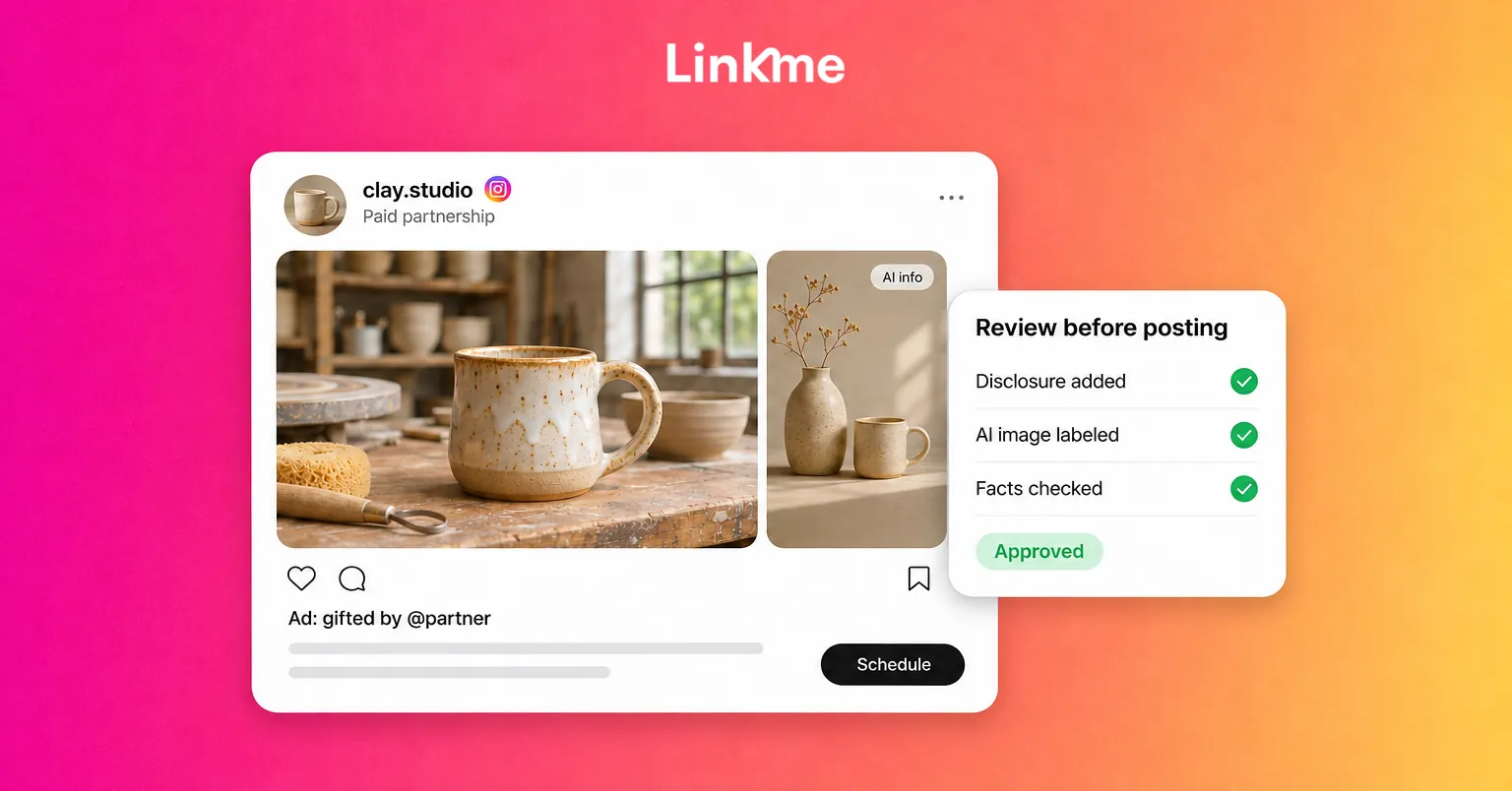
| Free product | “Gifted by @brand” near the start, not buried in the hashtags |
| Affiliate link | “I earn a commission if you buy through this link” next to the link |
| Your own product | No sponsor label needed, but make it clear it is yours |
| Video | Say it out loud near the start, as well as in the caption |
Avoid vague tags like “sp”, “collab” or “thanks @brand”. They do not tell people that money or products changed hands.
Be open about AI use
AI disclosure is now part of platform policy, especially for realistic media:
- YouTube requires creators to disclose content that is meaningfully altered or synthetically generated and looks realistic, such as making a real person appear to say something they did not, or showing a realistic event that never happened. Minor edits, beauty filters, animation and production help such as AI-written scripts do not need disclosure (YouTube Help).
- TikTok asks creators to label AI-generated content that contains realistic images, audio or video, and may apply its own label automatically (TikTok Support).
Beyond the rules, a simple principle works: if a reasonable viewer would feel misled on learning something was AI-generated, say so. A realistic AI product photo, a synthetic voice reading your script or an AI-generated person in an ad all deserve a label. An AI-assisted caption that you checked and edited usually does not.
Never use AI to create fake testimonials or reviews. In the US, the FTC’s rule on consumer reviews and testimonials prohibits reviews that misrepresent who wrote them, including ones attributed to people who do not exist.
Keep real voices in the content
Generated content is now cheap and plentiful. Real people and real work stand out more because of it. Content that is hard to fake builds trust:
- Faces and voices: the founder explaining a decision, the chef plating a dish, the coach running a drill.
- The process, not only the result: drafts, mistakes, the setup before the event.
- Customer words, with permission: a real message or comment, credited and unedited apart from length.
- Opinions: a clear point of view on your field, including what you would not recommend.
Use AI for the work around this, such as drafting, resizing and caption variations, and keep the substance human.
Consistency makes authenticity visible
One honest post does not build a reputation. Months of steady, recognizable behavior do. That means:
- The same voice across networks. Adapt the format for each network, not your personality.
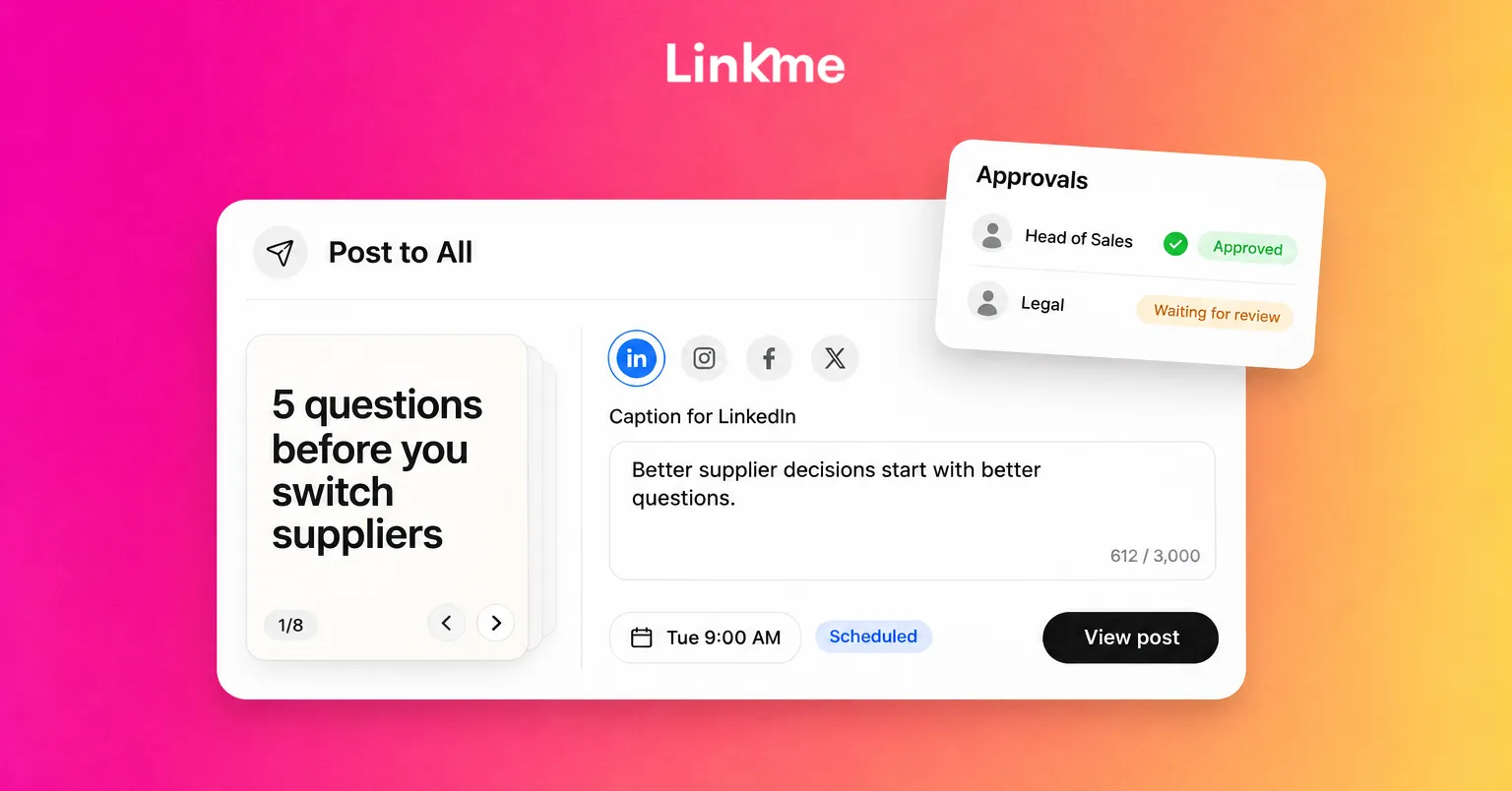
- A steady posting rhythm. Going silent for weeks and then posting in bursts reads as a campaign, not a person. Scheduling ahead with a tool like Post to All keeps you present on busy weeks without lowering standards.
- Behavior that matches the message. If you say you listen to your community, answer the comments.
- Partnerships that fit. Turning down a well-paid deal that does not match your values protects the trust that every future deal depends on.
Use approvals to protect trust
Most authenticity failures are not deliberate. A missing disclosure, an unchecked AI image or a caption written in the wrong tone slips through because nobody looked before it went out. A short review step catches these.
Before publishing, a reviewer checks:
- Is every paid relationship disclosed in words, not only with a label?
- Is any realistic AI-generated media labeled according to the platform’s rules?
- Are all facts, quotes and claims accurate and attributed?
- Does it sound like us?
- Would we be comfortable if a follower asked how it was made?
On Linkme, post approvals build this into the schedule. A manager submits the post, it shows Waiting for approval, and an owner or admin approves it or requests changes. Changing the caption or the time after approval sends the post back for review. Link, Linkme’s AI social media manager, works the same way: it drafts posts and makes images and videos, but nothing goes live until someone approves it, and it never replies to comments or DMs itself.
When you get it wrong
Everyone makes a mistake eventually: a missed disclosure, a wrong fact, an image that should have been labeled. Fix the post, say what you changed in a short comment or follow-up, and change the process that let it through. A quick, plain correction usually costs less trust than the mistake did. Silence or deleting the post usually costs more.
Linkme’s features cover the practical side of this: scheduling, approvals, an inbox for answering your community and an AI assistant that waits for your approval.
Frequently asked questions
What does authenticity on social media mean?
It means being transparent about who is speaking, who paid and how content was made, keeping a recognizable human voice, and behaving consistently over time. It does not require oversharing. It requires that what you post is honest and that your actions match your words.
Do I have to disclose AI-generated content?
On YouTube and TikTok, yes, when it is realistic: both ask creators to label AI-generated or significantly altered images, video and audio that could pass as real. Minor edits and AI-assisted text, such as a caption or script you checked yourself, generally do not need a label. Check each platform’s current policy.
Is the paid partnership label enough on its own?
Not always. The FTC recommends adding your own clear disclosure, such as “Ad” or “Paid partnership with @brand” at the start of the caption and said out loud in videos, because a built-in label can be easy to miss.
How can a business seem authentic on social media?
Show the real people and work behind the business, quote real customers with permission, answer comments and complaints openly, keep a consistent voice and posting rhythm, and check every post for accuracy and disclosure before it goes out.