Virtual Collaboration With Creators: Briefs, Deals and Video Review
Most creator partnerships now run entirely remotely. How to write a brief a creator can act on alone, agree every term in writing, give feedback without calls and check disclosure before anything goes live.
On this page
Virtual collaboration with creators works when everything a creator needs to make the right video is written down, agreed in one place and checked against the same standard when the video comes back. Most brand and creator partnerships now run entirely remotely: the brand never visits the shoot, and the creator never sees the marketing team’s meeting. That makes the brief, the written agreement, the review step and the disclosure check the whole collaboration. This guide covers how to run each one without endless back and forth.
Why remote creator campaigns go wrong
Remote creator campaigns rarely fail because of the creative idea. They fail because of gaps between people who never meet:
- The brief says “show the product” but not which feature matters.
- The fee is agreed in a DM, the usage rights in an email and the posting date in a voice note.
- Feedback arrives as “can it feel more premium?” with no example.
- The video goes live without a clear disclosure, and the brand only notices from a comment.
Each gap is fixable with a written step. The steps below are designed for collaboration that happens entirely in messages, files and approvals.
Write a brief creators can act on alone
A brief for remote work must answer the questions a creator would otherwise ask on a call. Keep it to one page.
What to include
| Section | What to write | Example |
|---|---|---|
| Goal | One outcome for this video | Get runners to try the new trail shoe |
| Audience | Who should care, in one line | Runners who train on weekends |
| Must-haves | The few things every video needs | Shoe visible in use, the product name said once, your link |
| Must-avoid | Claims or situations to stay away from | No speed or injury claims, no competitor products |
| Freedoms | What the creator decides | Location, script, music, format |
| Deliverables | Formats, count and network | One Reel and three Stories on Instagram |
| Dates | Draft due, review window, posting date | Draft Tuesday, feedback within 48 hours, live Friday |
| Disclosure | How the partnership is shown | Paid partnership label plus a clear disclosure in the video and caption |
The “freedoms” row matters most. Creators know what works with their audience. A brief that controls every shot produces content that looks like an ad and performs like one.
Send the same brief, then personalize the opener
Use one brief for all creators in a campaign so every video can be reviewed against the same standard. Personalize the first message instead: mention a specific video of theirs and why it fits.
Agree terms in writing before anyone films
A remote deal needs a written record that both sides can point to. Before filming, confirm:
- Deliverables: exact formats, number of posts and the network for each.
- Timeline: draft date, review window, posting date and time zone.
- Revisions: how many rounds are included, usually one or two.
- Usage: whether the brand can repost the video or run it as an ad, for how long and on which networks.
- Payment: the amount, when it is paid and what triggers it.
- Disclosure: the label and wording the creator will use.
- Approval: who on the brand side gives final sign-off.
Keep all of this in one thread. When a question comes up three weeks later, nobody should have to search across email, DMs and a shared drive.
Keep one thread per creator
Remote collaboration creates a lot of small messages: a question about the product, a shipping update, a new posting time. Put every message for one creator in one place, and decide who on your side answers. Two people giving different answers is the fastest way to lose a creator’s trust.
How Linkme’s creator marketplace runs this
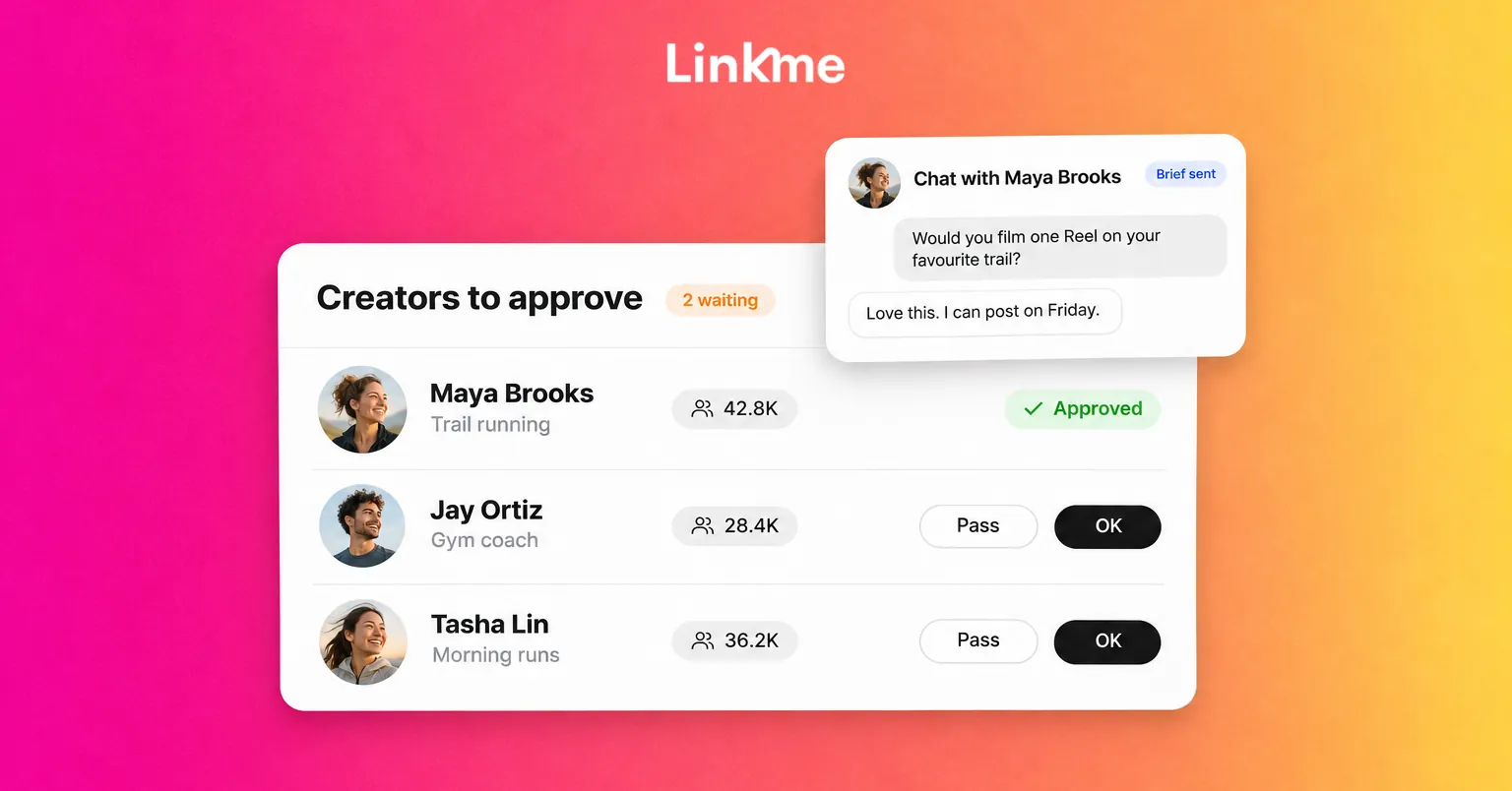
In the Linkme creator marketplace, you tell Link, Linkme’s AI social media manager, who you want to reach in one line. Link searches creators who run their pages on Linkme, by follower count, industry, niche and city, and shows you why each one fits. From there:
- You approve every creator. Nothing goes out until you say OK.
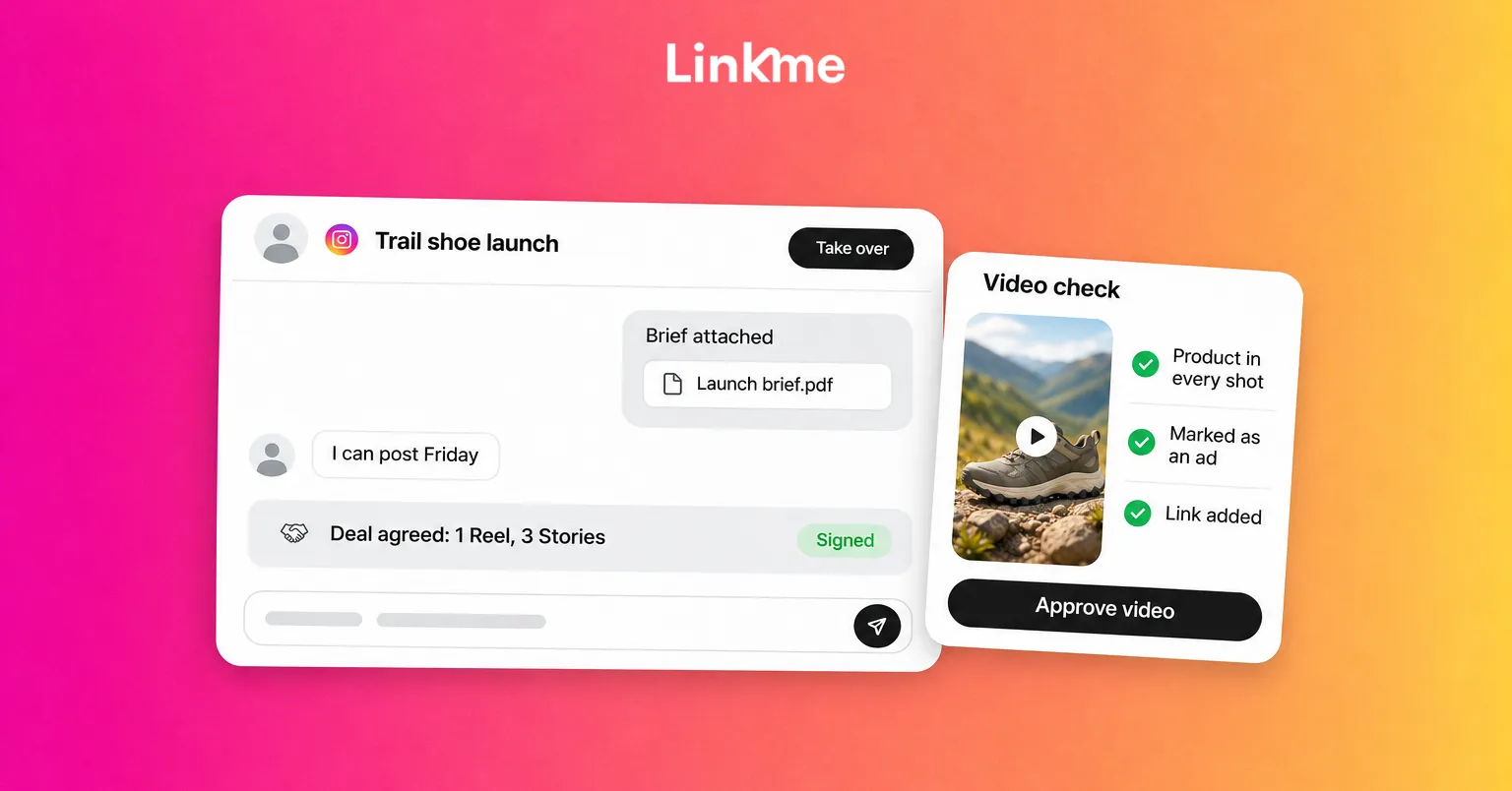
- Link sends your brief and agrees the deal. It messages each creator you approve, answers their questions and agrees the terms.
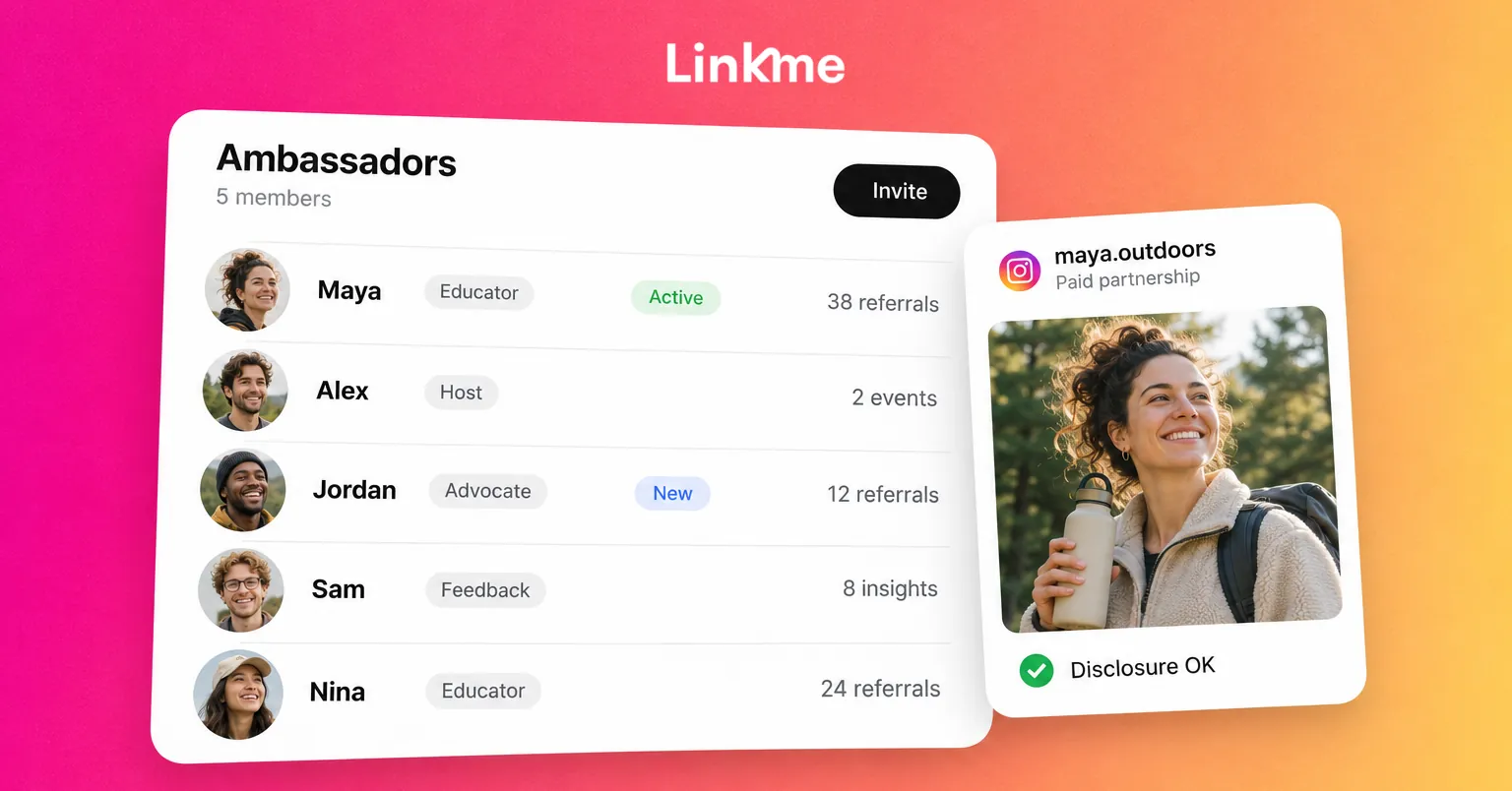
- You can read every chat. Every message Link sends is in your dashboard, and you can take over any chat at any time.
- Link checks each video against your brief. You keep the videos you like and pass on the rest.
- The best videos can run as ads from the same dashboard where you manage your ad campaigns.
The result is the single thread described above: the brief, the conversation and the finished video in one place, with a person deciding at each step.
Review each video against the brief
Check the must-haves first
Start every review with the brief’s must-haves, not personal taste. A short checklist keeps reviews consistent across creators:
- Is the product shown the way the brief asked?
- Are any claims accurate and allowed?
- Is the disclosure visible in the video and caption?
- Is the right link included?
- Does it match the agreed format and length?
If all of these pass, the video is acceptable. Anything beyond that is a suggestion, and should be labelled as one.
Give feedback that works without a call
Remote feedback needs to be specific enough to act on:
- Use timestamps. “At 0:08, the logo is cut off; can the shot start a second earlier?”
- Separate required changes from suggestions. Required changes come from the brief or the agreement. Suggestions are optional.
- Batch your feedback. Send one consolidated note per round, from one person.
- Respect the agreed rounds. If you need more, agree it and any extra fee in the thread.
Approve in writing
When a video is approved, say so in the thread with the final file name or link. That record protects both sides if questions come up later about what was agreed.
Make disclosure part of the review
Disclosure is a requirement, not a style choice. The FTC’s Disclosures 101 for Social Media Influencers says not to assume a platform’s disclosure tool is enough on its own, to place the disclosure with the endorsement and, in video, to include it in the video itself rather than only in the description. Plain words such as “ad,” “advertisement” or “sponsored” work; vague terms such as “spon” or “collab” do not.
Add disclosure to the brief, to the written terms and to the review checklist. A video without a clear disclosure is not ready to go live, however good it is.
After the videos go live
Close each collaboration properly:
- Confirm payment was sent on the agreed date.
- Save the final videos and the approval record together.
- Note which creators were easy to work with and which briefs produced the strongest videos.
- If a video performed well, agree any additional usage, such as running it as an ad, in writing before you use it.
Frequently asked questions
How do brands collaborate with creators remotely?
They send a written brief, agree deliverables, dates, usage, payment and disclosure in writing, keep all communication in one thread per creator and review each video against the brief before approving it.
What should a creator brief include?
The goal, the audience, the must-haves and must-avoids, what the creator is free to decide, the deliverables, the dates and how the partnership will be disclosed.
How many revision rounds should a creator deal include?
Agree the number up front, usually one or two. Required changes should come from the brief or the agreement, and extra rounds should be agreed in writing.
Who is responsible for disclosing a paid partnership?
The creator makes the disclosure on their post, and the brand should require it in the brief and terms and check it during review. Both sides benefit from getting it right.
To run creator collaborations from one place, with every chat visible and every video checked against your brief, see the Linkme creator marketplace or book a demo.