E-commerce Trends: Where Online Shopping Is Heading and What to Do Next
Six shifts shaping online shopping, from checkout inside social apps to creator-made ads, presales and AI assistants, with one practical next step for each.
On this page
- Key takeaways
- Six e-commerce trends at a glance
- 1. Checkout is moving into the social journey
- 2. Creator commerce and creator-made ads
- 3. Presales and scheduled drops
- 4. Print on demand: merch with no stock
- 5. AI shopping assistants change how products are found
- 6. Owned customer lists matter more as platforms shift
- What happened to AR try-on and voice shopping?
- Which trend to act on first
- Frequently asked questions
The e-commerce trends that matter most right now start on social media. People find a product in a feed or a creator’s video, ask a question in the comments or DMs, and expect to pay in a few taps on their phone. This guide covers six shifts shaping online shopping, what each one means for a small brand, a store or a creator business, and one practical next step for each.
Six e-commerce trends at a glance
| Trend | What changed | Your next step |
|---|---|---|
| Checkout inside social journeys | Buyers pay closer to where they found the product | Count the taps from post to paid on a phone |
| Creator commerce | Creators sell their own products and make brand ads | Brief one creator and get the right to run the video as an ad |
| Presales and drops | Selling before release is normal | Run one presale with a clear delivery date |
| Print on demand | Merch without stock or a warehouse | Test a small set of designs before you order inventory |
| AI shopping assistants | Shoppers ask AI to compare products | Make product names, prices and details easy to read |
| Owned customer lists | Reach on platforms is rented | Collect buyer emails at every sale |
1. Checkout is moving into the social journey
The distance between seeing a product and paying for it keeps shrinking. TikTok Shop lets people buy without leaving TikTok. Meta went the other way: during 2025 it moved Facebook and Instagram Shops to checkout on the seller’s own website. Both aim for fewer steps between interest and purchase, and both show that one platform’s rules can change.
The practical answer is to keep a single destination that works from every network you post on: a page in your bio that shows the products, their prices and a fast mobile checkout. Most traffic arrives on a phone, often inside an in-app browser where people are signed out of everything, so a wallet payment such as Apple Pay or Google Pay removes a step where many buyers give up.
Next step: open your own bio link on a phone, from inside Instagram, and count the taps it takes to pay for your best seller. Then remove one.
On Linkme, products sit on your page and in a shop at link.me/yourname/shop, where buyers check out with Apple Pay, Google Pay or a card, with shipping and tax worked out for them. Products you already sell elsewhere can link straight to your own store. The Sell & Monetize features cover digital downloads, pay to unlock content, merch, courses and tips.
2. Creator commerce and creator-made ads
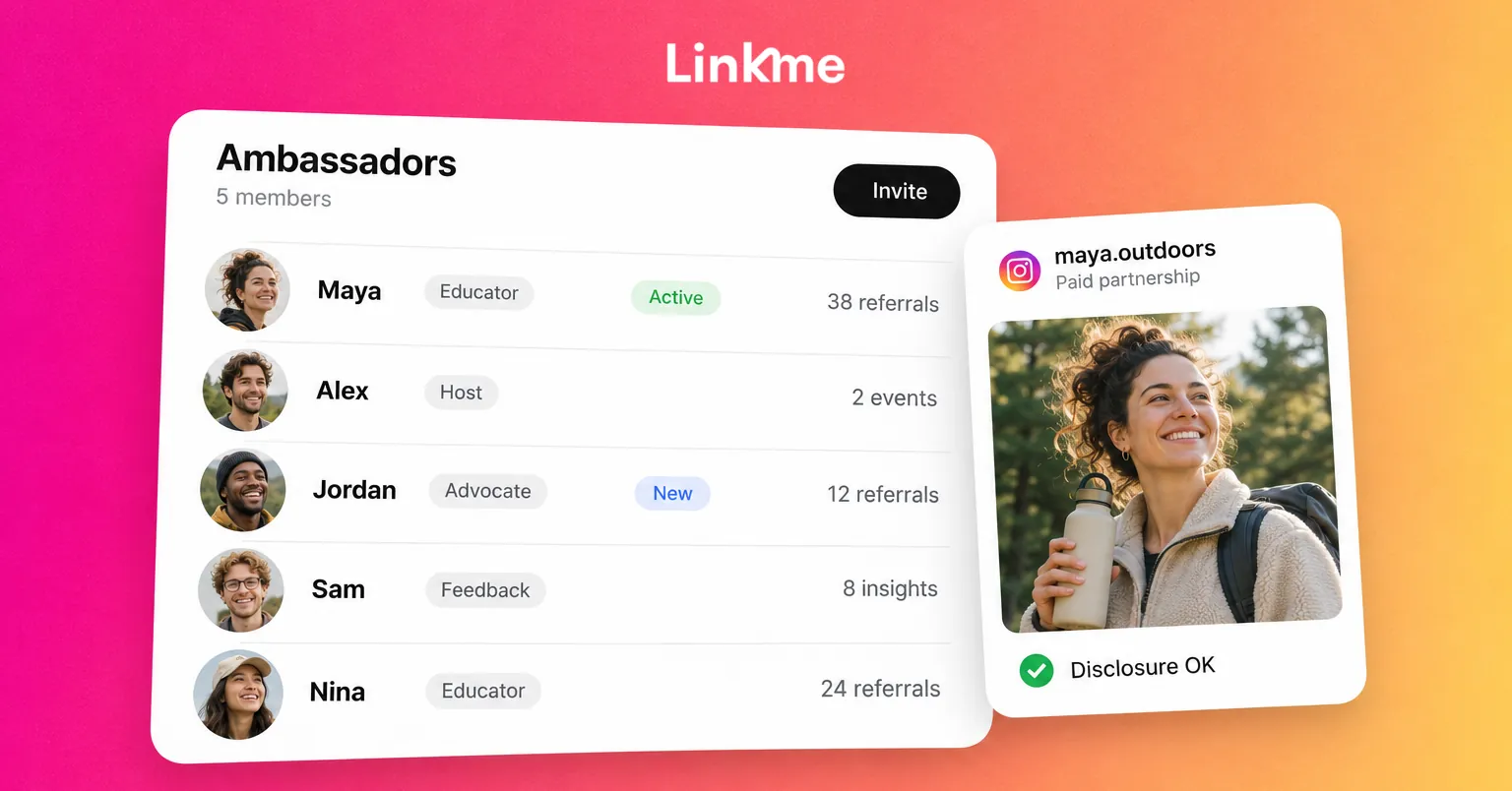
Many creators now sell their own product lines, from merch to digital guides, from the page every bio points to. On the brand side, the most useful creator output is often the video itself: a creator films the product in their own style, and the brand runs that video as an ad because it looks like something people actually want to watch.
Next step: brief one creator who already makes content your buyers watch. Agree in writing whether you can run the video as an ad, for how long and where. Make sure the post is clearly disclosed as a paid partnership.
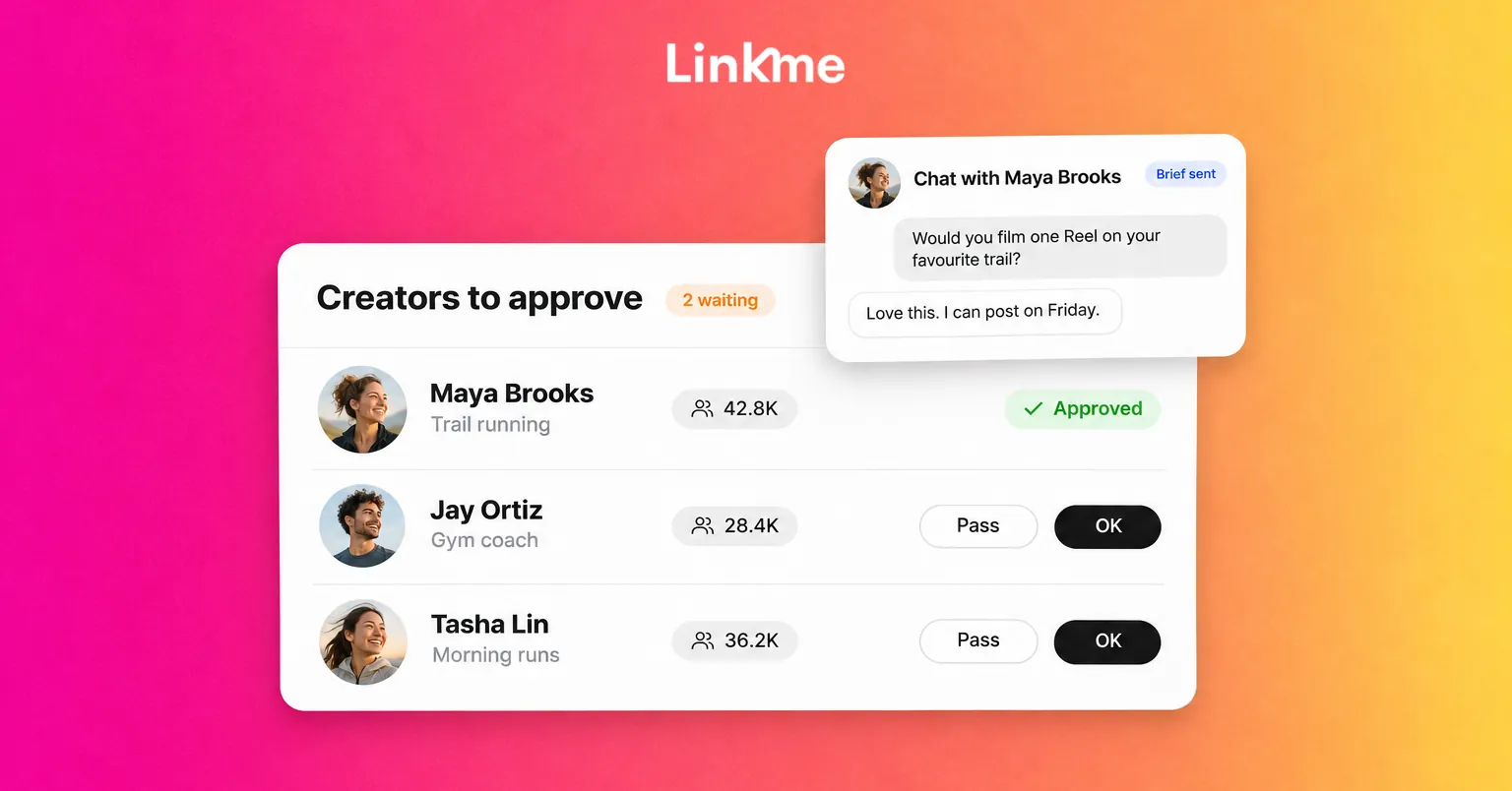
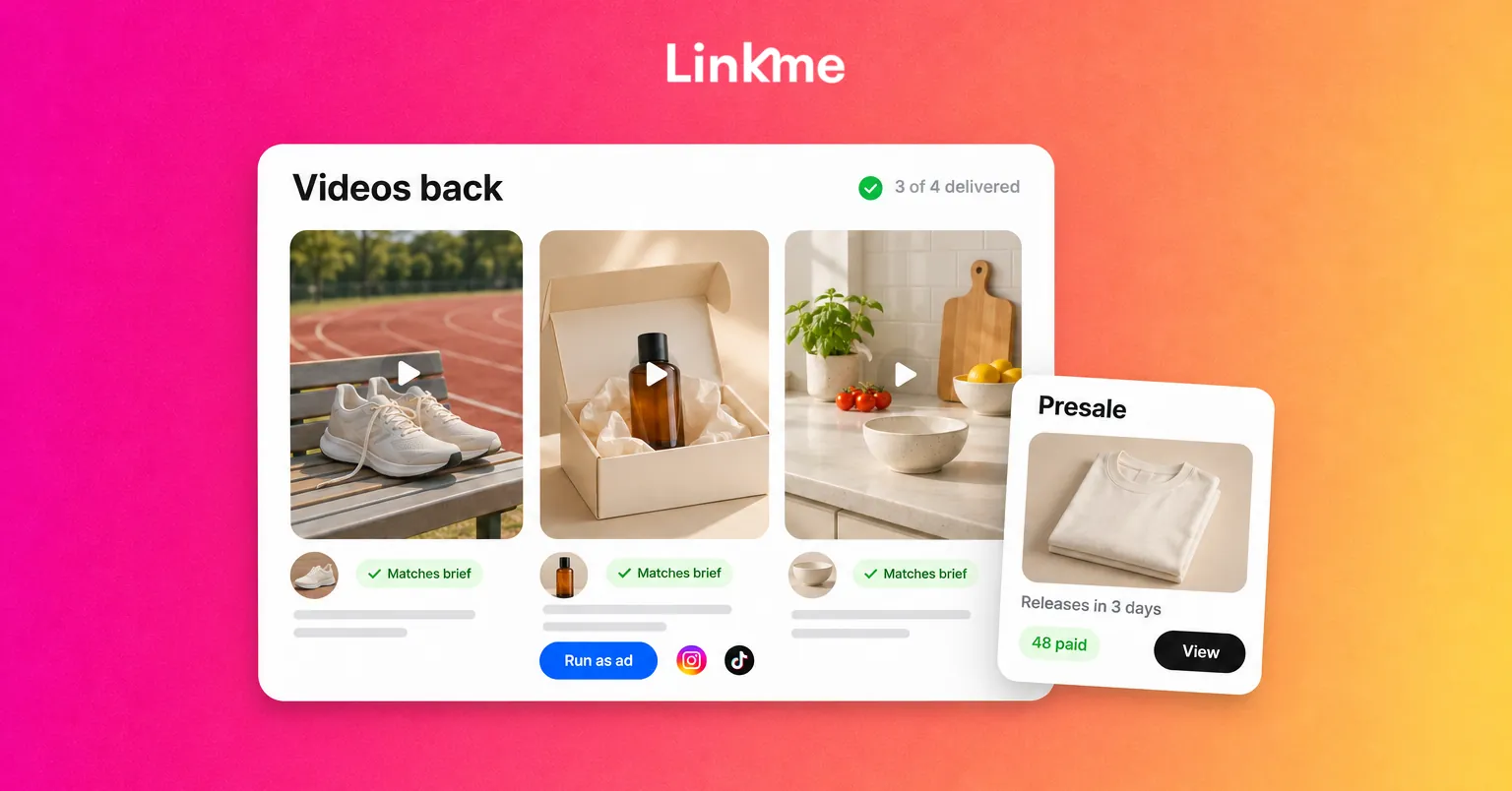
On Linkme, the creator marketplace lets a brand describe who it wants to reach. Link searches the creators on Linkme, shows why each one fits, messages the creators you approve with your brief, and brings the videos back so you can pick the best to run as ads.
3. Presales and scheduled drops
Selling before a product exists used to be reserved for crowdfunding. Now it is a normal way to launch. A presale tells you how much demand there is before you commit to production, and it gives you money and a list of buyers on day one.
Presales work best when the delivery promise is concrete: a release date, what the buyer gets, and what happens if the date moves.
Next step: pick one upcoming product and open a short presale window with a clear release date. Post a countdown and remind people on the day.
On Linkme you can schedule a release so buyers pay now and the product reaches them automatically on release day, and Linkme can email them when it releases. Any link on your page can also get a start and end time, so a drop goes live and comes down on schedule.
4. Print on demand: merch with no stock
Print on demand removes the hardest part of selling physical products for a small brand or creator: buying inventory upfront and guessing sizes. Each item is printed when someone orders it, so you can offer more designs and retire the ones that do not sell without a storeroom full of leftovers.
The trade-off: per-item costs are higher than bulk orders.
Next step: launch three designs, order a sample of each yourself, and keep only what sells after a month.
Linkme prints and ships merch you design in its Design Maker, so you hold no stock. Each order lands in Sales with its total, fees and what you receive.
5. AI shopping assistants change how products are found
More shoppers start with a question to an AI assistant: “Which running shoe is best for wide feet?” or “Compare these two blenders.” The assistant reads what is public about your products and summarizes it.
How buying inside these assistants works is still settling. OpenAI added checkout inside ChatGPT in late 2025, and the way assistants hand buyers to merchants keeps changing. Discovery is the stable part, so that is where to focus.
Next step: rewrite your top three product listings so the name, price, sizes, materials and who it is for are stated plainly, and answer the questions customers already ask in your DMs.
AI also helps on the seller’s side. Link, Linkme’s AI social media manager, drafts posts and makes images and videos for your products, and nothing goes live until you approve it. If you advertise, you can also run campaigns on networks including Meta, Google, TikTok and ChatGPT from Linkme.
6. Owned customer lists matter more as platforms shift
Every trend above depends on a platform you do not control. Algorithms change, checkout rules change and accounts get restricted. A list of buyers and subscribers you can email is the part of the business that stays with you.
Next step: make sure you collect an email address with every order and offer a simple sign up on your page for people who are not ready to buy.
On Linkme, Export emails in Sales saves the email of every buyer as a file, and sign ups from your page land in Leads. From Leads you can send an email campaign to every active contact, for example to announce your next drop.
What happened to AR try-on and voice shopping?
Both found narrower uses than once predicted. AR try-on helps where fit or look is the main doubt, such as eyewear, makeup and furniture. Voice ordering mostly handles reorders. Sustainability still matters to many buyers, but claims now need specifics, like materials and shipping.
Which trend to act on first
Start where your buyers already are, and pick the trend that removes your biggest constraint: if stock ties up cash, try print on demand or a presale. Run one small test a month, judge it by sales rather than likes, and keep the customer list growing whatever you test.
Frequently asked questions
What are the biggest e-commerce trends right now?
Checkout moving into social apps, creators selling products and making brand ads, presales, print on demand, AI assistants that help shoppers compare products, and a renewed focus on customer lists that businesses own. Most of these start on social media rather than on a store homepage.
Are presales and print on demand worth it for a small brand?
Often, yes, because both reduce the cash you tie up before you know what sells. A presale confirms demand before production, and print on demand removes stock entirely. The trade-offs are a wait for buyers and a higher cost per item.
Will AI assistants replace online stores?
Not in the near term. AI assistants increasingly influence which products people consider, but the purchase usually still happens on a store or marketplace. Clear product details help you show up in those comparisons.
How can a small seller keep up with e-commerce trends?
Test one change at a time on the channel that already brings you sales, and judge it by orders and repeat buyers. Collect buyer emails as you go, so you can reach your customers whichever platform comes next.
The future of e-commerce is about being easy to buy from wherever people find you. A page that shows your products, takes payment on a phone and keeps the buyer’s email gives every trend above somewhere to land.