How to Partner With Social Media Influencers: A Brand's Guide
A brand's step-by-step guide to influencer partnerships: set one goal, pick creators by audience fit, brief them, agree terms in writing, disclose properly and measure each creator.
On this page
To partner with social media influencers well, a brand needs five things in order: a clear goal, creators whose audience matches its buyers, a written brief, agreed terms and a way to measure what the content did. Most partnerships that disappoint skip one of those steps, usually the brief or the measurement. This guide walks through each step from the brand’s side, with a checklist you can reuse for every campaign.
Decide what the partnership is for
Influencer marketing covers very different jobs. A product launch, a store opening and an email sign up campaign need different creators, formats and measures. Write down one primary goal before you look for anyone.
| Goal | What you ask the creator for | What you measure |
|---|---|---|
| Awareness for a launch | A short video showing the product in use | Views, saves, shares, new followers on your account |
| Traffic or sales | A video plus a link or code | Link clicks, orders or revenue by creator |
| Sign ups or leads | A reason to join, such as early access | New contacts by source |
| Content for ads | Videos you can run as paid ads | Ad results compared with your own creative |
Also decide your audience in one line: who buys, where they live and what they care about. That line drives every later choice, from which creators you shortlist to what the brief says.
Find creators who fit your brand
Follower count is the least useful number on a creator’s profile. What matters is whether their audience looks like your buyers and whether people actually respond to what they post.
When you review a creator, check:
- Recent posts, not the highlight reel. Scroll back a few weeks. Is the content consistent, and would your product look natural in it?
- Comments. Real questions and conversations are a better sign than a stream of emoji.
- Past sponsored posts. How do they present brands? Do they disclose clearly? Did their audience engage with those posts or skip them?
- Audience location and age. Ask for a screenshot of their audience insights if it matters to your goal.
- Brand safety. Read enough of their content to be comfortable with their tone and past statements.
Shortlist more creators than you need. Some will say no, some will be booked, and some will ask for terms that do not fit.
Write an influencer brief creators can use
A good influencer brief is short, specific and leaves room for the creator’s own style. Creators know what works with their audience; your job is to tell them what must be true, not to script every line.
Include:
- The goal and the audience, in one or two sentences.
- The product and the one message you want people to remember.
- Must-haves: the product visible on screen, the link or code, any claims they can and cannot make.
- Do-nots: competitor products, restricted claims, topics to avoid.
- Deliverables: format (Reel, TikTok, Short, Story), number of posts, length and aspect ratio.
- Timeline: draft date, review window, posting date.
- Review step: whether you see a draft before it goes live and how many rounds of changes are included.
- Disclosure: how the post must be labeled.
Keep it to a page. If the brief needs a call to explain, it is too long.
Agree terms before anyone films
Put the deal in writing, even for a gifted product. Misunderstandings about usage rights and payment timing cause more friction than creative disagreements.
| Term | What to settle |
|---|---|
| Payment | Flat fee, free product, commission on sales or a mix |
| Deliverables | Exactly which posts, on which networks, by when |
| Revisions | How many rounds of changes are included |
| Usage rights | Whether you can repost the video or run it as an ad, for how long |
| Exclusivity | Whether they can promote a competitor during or after the campaign, and for how long |
| Payment timing | On signing, on posting, or split |
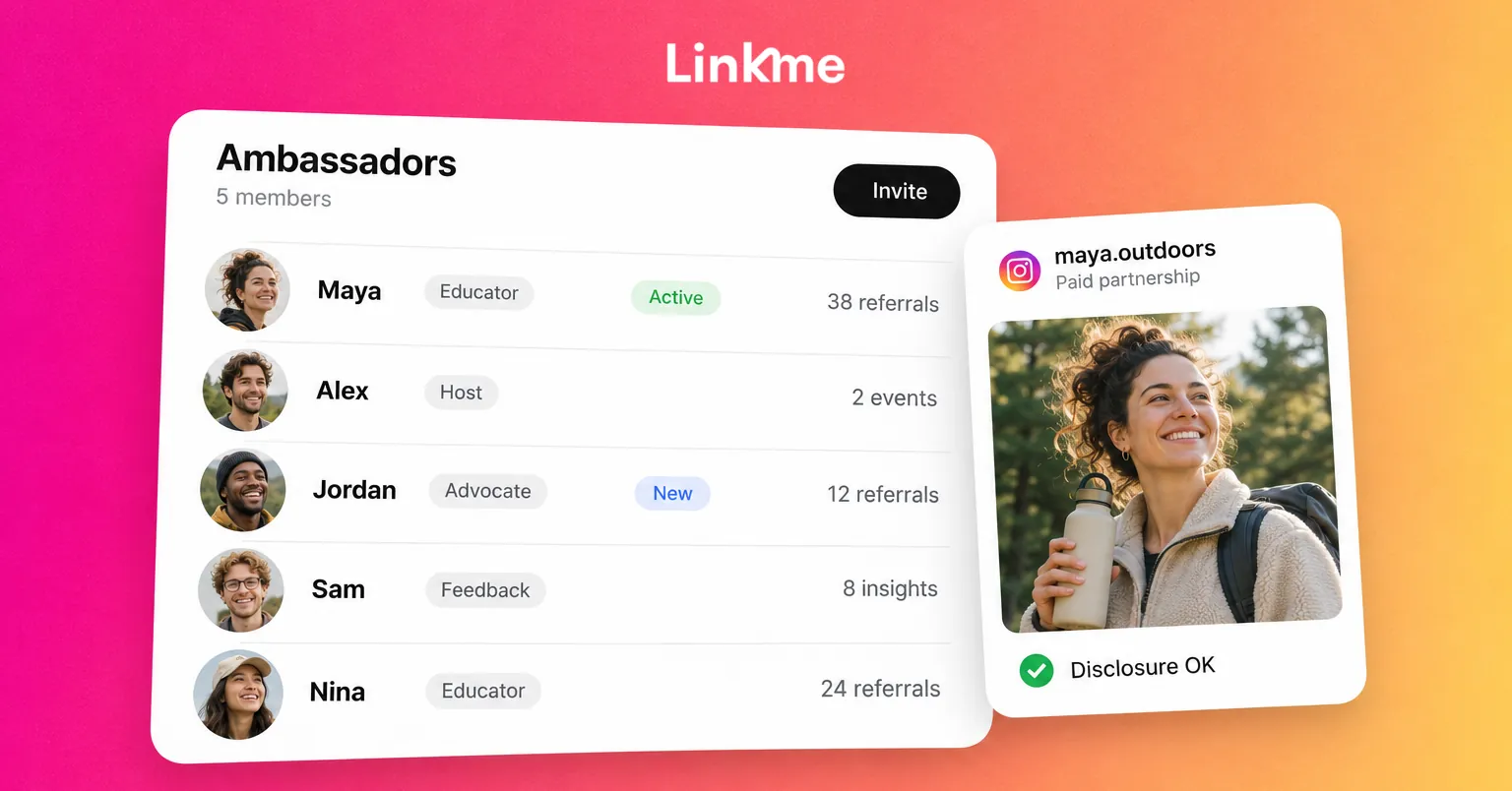
Usage rights deserve the most attention. Running a creator’s video as an ad is a separate permission from the post itself, and creators often price it separately. On Instagram, for example, a brand needs the creator’s permission to run a partnership ad from their handle, and the creator can revoke it.
Handle disclosure properly
In the US, the FTC expects creators to disclose any material connection with a brand, including free products, not just cash. Its guidance for influencers, Disclosures 101 for Social Media Influencers, sets out the basics:
- Put the disclosure in the post itself, where people will see it, not only in a bio or behind a “more” link.
- Use plain words such as “ad” or “sponsored,” or “Thanks to [brand] for the free product.”
- In videos, say it out loud and show it on screen. In live streams, repeat it.
- Platform labels such as Instagram’s paid partnership label help, but the FTC says not to rely on them alone.
Write the disclosure into the brief and check it before you approve any post. A missing disclosure is a problem for the brand as well as the creator.
Measure results creator by creator
Measurement starts before the post goes live. Give each creator something you can trace:
- A unique link that points to the page or product you want people to reach.
- A discount code per creator if you sell online or in store.
- A tagged URL with a source parameter, so your analytics can separate traffic by creator.
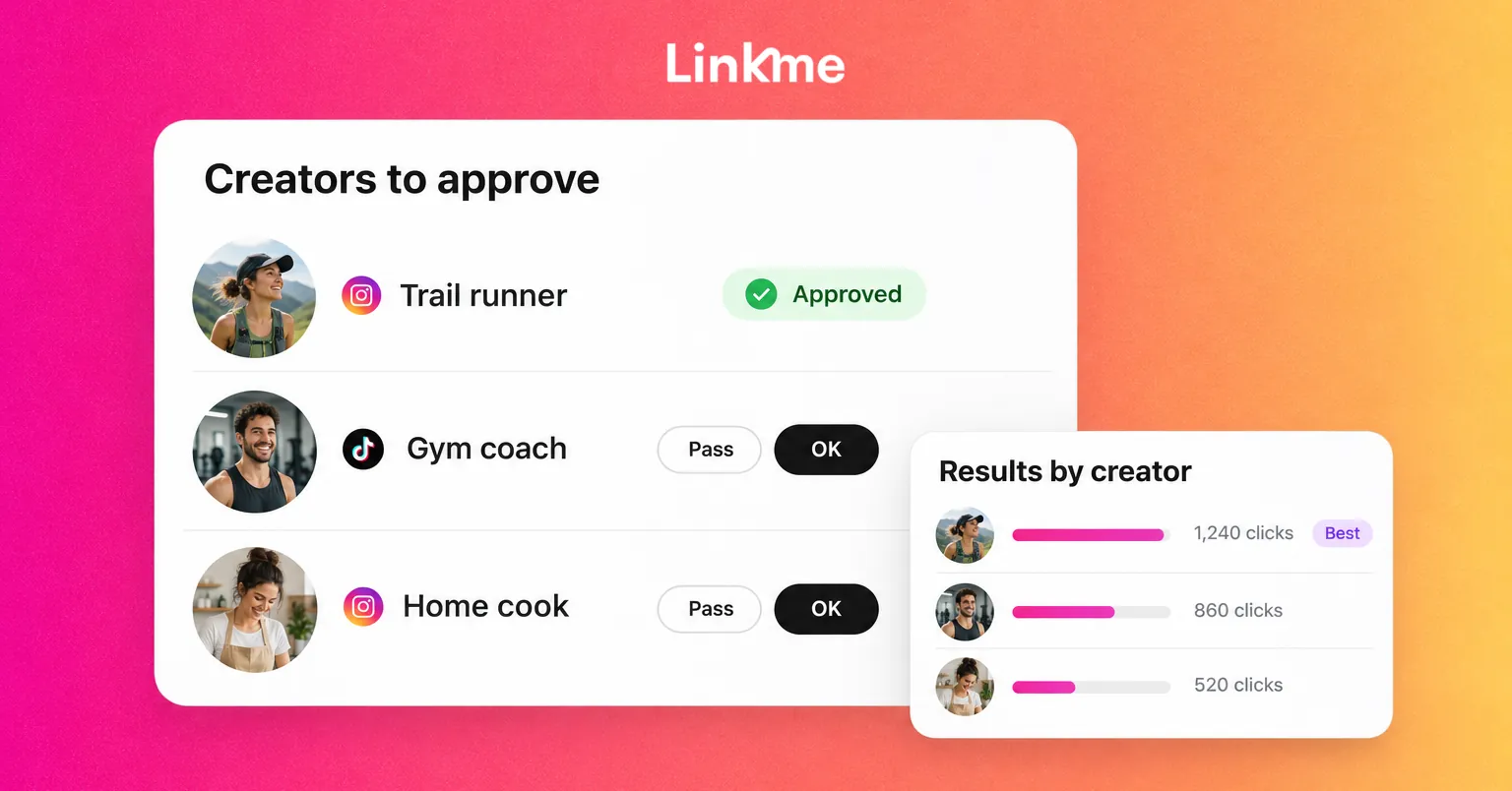
After the campaign, compare each creator against the goal you set at the start, not against vanity numbers. A creator with fewer views who drove more sign ups did the job better. Record what you paid, what you got and whether you would book them again. That record becomes your shortlist for the next campaign.
If you send people to a Linkme page, Linkme’s analytics show profile views, link clicks and the traffic sources and cities they came from, which makes it easier to see which creator’s audience turned up.
How Linkme’s creator marketplace handles the legwork
Finding creators, sending briefs and chasing replies is most of the work in influencer marketing. In the Linkme creator marketplace, you tell Link, the AI social media manager inside Linkme, who you want to reach in one line. Link looks at what the creators who run their pages on Linkme actually post and shows you who it picked and why. You can also find creators yourself by follower count, industry, niche and city, inside your Business dashboard.
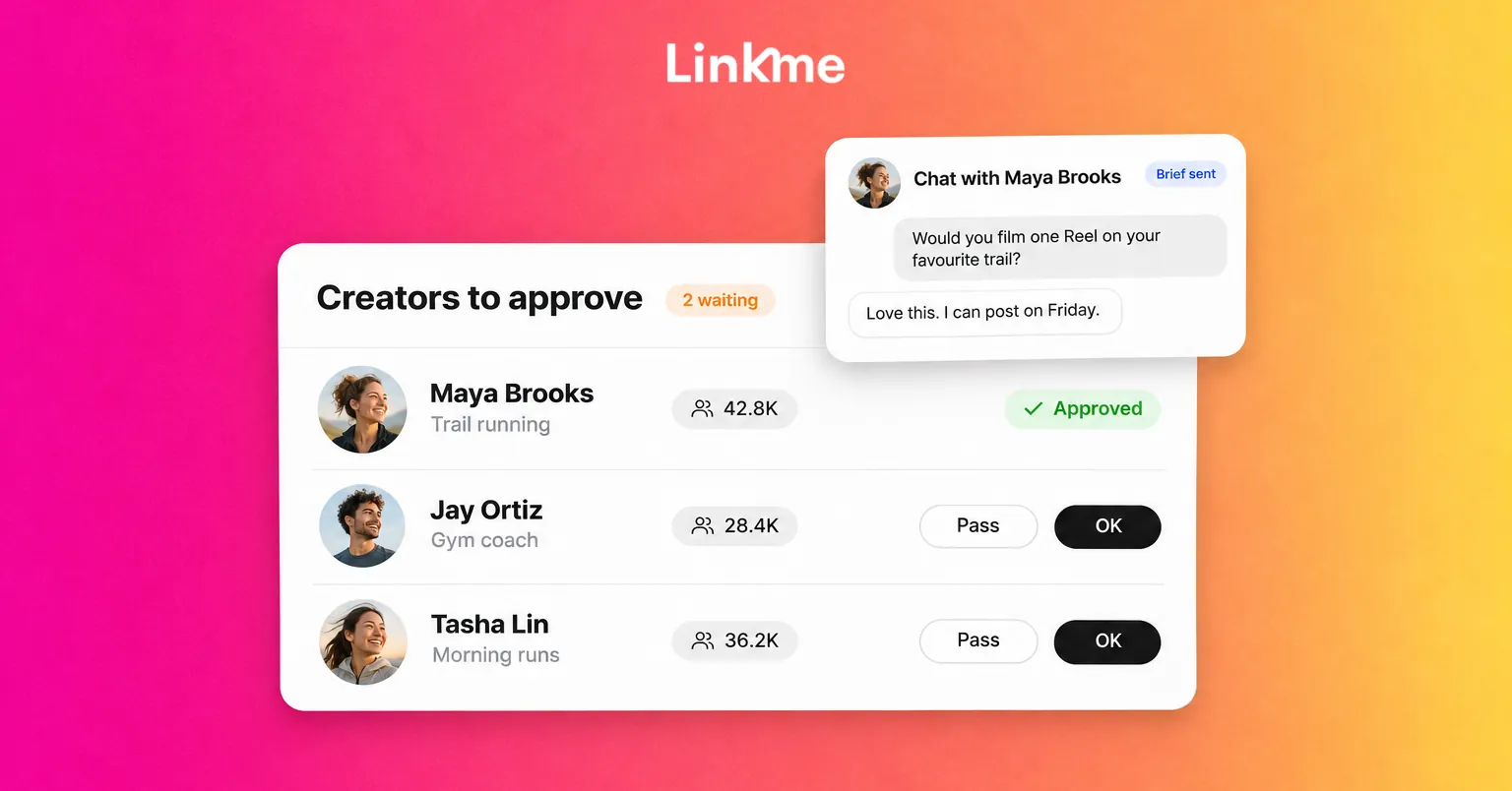
Nothing goes to a creator until you approve the shortlist and the brief. Link then messages the creators you approved, answers their questions and agrees the deal, and every chat sits in your dashboard so you can read it or take over at any point. When videos come back, Link checks each one against your brief, for example that the product is in shot, the post is marked as an ad and your link is included. You approve the videos you like and can run them as ads from the same dashboard where you manage your ad campaigns.
The steps in this guide still apply: a clear goal, a short brief, written terms and proper disclosure. The marketplace takes on the searching, messaging and checking so your team spends its time on the decisions.
Frequently asked questions
How much should a brand pay an influencer?
There is no standard rate. Pay depends on the creator’s audience, the number and type of posts, how much production is involved and whether you want usage rights for ads or exclusivity. Ask each creator for their rate for the exact deliverables in your brief, and compare quotes against the results you expect rather than follower count.
Do influencers have to disclose a free product?
Yes, in the US. The FTC treats free or discounted products as a material connection, so a post about a gifted product should be disclosed the same way as a paid one. Put the requirement in your brief and check it before approving.
Can I run an influencer’s video as an ad?
Only with permission. Agree usage rights in writing, including how long you can run the video, and set up the platform’s permission, such as an Instagram partnership ad, which the creator must approve. Expect creators to charge for ad usage separately from the organic post.
How many influencers should I start with?
Start with a small group, enough to compare creators against each other on the same brief. Once you know which audiences respond, book the creators who performed again and test a few new ones each round.