Micro-Influencer Marketing: How Brands Find, Pay and Run Small Creators
Small creators with focused audiences often beat big names on trust and fit. How brands find, pay and run micro influencers at scale.
On this page
Micro-influencer marketing means paying, gifting or partnering with creators who have smaller, focused audiences instead of a single big name. It works best when your customers gather around a specific interest, place or community, and when you would rather run ten honest videos from people that audience already trusts than one polished post that reaches millions of the wrong people. The trade-off is coordination: more creators means more briefs, more deals, more videos to check and more disclosures to get right.
This guide is written for brands. It covers when small creators make sense, how to find and pay them, and how to run a micro influencer campaign with many creators at once without losing control.
What counts as a micro influencer
There is no official definition. Agencies and platforms draw the lines differently, but the common shorthand puts nano influencers in the low thousands of followers and micro influencers in the tens of thousands. Above that sit mid-tier and macro creators, then celebrities.
The label matters less than three things you can check yourself:
- Focus. Does the creator cover one topic or community consistently, such as trail running, home baking or a local food scene?
- Audience. Do the comments come from people who look like your buyers, asking real questions?
- Format. Do they already make the kind of content you need, such as short vertical video, tutorials or honest reviews?
A creator with a modest following who answers every comment about running shoes is often more useful to a shoe brand than a lifestyle account ten times the size.
When micro-influencer marketing makes sense
Small creators are a good fit when:
- Your product has a clear niche. Specialist gear, a regional service or a product for a particular hobby benefits from creators whose whole audience shares that interest.
- You sell locally. A restaurant, gym or venue usually wants people within driving distance. Local creators reach them; national ones mostly do not.
- You need volume of creative. Short-form video ads wear out. Several creators filming the same product from different angles gives you more to test.
- You want trust over awareness. Viewers tend to treat a recommendation from a creator they follow closely like advice from a friend, as long as it is disclosed honestly.
They are a weaker fit when you need a single moment of mass awareness, such as a national launch on one day, or when your team cannot manage many relationships at once.
How to find the right creators
Start from your buyer, not from a list
Write one line describing who you want to reach: “runners aged 25 to 40 in the US,” “parents who cook on weeknights,” “basketball fans in Chicago.” Then look for creators whose content and comment sections match it.
Check fit before you reach out
Use a short checklist for every candidate:
| Check | What to look for |
|---|---|
| Recent posts | Consistent topic and quality over the last few months |
| Comments | Real questions and conversations, not only emojis |
| Past partnerships | Clearly disclosed, and not a different sponsor every day |
| Values | Nothing that would embarrass your brand or contradict your product |
| Location | Where their audience is, if you sell locally |
Ask creators for a screenshot of their audience insights before you agree a deal. Most platforms show creators where their viewers are and how old they are.
Find them by size and niche with Linkme
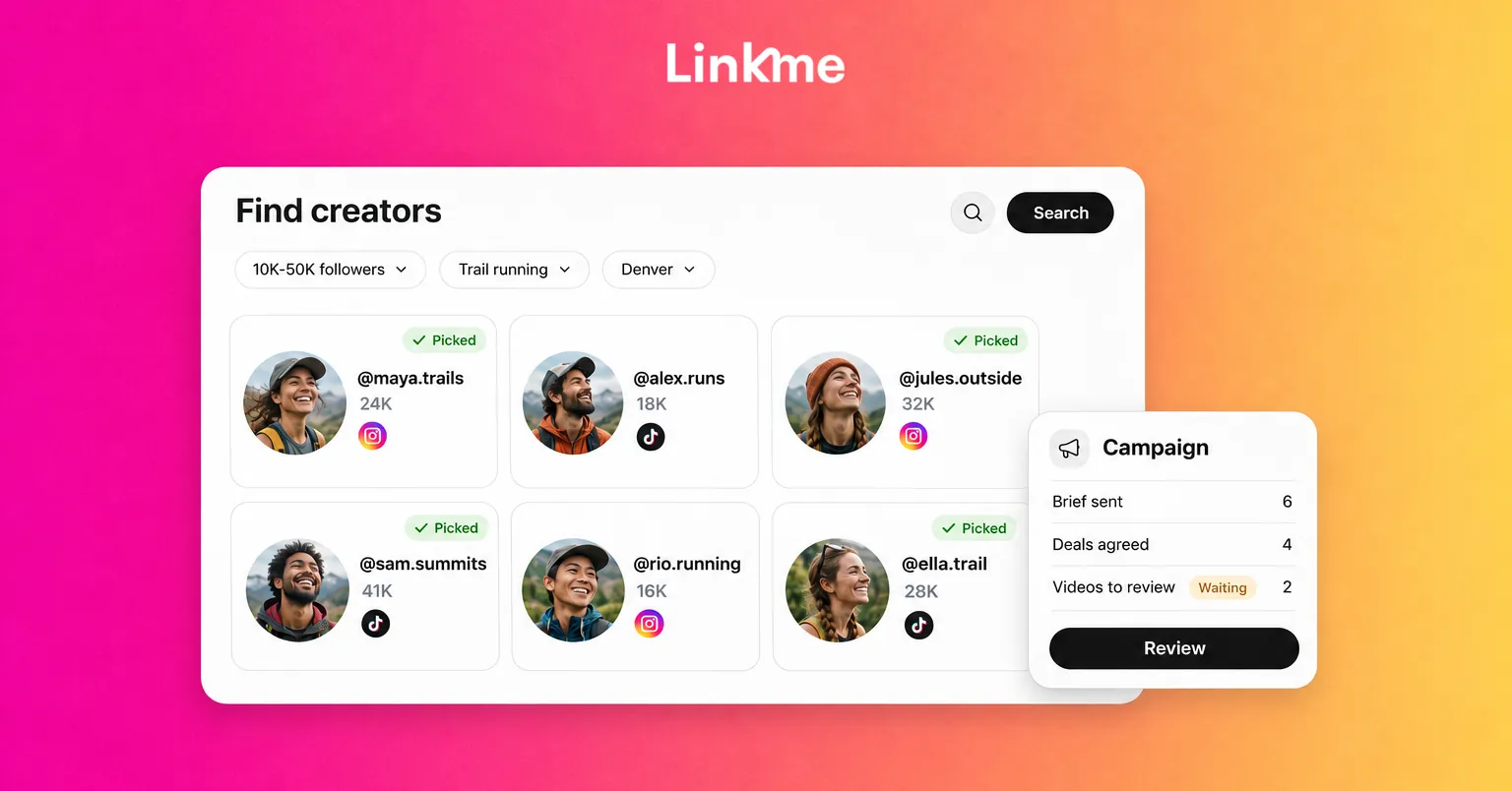
Searching creator by creator is the slow part of micro-influencer marketing. In the Linkme creator marketplace, you can search the creators who run their pages on Linkme by follower count, industry, niche and city, right inside the Business dashboard. You can also tell Link, the AI social media manager, who you want to reach in plain words. Link looks at what each creator really posts, shortlists the ones who fit and shows you why it picked each one before anyone gets a message.
How to pay micro influencers
There is no standard rate card. Prices depend on the platform, the format, the creator’s audience and what rights you want. Common structures include:
- Flat fee per deliverable. For example, one short video and three Stories. Simple to budget and easy to compare.
- Product plus fee. Useful for physical products the creator needs to show on camera.
- Product only (gifting). Works for some nano influencers, but it is still a material connection and still needs disclosure.
- Commission or affiliate code. Pays for results, but asks the creator to carry the risk. Often combined with a smaller fee.
- Usage rights. If you want to run the video as an ad, agree that separately: how long, on which platforms and whether you can edit it.
Whatever you choose, write it down: deliverables, posting date, approval steps, payment terms, usage rights and disclosure.
Running a micro influencer campaign with many creators
One brief, many creators
Write one brief that every creator receives. Keep it short:
- The product and the one thing viewers should remember.
- Who the video is for.
- Must-haves, such as the product visible in every shot, the link or code to use, and the disclosure.
- What creators are free to do in their own style.
- Deadline and where to send the draft.
Leave room for the creator’s voice. A script that sounds like an ad defeats the purpose.
Keep every conversation visible
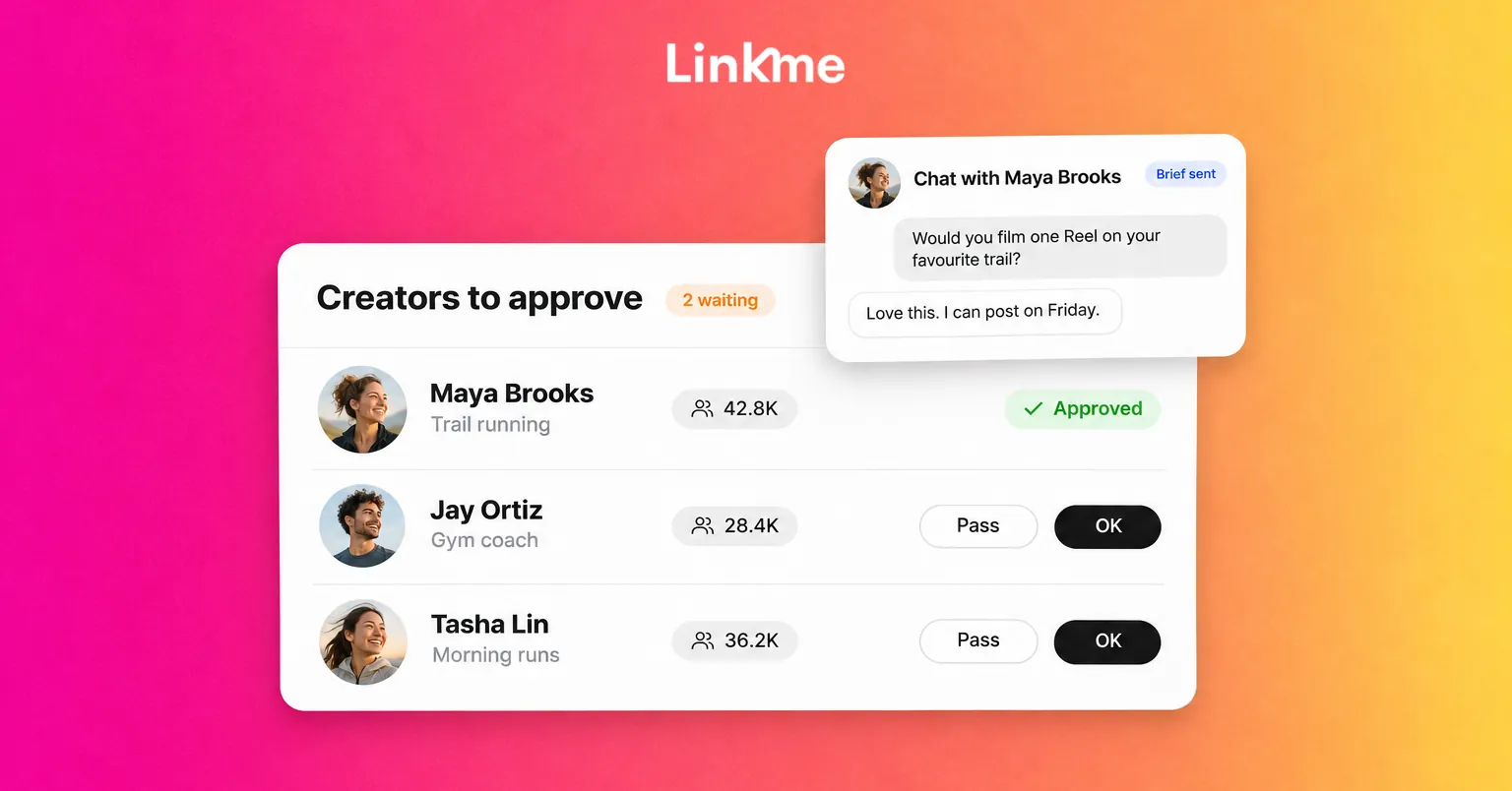
When ten creators are asking questions at once, answers drift. Keep negotiation and questions in one place your team can read. In the Linkme creator marketplace, Link sends your brief to each creator you approve, answers their questions and agrees the deal, and every chat sits in your dashboard so you can read it or take over at any time. Nothing goes out to a creator until you approve it.
Check each video against the brief
Before a video goes live, check it against the same list every time: product visible, correct link or code, disclosure present and in the video itself, and nothing that conflicts with your brand. On Linkme, Link checks each video against your brief and you approve the ones you keep.
Disclosure is part of the brief
In the US, the FTC expects creators to disclose any material connection with a brand, including free products, clearly and in the post itself. Its Disclosures 101 for Social Media Influencers guide says disclosures in video should be in the video, not only in the description, and that a platform’s built-in tool may not be enough on its own. Use the platform labels as well: TikTok asks creators to turn on its content disclosure setting for branded content, which adds a Paid partnership label.
Brands share responsibility here. Put the disclosure wording in the brief and check it before approving.
Turn the best videos into ads
The bigger return often comes when you run the strongest videos as paid ads to a wider, targeted audience, once usage rights are agreed. With Linkme, you pick the videos you like and run them as ads from the same dashboard where you manage your ad campaigns.
Measure each creator separately: views, clicks on their link or code, and sales or sign-ups you can trace. Keep working with the creators whose audiences actually buy, and drop the rest without drama.
Frequently asked questions
What is the difference between nano and micro influencers?
The difference is mostly audience size. Nano influencers have very small followings, often friends, neighbors and a close community, while micro influencers have larger but still focused audiences. Definitions vary between agencies, so judge each creator by audience fit and content quality rather than by a tier name.
How much should a brand pay a micro influencer?
There is no standard price. Rates depend on platform, format, audience, the number of deliverables and whether you want to run the content as an ad. Ask creators for their rates, compare the deliverables rather than the follower counts, and pay separately for usage rights.
Do gifted products need to be disclosed?
Yes. Under the FTC’s guidance, free or discounted products are a material connection, so the creator should disclose it clearly in the post even if they were not paid cash. Brands should include the disclosure in the brief and check it before approving the post.
How many micro influencers should a campaign use?
Enough to test different creators and angles, but no more than your team can brief, check and pay properly. A small first wave lets you see which audiences respond before you scale up with the creators who performed.
If you want to run creator campaigns without managing every message yourself, the Linkme creator marketplace finds creators by size and niche, sends your brief and brings the videos back for you to approve and run as ads. Book a demo to see it on your brand.