Remote Team Leadership for Social Media Teams: Rituals That Work
Five leadership rituals for distributed social teams: weekly planning, draft feedback that ends in a decision, scheduled reports, recognition and one-to-ones.
On this page
- Key takeaways
- Why remote social teams need rituals, not more meetings
- Ritual 1: A weekly planning session that ends with a calendar
- Ritual 2: Feedback on drafts that moves work forward
- Ritual 3: Scheduled reports instead of status meetings
- Ritual 4: Recognition that names the work
- Ritual 5: One-to-ones and boundaries
- Frequently asked questions
Remote team leadership on a social media team comes down to a few repeatable rituals: one weekly planning session, feedback on drafts that is specific and fast, reports that arrive on a schedule instead of status meetings, and recognition that names the actual work. Social teams publish in public every day, often across time zones, so the leader’s job is to make priorities, standards and results visible without asking everyone to be online at the same time.
Why remote social teams need rituals, not more meetings
In an office, a lot of leadership happens by accident. Someone overhears that a launch moved, a manager glances at a draft over a shoulder, a good post gets a comment in the kitchen. Remote teams lose all of that. What replaces it is not more video calls but a small set of habits everyone can rely on.
For social media teams this matters more than for most. Posts go out on a schedule, comments arrive at all hours, and a mistake is public within minutes. Leading remote marketing teams well means people always know three things without asking:
- What we are publishing this week and why.
- What “good” looks like for a draft.
- How last week went.
The rituals below each answer one of those questions.
| Ritual | Cadence | Who | Output |
|---|---|---|---|
| Weekly planning | Once a week, live | Whole team | Posts on the calendar with owners |
| Draft feedback | Daily, async | Approver and writer | Approved posts or named changes |
| Scheduled report | Weekly or monthly, automatic | Team lead, owners | A report plus a short written note |
| Recognition | Weekly, in public | Team lead | Specific credit for specific work |
| One-to-ones | Every two weeks | Lead and each person | Workload and growth check |
Ritual 1: A weekly planning session that ends with a calendar
Keep one live meeting a week and make it count. Schedule it at a time that overlaps for everyone, rotate it if the overlap is unfair to one region, and keep it short.
A useful agenda:
- What happened last week (five minutes, from the report, not from memory).
- What is fixed this week: launches, events, campaigns, holidays in each market.
- Open slots: which accounts still need posts, and who owns each one.
- Risks: anything that might need a fast reply, such as a price change or a known complaint.
The meeting ends when every planned post has an owner and a date on the shared calendar. Decisions made only in the call are easy to forget; decisions on the calendar are not. If you need a structure for that calendar, our guide to building a social media approval workflow covers how to separate drafts, review and publishing.
Ritual 2: Feedback on drafts that moves work forward
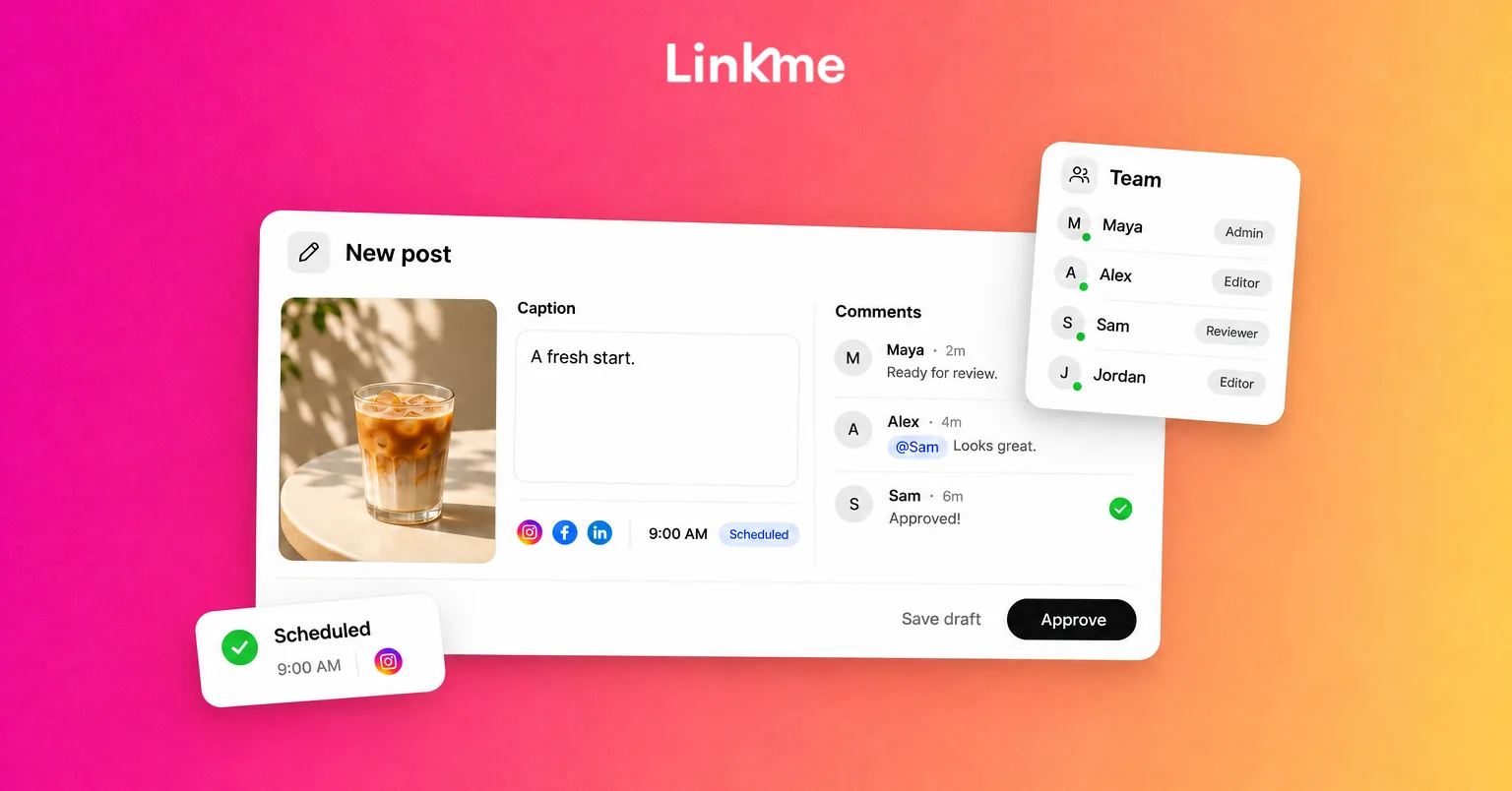
Most of a remote social team’s collaboration happens around drafts. The quality of that feedback sets the pace for everyone.
Give feedback against the brief
“I don’t love it” sends a writer back to guess. Tie each comment to what the post is for:
- Purpose: “This should drive presale sign ups; the link is buried in the third line.”
- Accuracy: “The event starts at 8, not 7.”
- Voice: “Too formal for TikTok; read it out loud.”
- Platform fit: “On X this needs to work in 280 characters.”
Separate must-fix items from suggestions so the writer knows what blocks approval.
Make every review end in a decision
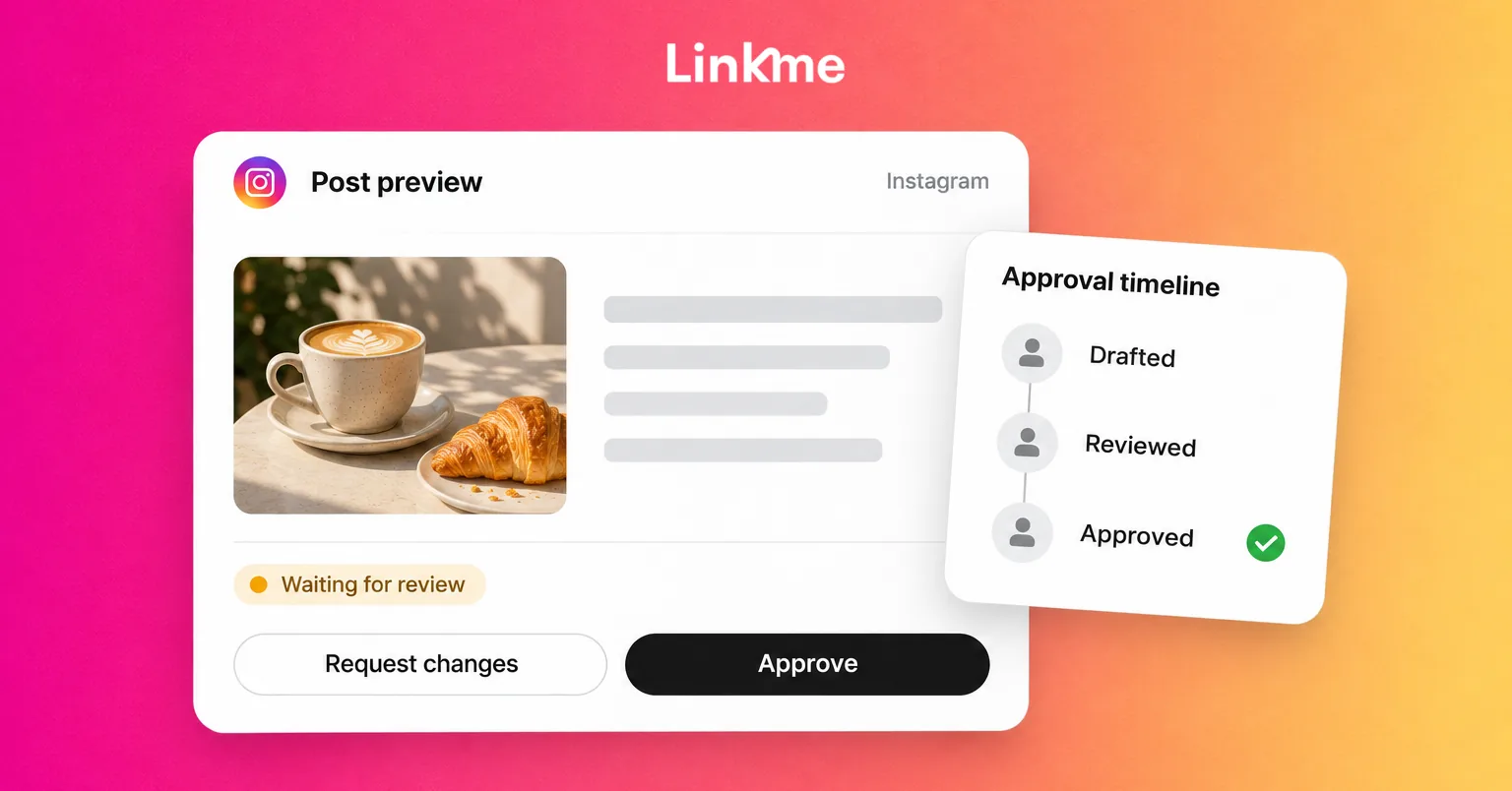
Drafts that sit in a review queue with no answer are the main bottleneck on distributed teams. Agree on a turnaround window, for example by the end of the reviewer’s next working day, and end every review with one of two outcomes: approve, or send it back with the specific change needed.
In Linkme, a manager writes the post in Plan and taps Submit for approval, and the post shows Waiting for approval. An owner or admin opens Needs attention, reviews it, and taps Approve or Request changes. A post that comes back shows Changes requested, and once it is fixed and resubmitted it shows Resubmitted for review. Approval keeps the scheduled time, and changing the caption or the time sends an approved post back for approval, so nobody publishes a version the reviewer never saw. The post approvals guide walks through the steps.
Review in batches across time zones
If the approver is hours ahead of the writers, agree that drafts for the next day are submitted before the writers log off. The approver clears the queue at the start of their day, and writers wake up to approved posts or clear changes.
Ritual 3: Scheduled reports instead of status meetings
A status meeting where each person reads out numbers is the easiest meeting to remove. Replace it with a report that arrives on its own and a few lines of interpretation from the team lead.
Pick what the report has to answer
Before choosing metrics, decide the questions. For most social teams these are: Did people visit and click? Which posts and links drove that? Did we capture leads or sales? What changes next week? Our guide to social media reporting has a template for turning those answers into a report people read.
Let the report come to you
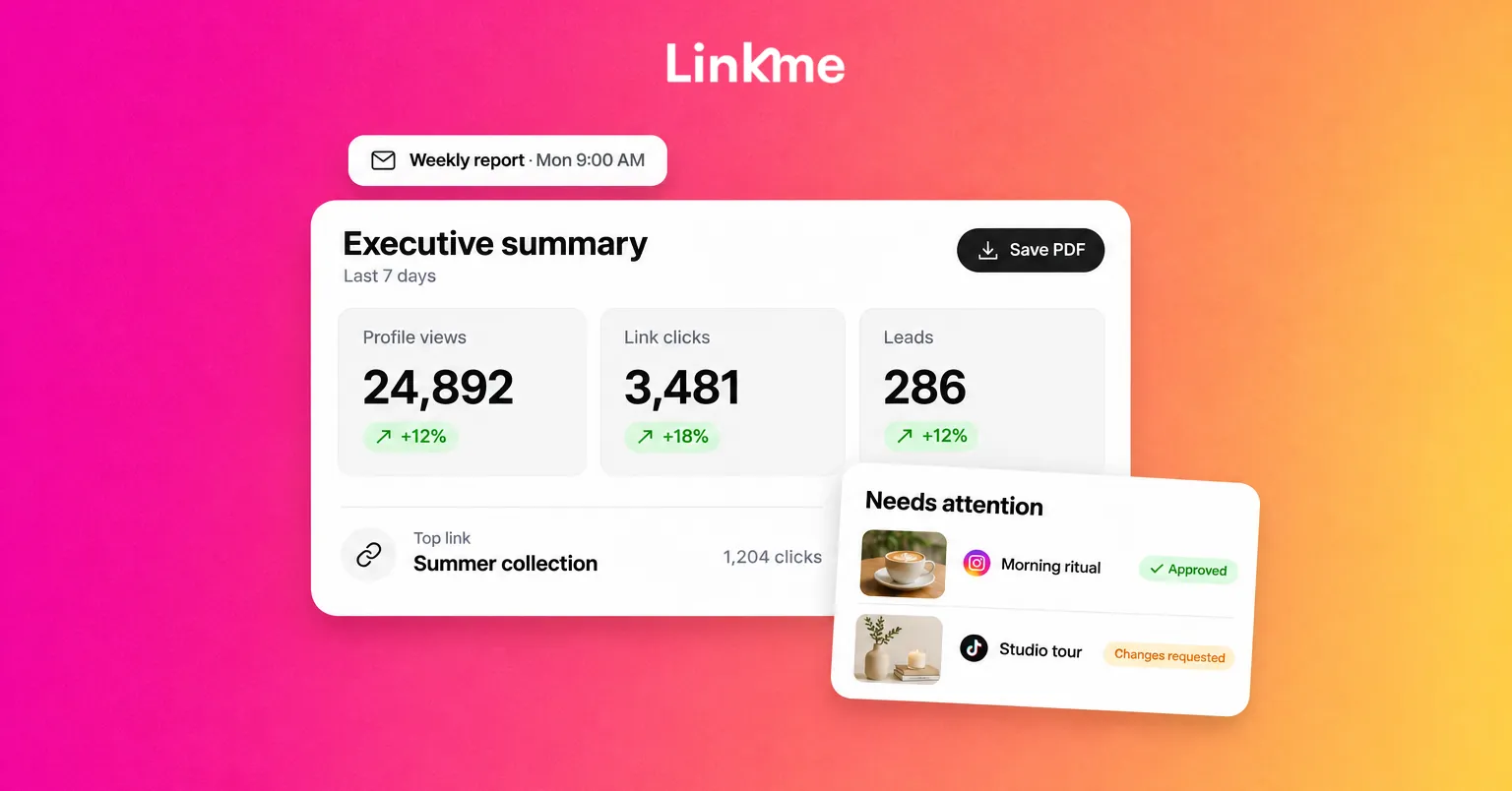
Linkme Business includes Reports: an Executive summary where each figure shows the previous period and the change, a By page view that compares pages side by side, and CSV export. Owners can get weekly or monthly emails on a schedule, and reports save as a PDF. Reports by page come with the AI Power Maxed and Enterprise packages.
Add a short note, every time
Numbers without context invite the wrong conclusions. Each week, the lead posts three to five lines in the team channel:
- What went well and why we think so.
- What underperformed and what we will try.
- One decision for the coming week.
That note replaces the status meeting, and it becomes a running record of what the team learned.
Ritual 4: Recognition that names the work
Remote teams miss the small, informal thanks that happen in person. Recognition has to be deliberate.
- Be specific. “The Thursday reel’s hook got people to the presale link; Top link this week was yours” beats “great job everyone.”
- Credit the invisible work. Community managers answering comments at night, or the person who caught a wrong date in review, rarely show up in a report.
- Do it in public, and soon. A note in the team channel the same week matters more than a mention in a quarterly review.
Reports help here. When a link, page or campaign leads the period, say who made it.
Ritual 5: One-to-ones and boundaries
Social media never closes, which makes burnout a real risk for remote teams. Use a short one-to-one every two weeks to check workload, what is blocking each person and what they want to learn next.
Agree on coverage outside working hours. Decide who watches comments and messages on weekends, rotate it, and write down what counts as urgent. A shared inbox helps: Linkme’s Social Inbox brings Instagram and Facebook comments and DMs into one place with internal notes, saved replies and Resolve, so whoever is covering can see what has already been handled. Conversations cannot be assigned to a specific teammate, so agree in the team channel who is covering which account.
Frequently asked questions
What makes remote team leadership different on a social media team?
Social teams publish in public on a fixed schedule and receive comments around the clock. That puts more weight on clear review rules, fast feedback and agreed coverage hours than on most remote teams, and less on long synchronous meetings.
How many meetings should a remote social media team have?
Usually one live planning session a week plus short one-to-ones. Status updates, approvals and results can run asynchronously through the calendar, the approval queue and scheduled reports.
How do you give feedback on social posts remotely?
Tie each comment to the post’s purpose, accuracy, voice or platform fit, separate must-fix items from suggestions, and end the review with a decision: approve, or send it back with the specific change needed.
Can scheduled reports replace status meetings?
Yes, if someone adds interpretation. A scheduled report shows what happened; a few written lines from the team lead explain why and what changes next. Together they cover what most status meetings try to do.
Leading a remote social team is mostly about making the work visible: the plan on a shared calendar, drafts in one review queue and results in a report that arrives on time. See how Linkme Reports fits that rhythm, or book a demo to walk through it with your team.