Navigating Social Media Changes: How to Protect Your Reach and Audience
Algorithm shifts, retired features and account bans happen without warning. Spread across networks, own your audience, and keep a checklist for the first days after a change.
On this page
Social platforms change without asking. Reach drops after a ranking update, a format you built your calendar around gets retired, a policy shift limits links, or an account is restricted for days while an appeal sits in a queue. Navigating social media changes well comes down to two things: not depending on any single network, and owning a direct line to your audience that no platform can switch off.
This guide covers how brands and creators reduce platform risk before a shock, and a checklist for the first days after one.
The kinds of change that hit brands and creators
Not every shift is equally serious. Sorting them helps you respond in proportion.
| Type of change | What it looks like | Typical impact |
|---|---|---|
| Algorithm changes | A network reweights what it shows, such as favoring video, original content or posts from accounts people already follow | Reach and engagement move up or down, often unevenly across formats |
| Feature retirements | A format, tool or placement is removed or replaced | Workflows and content plans built around it stop working |
| Policy changes | New rules on links, promotions, branded content or certain topics | Posts get less distribution, are labeled or are removed |
| Account restrictions | A temporary block, lost access, a hacked account or a suspension | You cannot post or reply, sometimes for an unknown period |
| Platform-level risk | A network loses popularity, changes ownership or faces regulatory limits in a country | Your audience there may shrink or become harder to reach |
Algorithm changes are the most frequent and usually the least dangerous. Platform ban risk and account restrictions are rarer but can cut you off completely, which is why the preparation below matters.
Before the shock: reduce your dependence
Diversify social channels on purpose
Diversifying does not mean being everywhere at full effort. It means having a real presence on more than one network, so a drop on one does not take your whole audience with it.
- Pick a main network and at least one or two secondary ones where your audience is active.
- Adapt rather than copy. Reuse the idea and the media, but adjust captions, length and format for each network.
- Keep secondary accounts alive. Post regularly enough that the audience there knows you are active, even if the main effort goes elsewhere.
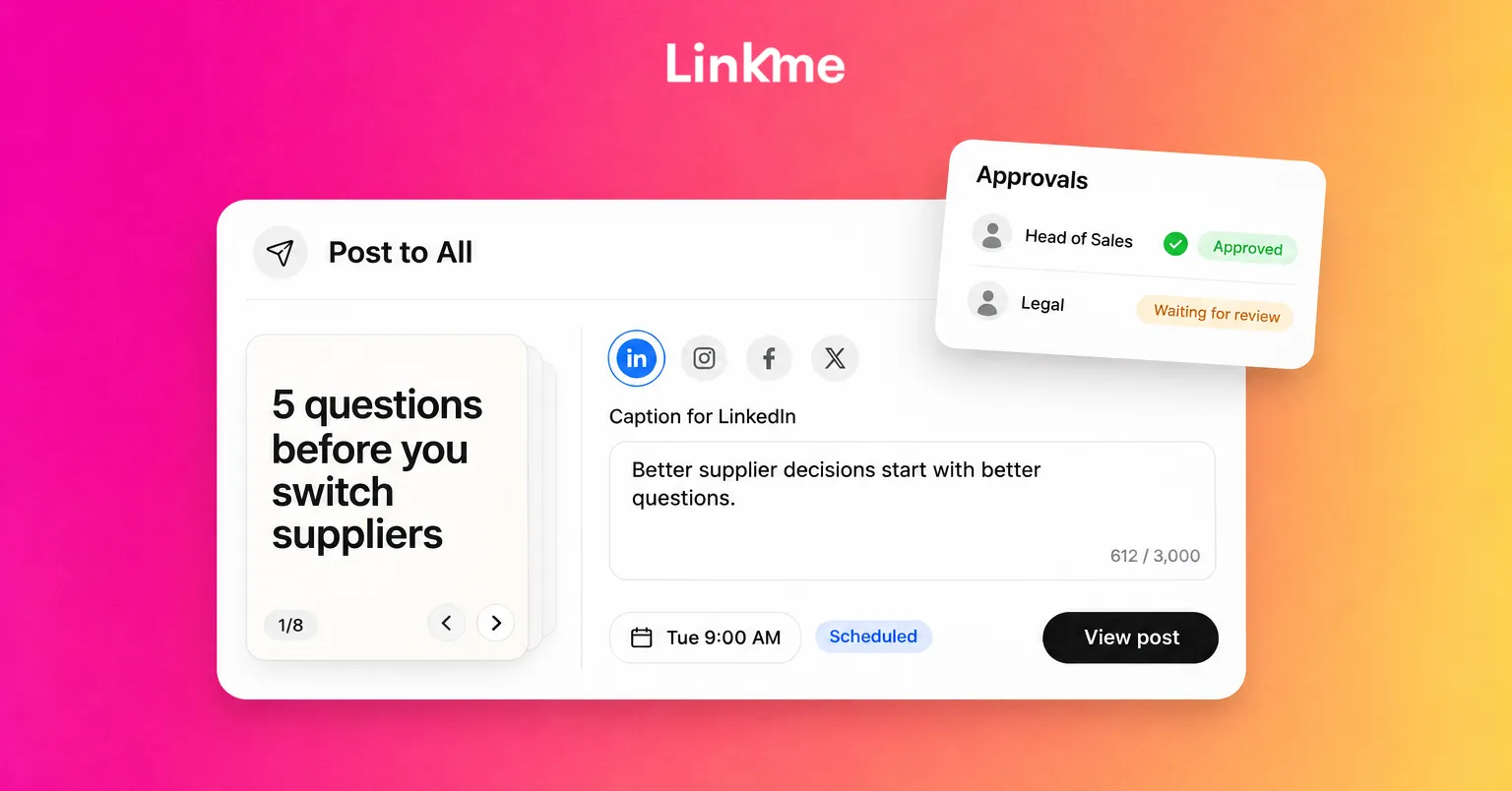
A publishing tool makes this realistic for small teams. With Linkme’s Post to All, one post goes to Instagram, TikTok, YouTube, Facebook, X, Threads and LinkedIn, with one caption for all or one per network, now or on a schedule. Linkme Business adds Pinterest, Reddit, Bluesky, Telegram, Discord and Google Business Profile. The cross-posting guide explains how to adapt one post for several networks without it reading like a copy.
Own your audience
Followers live inside a platform’s rules. An email address or phone number someone gives you directly does not. Two assets do most of the work:
- A page you control. Put one link in every bio and send people to a page that lists your channels, offers and contact options. If one network goes quiet, the page still points people to the others.
- An email list. Ask for an email on that page, with a clear reason to join, such as early access, event updates or a monthly roundup.
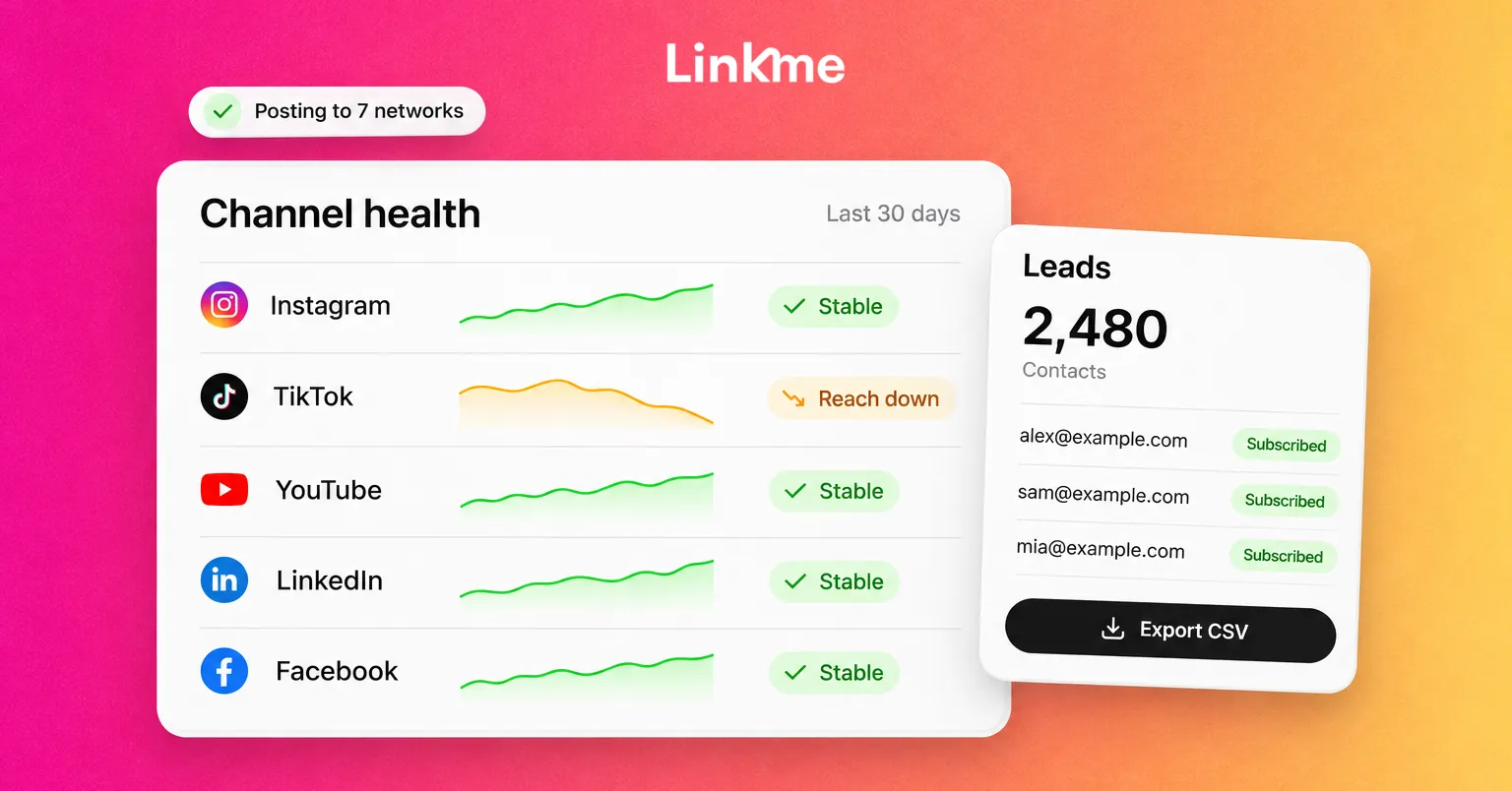
On Linkme, the “Connect with” email field and simple forms on your page add people to Leads with the source of each contact, and you can export a CSV at any time. Lead capture and email campaigns then let you email the list from the same place. Because you can export it, the list stays yours whichever tools you use later.
Secure access and keep backups
- Turn on two-factor authentication for every social account and for the tools connected to them.
- Record who owns each login, the recovery email and phone number, and keep that record somewhere the team can reach.
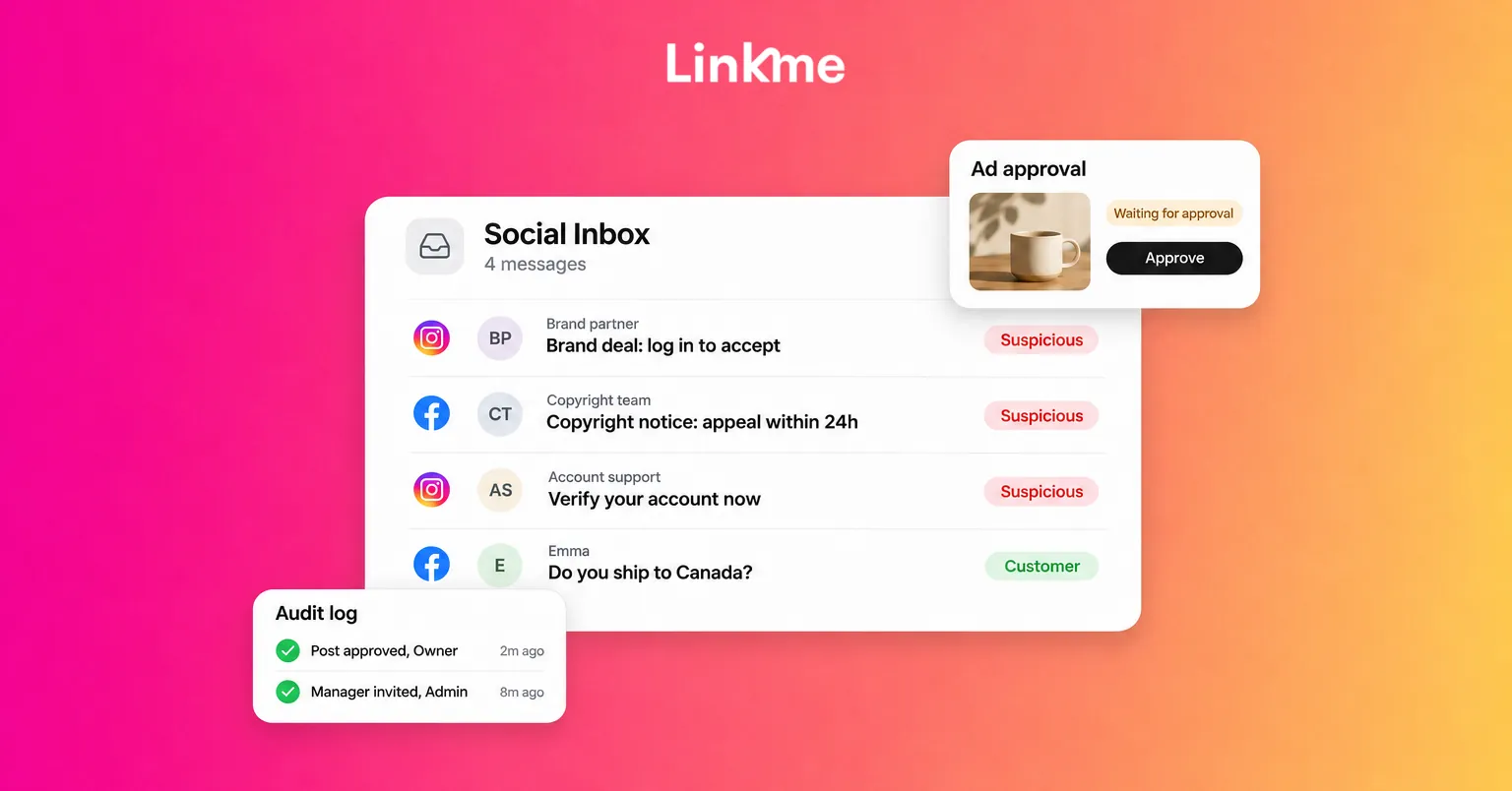
- Give teammates their own access through a tool or the platform’s business settings rather than sharing passwords, so one departure cannot lock you out.
- Download your data periodically. Most major networks offer a way to download a copy of your account information in their settings. Keep original media files and captions in your own storage, not only on the platform.
After the shock: a response checklist
When something changes, the first instinct is often to react on every channel at once. Work through a short checklist instead.
First 24 hours
- [ ] Confirm what actually changed. Check the platform’s official announcements or help center rather than relying on rumors.
- [ ] Check whether it affects you. Compare reach, link clicks and account status with the same period last week.
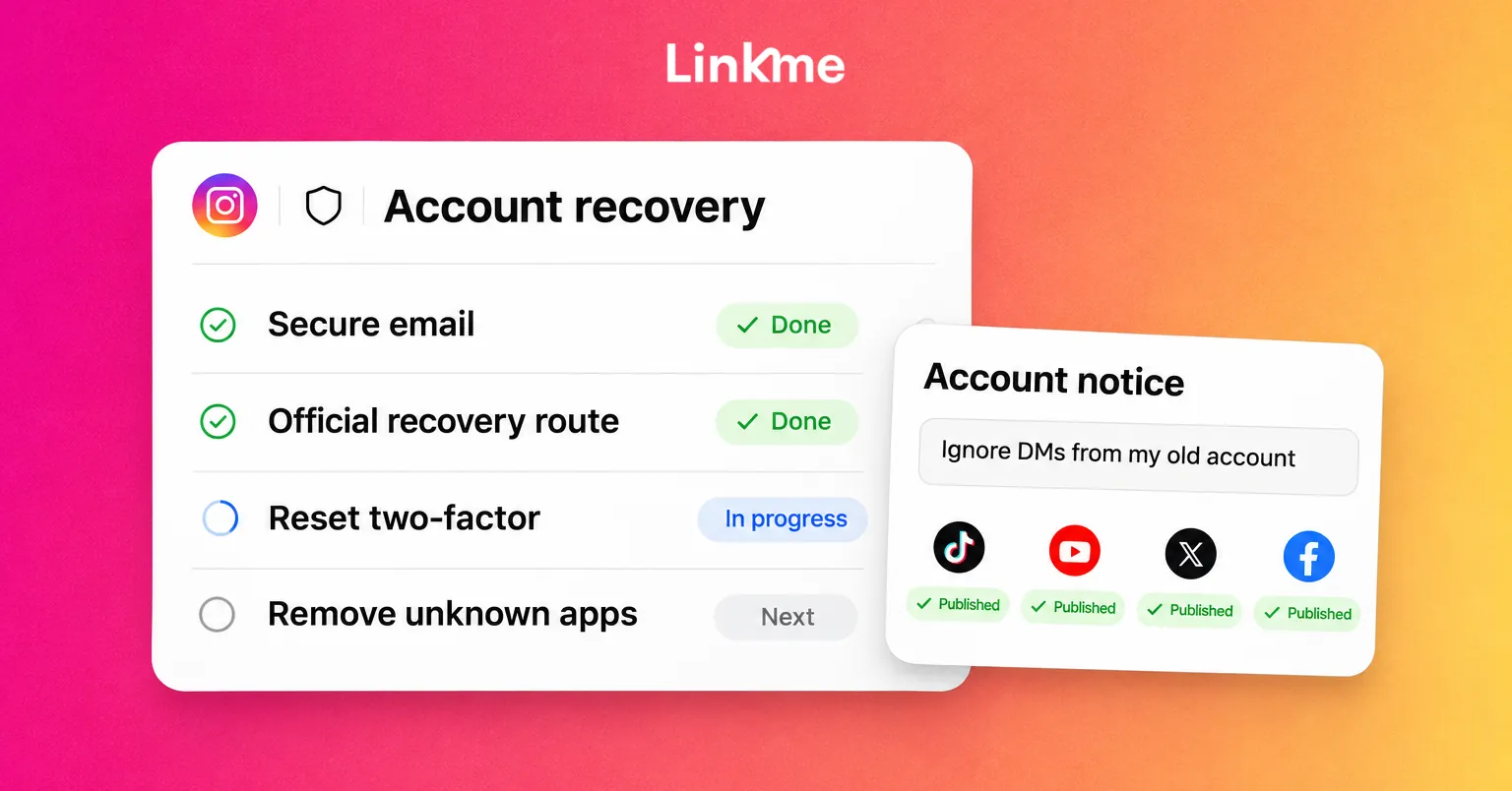
- [ ] If an account is restricted, follow the platform’s official appeal or recovery process, and beware of messages offering to “restore” accounts for a fee.
- [ ] Tell your audience on your other channels and your email list where to find you, if you have lost a channel.
- [ ] Pause scheduled posts that no longer make sense, such as a format that was removed or a promotion that now breaks a rule.
First two weeks
- [ ] Watch the numbers on more than one day. Early swings after an algorithm change often settle.
- [ ] Test one adjustment at a time, such as a shorter video length or a different call to action, and keep notes.
- [ ] Shift some effort to channels that are holding up, without abandoning the affected one too early.
- [ ] Update your team on what changed and what you are doing about it.
First quarter
- [ ] Decide whether the change is permanent for you. Some shifts reverse; others become the new normal.
- [ ] Rebalance your channel mix based on results, not on headlines.
- [ ] Add what you learned to your written playbook.
Measure what you own as well as what you rent
Platform analytics tell you what happened inside one network. They will not show you whether your audience followed you elsewhere. Track a few numbers you control alongside them:
- Visits and link clicks on your page, and where visitors came from.
- New email or phone contacts, and which source brought them in.
- Email results, such as opens and clicks on campaigns.
If reach on one network drops but visits to your page and sign-ups hold steady, the change is an inconvenience. If both fall together, it needs a bigger response. Linkme’s analytics show profile views, link clicks, traffic sources and places for your page over any date range, against the period before.
Write it down before you need it
Keep a one-page playbook for platform changes. It should list your channels, login owners, recovery details, where your backups and email list live, who decides to pause or reschedule posts, and the message you will send your audience if you lose a channel. Review it twice a year.
The platforms will keep changing. The goal is to make each change a matter of adjusting, not starting over.
Frequently asked questions
How do you handle algorithm changes on social media?
Confirm the change from official sources, compare your results with the same period before, and test one adjustment at a time over a couple of weeks. Avoid rebuilding your whole strategy after a few days of data, and keep posting on your other channels while you test.
How can I protect my business from a platform ban?
Follow each platform’s rules, secure every account with two-factor authentication, and keep your own records of login owners and recovery details. Most important, build an audience you can reach without that platform: a page in your bio and an email list you can export.
What does “own your audience” mean?
It means having a direct way to contact people that does not depend on a social network’s ranking or rules, usually an email list or phone list collected with permission. Followers can disappear with an account; a contact list you can export stays with you.
How many social networks should a small business be on?
Enough that losing one does not cut you off, but no more than you can keep active. For many businesses that means one main network plus one or two secondary ones, with a single page linking them all.
Platform changes are easier to absorb when your reach is spread out and your audience can find you directly. Explore all Linkme features to see how publishing, your page, lead capture and email fit together under one login.