Imposter Syndrome as a Creator: How to Keep Showing Up
Self-doubt before you post is common. Small regular reps, a first draft from Link instead of a blank page, and feedback from your numbers help you keep showing up.
On this page
- Key takeaways
- What imposter syndrome looks like for creators
- Reframe what you are allowed to post about
- Build confidence with small, regular reps
- Use Link as a drafting partner, so you never start from a blank page
- Let real feedback replace the voice in your head
- When doubt is a signal to pause
- Frequently asked questions
Imposter syndrome as a creator usually sounds like “who am I to post about this?” right before you hit publish, or after a post does well and you decide it was luck. It does not go away by waiting until you feel ready. What helps is a routine that makes showing up small and regular, a way to start without a blank page, and real feedback from your numbers instead of the story in your head. This guide covers all three.
What imposter syndrome looks like for creators
Psychologists Pauline Clance and Suzanne Imes first described the “impostor phenomenon” in 1978: capable people who discount their achievements and fear being found out. It is not a clinical diagnosis, and many researchers prefer “phenomenon” to “syndrome” for that reason. It describes a pattern of thinking, and patterns can be changed.
For creators it tends to show up in specific ways:
- “Everyone already said this.” You see the same topic covered by larger accounts and decide your version adds nothing.
- “I’m not an expert yet.” You wait for a credential, a follower count or a level of skill that keeps moving.
- “That post only worked by accident.” A good result gets explained away; a weak one feels like proof.
- “People will notice I’m faking it.” Every comment feels like a potential exposure.
- Over-preparing. Re-recording a video ten times, rewriting a caption until it says nothing.
The fear of posting online is usually not about the post itself. It is about what the post might reveal about you. Naming that helps you treat it as a feeling to work around, not a fact to obey.
Reframe what you are allowed to post about
You do not need to be the world’s leading expert. You need to be useful to someone a step or two behind you. Three honest positions any creator can post from:
- The documenter: “Here’s what I’m learning as I go.” No claim of mastery, just a record.
- The practitioner: “Here’s what I did this week and what happened.” Your results are yours, whatever their size.
- The curator with a view: “Here are three things I tried, and the one I’d recommend.” Your judgment is the value.
Pick the position that is true for you and say so in the post. Honesty about where you are removes the thing you were afraid of being exposed for.
Build confidence with small, regular reps
Confidence comes after action, not before it. The goal is to make each rep small enough that you do it even on a day when doubt is loud.
Set a minimum post
Define the smallest post that still counts: a 20-second clip, three photos with a short caption, a single tip. On a good day you do more. On a hard day you do the minimum and it still counts toward your streak.
Batch and schedule
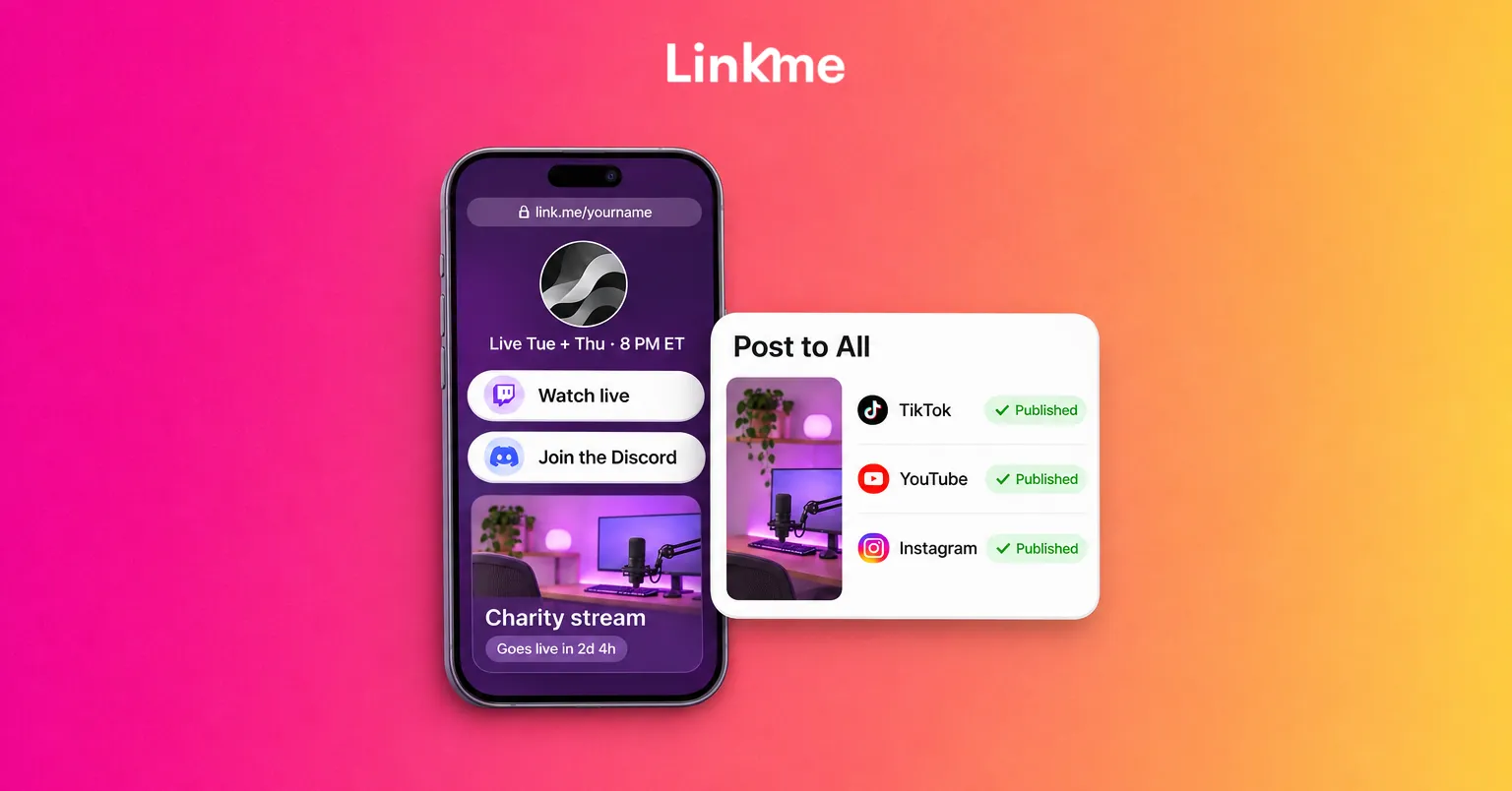
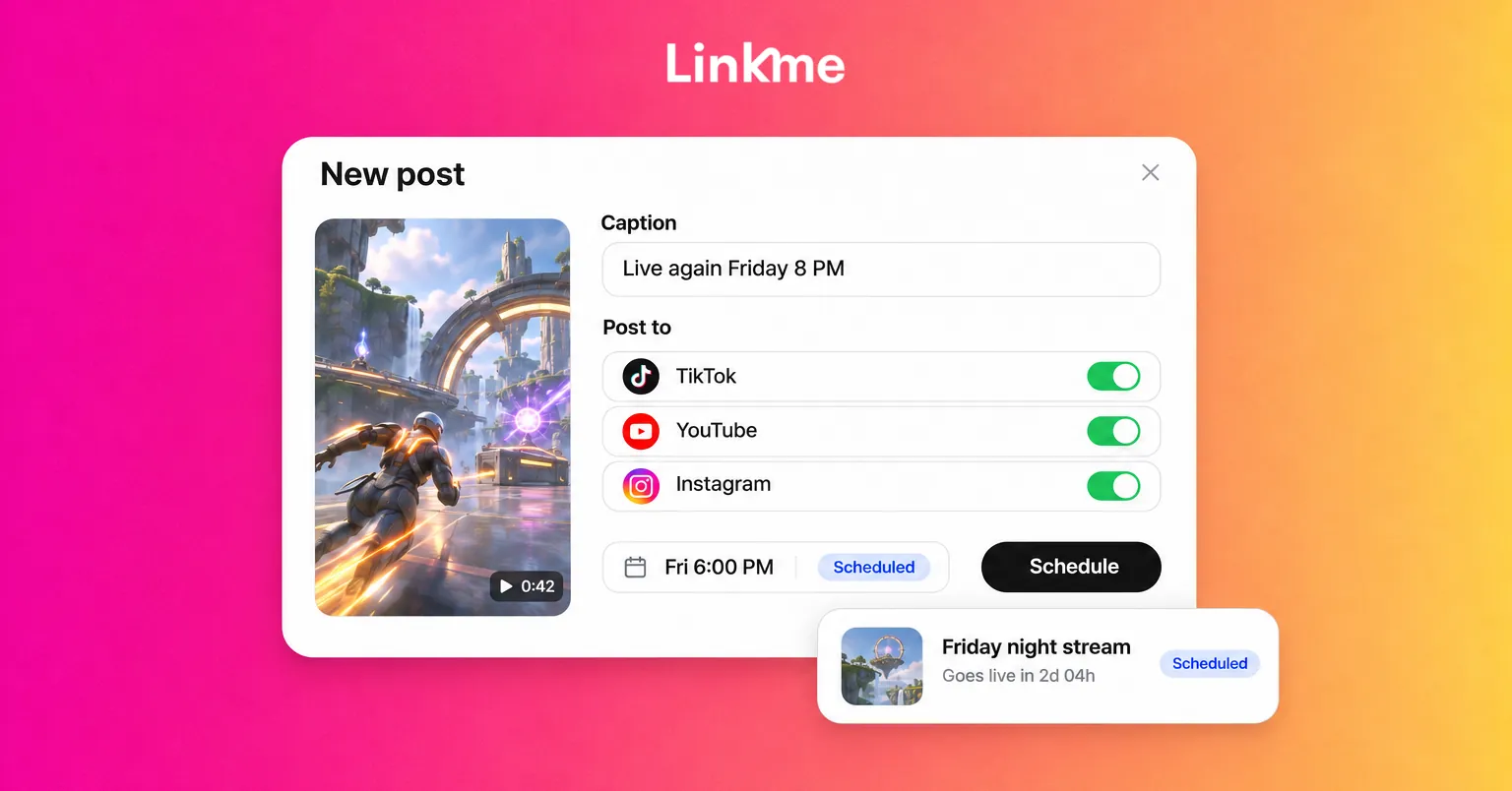
Recording three short videos in one session means the decision to post is made once, not every day. Scheduling them takes the “should I really post this?” moment out of the evening. With Post to All, one upload and one caption can go to Instagram, TikTok, YouTube and your other connected networks at a time you pick.
Show up on camera in stages
If being on camera is the hard part, build up to it:
- Voiceover over your hands, your screen or your product.
- Your face for the first three seconds only.
- A full talking video, unedited, as a story or a trial post.
- A planned talking video for your main feed.
Move to the next stage when the current one starts to feel ordinary.
Use Link as a drafting partner, so you never start from a blank page
Much of imposter syndrome lives at the blank page. When you start from nothing, every sentence is a judgment on whether you are good enough. When you start from a rough draft, you are just editing, which is a much calmer job.
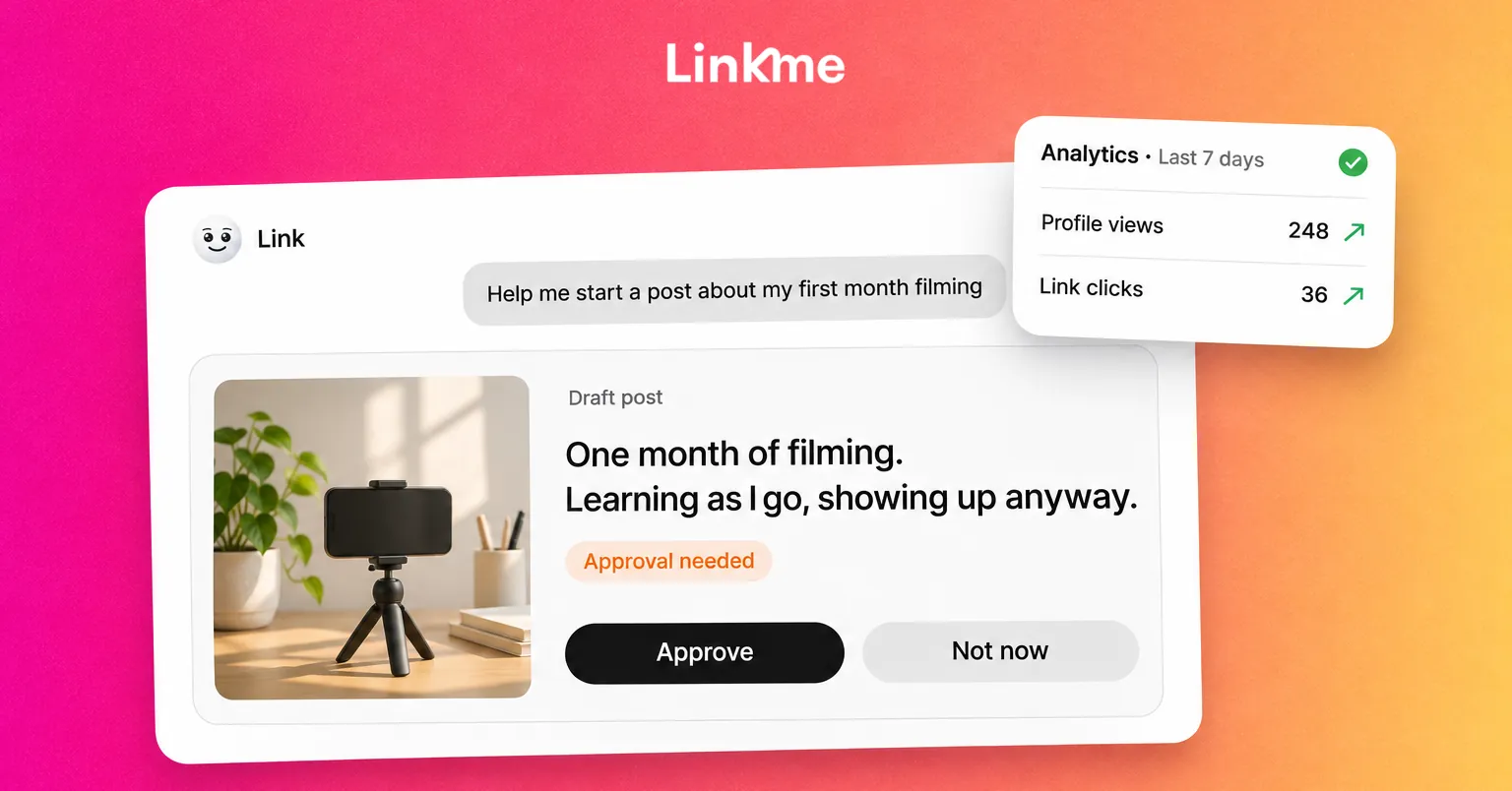
Link, Linkme’s AI social media manager, drafts posts and makes images, videos and voiceovers when you ask in plain words. Nothing goes live until you approve it, so the draft is a starting point you control, not a voice speaking for you. A useful way to work with it:
- Tell Link what you want to say in a rough sentence or two, the way you would explain it to a friend.
- Ask for two or three versions of the opening line.
- Rewrite the draft in your own words. Keep the structure, replace anything that does not sound like you.
- Approve it, or say “not now” and come back tomorrow.
The point is not to let AI be the creator. It is to get past the moment where doubt stops you from starting. For prompts you can adapt, see these AI prompts for social media.
Let real feedback replace the voice in your head
Imposter syndrome feeds on guesses: “nobody cares,” “people will think it’s cringe.” Data is a calmer judge.
What to check each week
- Which posts reached new people and which ones your existing audience saved or shared.
- Which links on your page people actually tapped. Linkme’s page analytics show profile views, link clicks and the countries and cities visits come from, so you can see that real people are acting on what you make.
- Comments and messages worth keeping. Screenshot the kind ones into an “evidence” folder. Read it before you post something that scares you.
Read numbers as information, not a verdict
A post that underperforms tells you something about the hook, the format or the timing. It does not say anything about whether you belong. Change one thing next week and compare. Over a month, the trend matters more than any single post.
When doubt is a signal to pause
Some self-doubt is useful: it pushes you to check facts and improve. But if anxiety about posting is affecting your sleep, eating, relationships or work, or if you dread every notification, step back and talk to a doctor or a licensed mental health professional. Scheduling a few posts ahead lets you take that time without disappearing.
Frequently asked questions
Is imposter syndrome common among content creators?
Yes. Many creators, including large and established ones, describe feeling like a fraud, especially when they grow quickly or move into a new topic. Feeling it does not mean you are unqualified; it often appears precisely when you are doing something new.
How do I post online when I’m afraid of judgment?
Start smaller than feels necessary: a short post, a voiceover instead of your face, or a scheduled post so you are not watching it go live. Keep a minimum posting habit, and review real results weekly rather than imagining reactions.
Does using AI make me less of a real creator?
Not if your ideas, experience and voice lead. Using an AI draft to get past a blank page is similar to working with an editor. Rewrite the draft in your own words and approve only what you would say yourself.
How long does it take to feel confident on camera?
It varies, but confidence usually follows repetition. Many people find that after a few weeks of short, regular videos, the camera feels ordinary. Staging the process, from voiceover to full talking videos, makes each step manageable.
Confidence is built one post at a time. Linkme helps you keep the reps small and regular, with Link to draft the first version, Post to All to send it everywhere and analytics to show what landed. Start with Link.