Networking for Musicians: Build an EPK, Pitch Promoters and Get Booked
Bookers, promoters and collaborators give you a few minutes at most. Build an electronic press kit at one link, pitch with specifics and make it easy to reach you.
On this page
- Key takeaways
- Who you are networking with, and what each one needs
- Build an electronic press kit that lives at one link
- How to contact music promoters and venues
- Make it easy for people to reach you back
- Musician collaborations: finding and approaching people
- Use your numbers when you pitch
- Frequently asked questions
Networking for musicians comes down to making it easy for the right person to say yes. A venue booker, promoter or potential collaborator gives you a few minutes at most, so they need to hear your music, see you live, check your draw and reach you without digging. The practical setup is one link that works as an electronic press kit, a short and specific pitch, and a reliable way to answer people who get in touch.
Who you are networking with, and what each one needs
Music industry networking covers very different people. Treat them differently.
| Contact | What they want to know | What to send |
|---|---|---|
| Venue talent buyer | Will you bring people, and do you fit the room? | Local draw, recent shows, a live video, available dates |
| Promoter | Can you help sell a bill? | Audience in that city, past bills, how you promote shows |
| Other artists and producers | Do you sound right, and are you easy to work with? | Two or three tracks, credits, what you want to make together |
| Press, blogs and curators | Is there a story? | A new release, a short bio, press photos |
| Brand partners | Does your audience match theirs? | Audience location, past partnerships, contact details |
Notice that every column ends with the same requirement: the material has to be easy to find and current.
Build an electronic press kit that lives at one link
An electronic press kit (EPK) used to be a PDF attached to an email. PDFs go stale the day you play a new show. A page at one link stays up to date, and you can paste the same link into an email, a DM, a booking form or your bio.
What to put in it
- A short bio. Two or three sentences: genre in plain words, where you are based, one credible highlight.
- One featured track. The song you want a booker to hear first, not a link to every platform.
- A live video. Bookers want to see how you hold a room. Phone footage of a real crowd beats a polished studio clip.
- Upcoming dates and recent shows. Proof you are active and where you play.
- Photos. A few press shots in landscape and portrait, ready to use on a poster.
- Press quotes or notable support slots, if you have them. Leave this out rather than padding it.
- Technical rider and stage plot as a link, for the venue’s production team.
- Contact details for booking, with a named person if you have an agent or manager.
How a Linkme page holds it
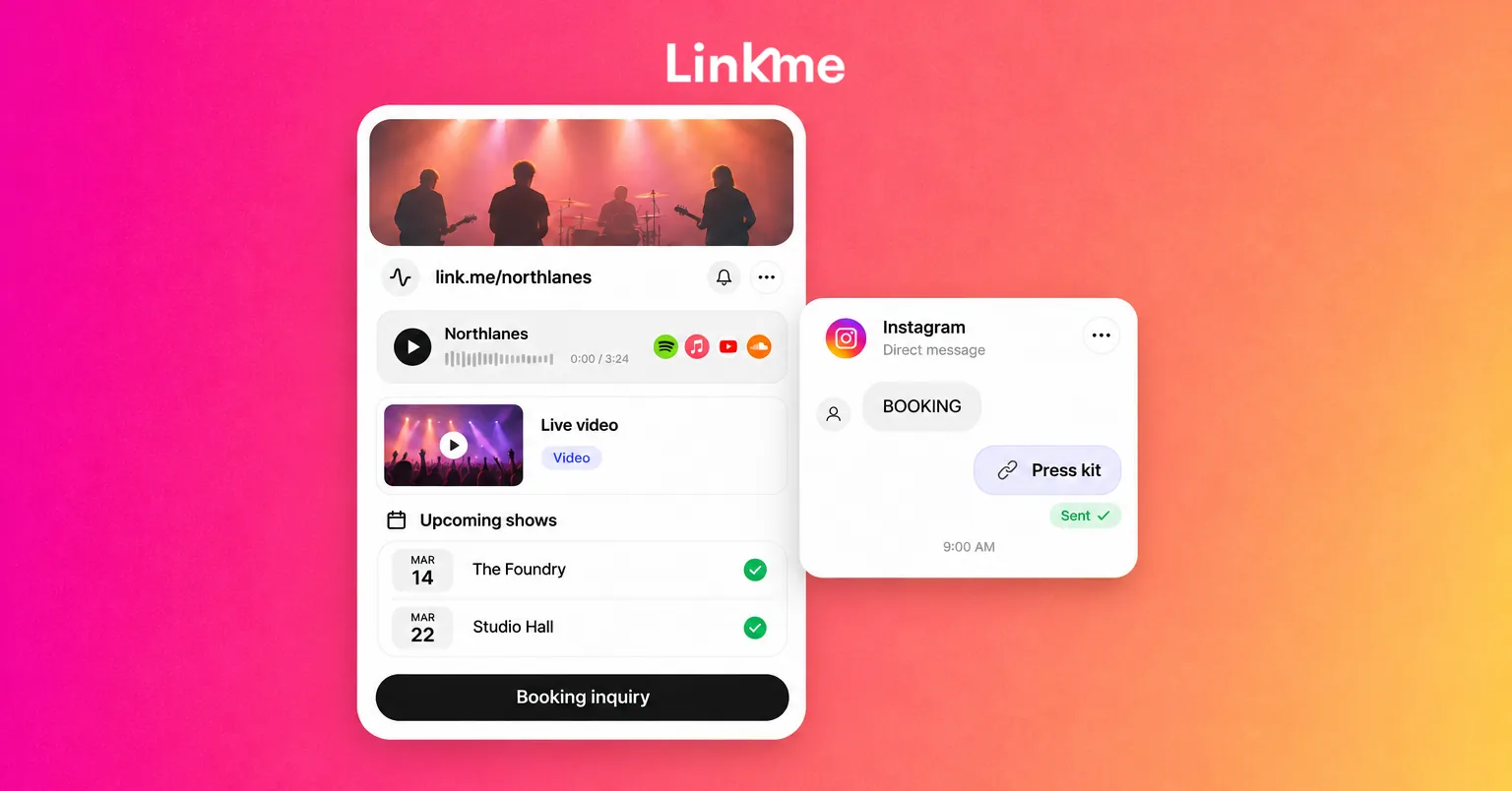
A Linkme page covers most of this list on one link.me address. A Music Smart Link takes one song or album URL and adds every streaming platform that carries it, so a booker on Apple Music and a producer on SoundCloud both get one tap to listen, and you see clicks per platform. Video feeds from Instagram, TikTok and YouTube show live footage, a gallery holds press photos, and featured links can point to your rider, stage plot and press coverage.
For dates, add events in the page editor or sync your tour from Bandsintown, each with its ticket link. The tickets and events guide covers the setup. Turn sections on or off and reorder them so the EPK version of the page leads with what bookers care about. Fan-facing extras can sit lower.
How to contact music promoters and venues
Most booking emails fail because they ask the reader to do the work. A better pitch is short and specific.
- Find the right person. Look for a talent buyer or booking contact on the venue’s site, and check which promoters run nights there.
- Pick a target. A specific date range, a support slot for a named touring act, or a recurring night that fits your genre.
- Write five sentences. Who you are, why this room or bill, what draw you can realistically bring, your best recent show, and your EPK link.
- Put the link in the body. No attachments.
- Follow up once, about a week later, with something new: a date that opened up, a new release or a recent show.
A sample opening: “We’re a three-piece indie band from Columbus. We sold out a 150-cap room here in May and would like to support [touring act] when they come through on [date]. Live video, recent dates and our rider are at [your link].”
Keep a simple log of who you contacted, when, and what they said. Bookers move between venues, and a polite “not this time” is often a yes six months later.
Make it easy for people to reach you back
Networking only works if replies reach you.
- Add a contact form. Turn on the Email Contact Form in your page’s sections so people can leave an email without opening their mail app. On Plus and Pro, a custom form can ask for name, email, phone and text fields such as “venue” or “date requested”. Submissions land in your dashboard.
- Swap details both ways. The me icon at the end of your page’s social row lets a visitor share their name, email and phone with you, so a promoter you met at a show is not lost when the night ends.
- Answer DMs reliably. A lot of booking interest arrives in Instagram DMs. DM automations can reply to messages with a keyword such as BOOKING by sending your EPK link, and reply to comments the same way. Every Linkme plan, Free included, can run DM automations on an Instagram business or creator account or a Facebook Page. Read the replies that follow yourself; automation handles the first step, not the negotiation.
Musician collaborations: finding and approaching people
Collaboration usually starts closer to home than people expect.
- Start with shared bills. The bands you played with last month already know your work. Ask them to swap support slots or write together.
- Credit and tag generously. Engineers, producers and session players often find work through credits. Tag them on releases and in your page’s links.
- Be specific in the ask. “Want to collab?” gets ignored. “I have a chorus in D minor that needs a verse; here’s the demo” gets listened to.
- Show you finish things. A few finished releases are more persuasive than a long list of ideas.
- Agree splits early. Before the session, agree in writing who owns what and how credits will read.
Use your numbers when you pitch
Draw is the question every booker asks. Your page’s analytics show profile views, link clicks and the countries and cities your visitors tap from, alongside per-platform clicks on your Music Smart Link. If you are pitching a venue in a city where your page sees steady traffic, say so with the number, and say which period it covers. If a city is new to you, be honest and offer a support slot instead of a headline date.
For a fan-facing page and using city data to plan a tour, see the creators and athletes overview.
Frequently asked questions
What should a musician’s electronic press kit include?
A short bio, one featured track, a live video, upcoming and recent shows, press photos, any genuine press or notable support slots, a technical rider and stage plot, and booking contact details. Keep it at one link so it stays current.
How do musicians contact promoters?
Find the booking contact for the venue or night, pitch a specific date or bill in about five sentences, include realistic draw and your EPK link in the email body, and follow up once with something new.
Where do musicians find collaborators?
Usually through people they already share bills, studios or scenes with. Credits on releases, local open sessions and online communities for specific genres also help. A specific ask with a demo attached works better than a general request.
Should my booking EPK be the same page fans see?
It can be. Reorder sections so dates, live video and contact details come first when you are pitching, then move fan features like merch back up when a release or tour starts.
Your talent gets you heard. A clear EPK, a specific pitch and a dependable reply make it easy for people to book you.