The Impact of Hacking on Business Social Media
What a hacked social account really costs a business, from lost access and scams aimed at followers to misused ad spend, plus a response plan and the controls that prevent it.
On this page
The impact of hacking on business social media goes well beyond a changed password. When a brand account is taken over, the business can lose its main customer channel for days or weeks, followers can be targeted with scams in the brand’s name, ad budgets can be spent by someone else, and the trust built over years can take a visible hit. This guide breaks down those costs, then sets out a response plan and the controls that make a takeover much less likely.
The costs of a hacked business account at a glance
| Cost | What it looks like | Who feels it |
|---|---|---|
| Lost access | Locked out of the account, scheduled posts stop, DMs go unanswered | Marketing, customer service, sales |
| Scams aimed at followers | Fake giveaways, crypto offers, “verify your account” links sent from your profile | Your customers |
| Misused ad spend | Ads you did not create, charged to your payment method | Finance |
| Reputation damage | Offensive or fraudulent posts under your name, screenshots that outlive the breach | The whole business |
| Hidden costs | Staff time, lost launches, partner concerns, possible legal duties | Leadership |
Lost access and lost time
For many businesses, social media is the front door. Customers ask about hours, orders and bookings in the comments and DMs. When the account is taken over, that channel goes dark, and customers who do not get an answer go elsewhere.
Recovery takes time. Each network has its own process, identity checks and wait times, and you cannot always predict how long it will take. Meanwhile, any campaign that depended on the account, such as a product launch or an event, is on hold. If an attacker also changed the handle or deleted posts, rebuilding takes even longer.
Scams aimed at your followers
Attackers rarely want your account for its own sake. They want the trust your followers place in it. Common patterns include:
- Fake giveaways asking people to “claim a prize” by entering card details.
- Investment or crypto offers posted as if the owner were endorsing them.
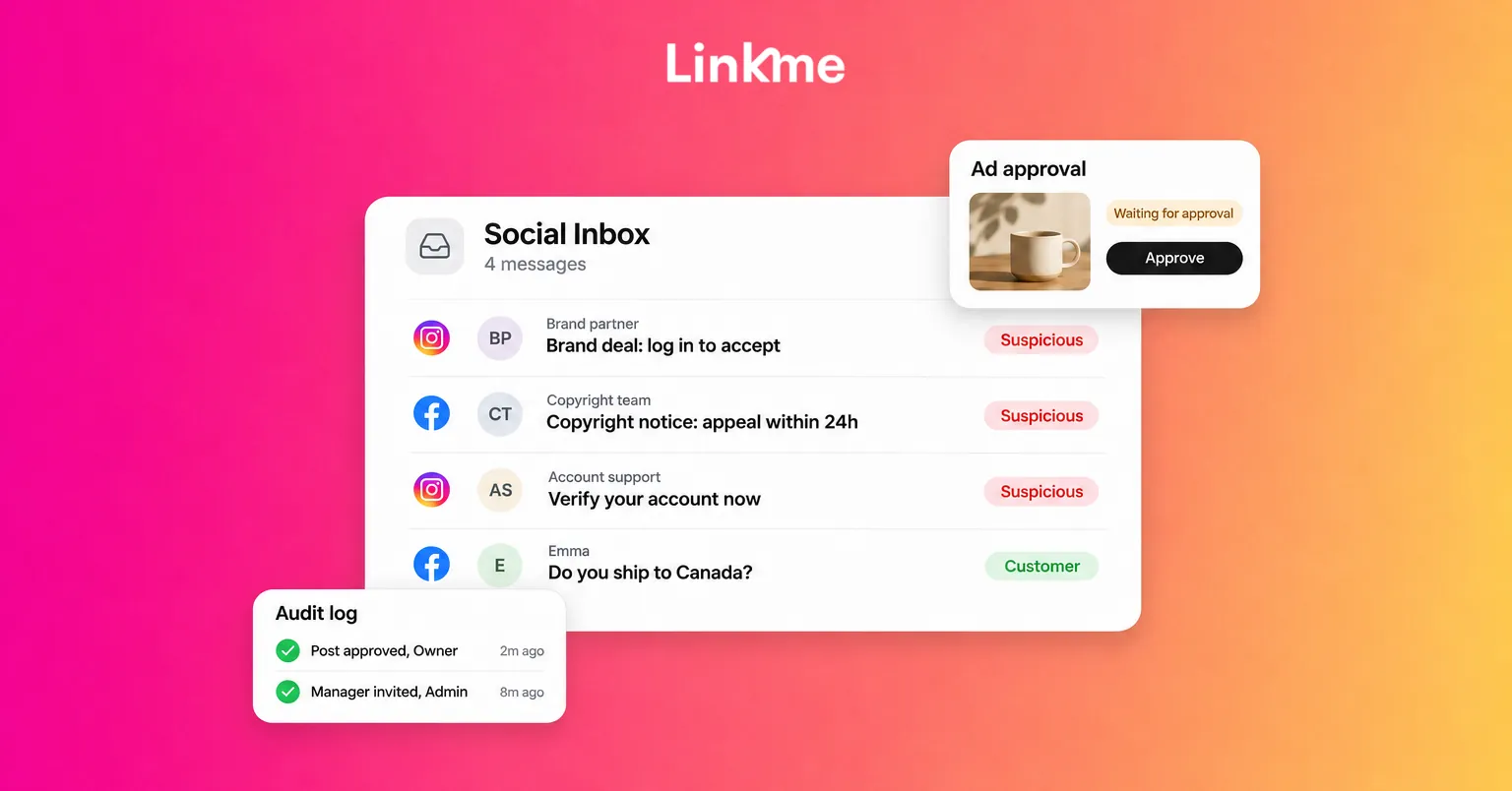
- DMs to followers saying their account needs verifying, with a link to a fake login page.
- Messages to business partners asking for payment to a new bank account.
Every follower who loses money or their own account because of a message from your profile is a customer who may not come back. Some will blame the business, whether or not that is fair.
Misused ad spend
When an ad account is connected to a hacked profile or business portfolio, the breach can quickly become a financial one. Attackers can launch ads, often promoting scams, and charge them to your saved payment method. The network may then restrict the ad account for policy violations, which pauses your legitimate campaigns too.
Getting unauthorized charges reversed usually involves the network’s support team and sometimes your bank. Both take time, and neither is guaranteed. Keep records of the campaigns and charges you did not create.
Reputation damage
Posts made during a takeover get screenshotted and shared, and those screenshots can circulate long after the posts are deleted. Partners and brand collaborators may pause deals until they are confident the account is secure. Customers may hesitate to click links or open DMs from you for a while.
How you respond affects how much of this sticks. A fast, clear statement on your other channels, with practical advice for followers, protects trust far better than silence.
The hidden costs
Some costs only show up later:
- Staff time. Hours of recovery work, customer replies and internal meetings.
- Lost momentum. Reach can take a while to recover after weeks without posting.
- Legal and contractual duties. If customer information in DMs or connected tools was exposed, you may have notification duties depending on where you operate. Check with legal counsel rather than guessing.
- Insurance questions. Some cyber insurance policies cover parts of an incident like this. Read your policy before you need it.
A response plan for business social accounts
Write this plan down before anything happens. The recovery steps for each network are set out in its own help center: Instagram’s process starts at instagram.com/hacked, as its help article for hacked accounts explains, and Facebook’s starts at facebook.com/hacked. Your plan should cover the people and decisions around those steps.
Assign roles in advance
- Incident lead. Decides what to pause, what to say and when the incident is over.
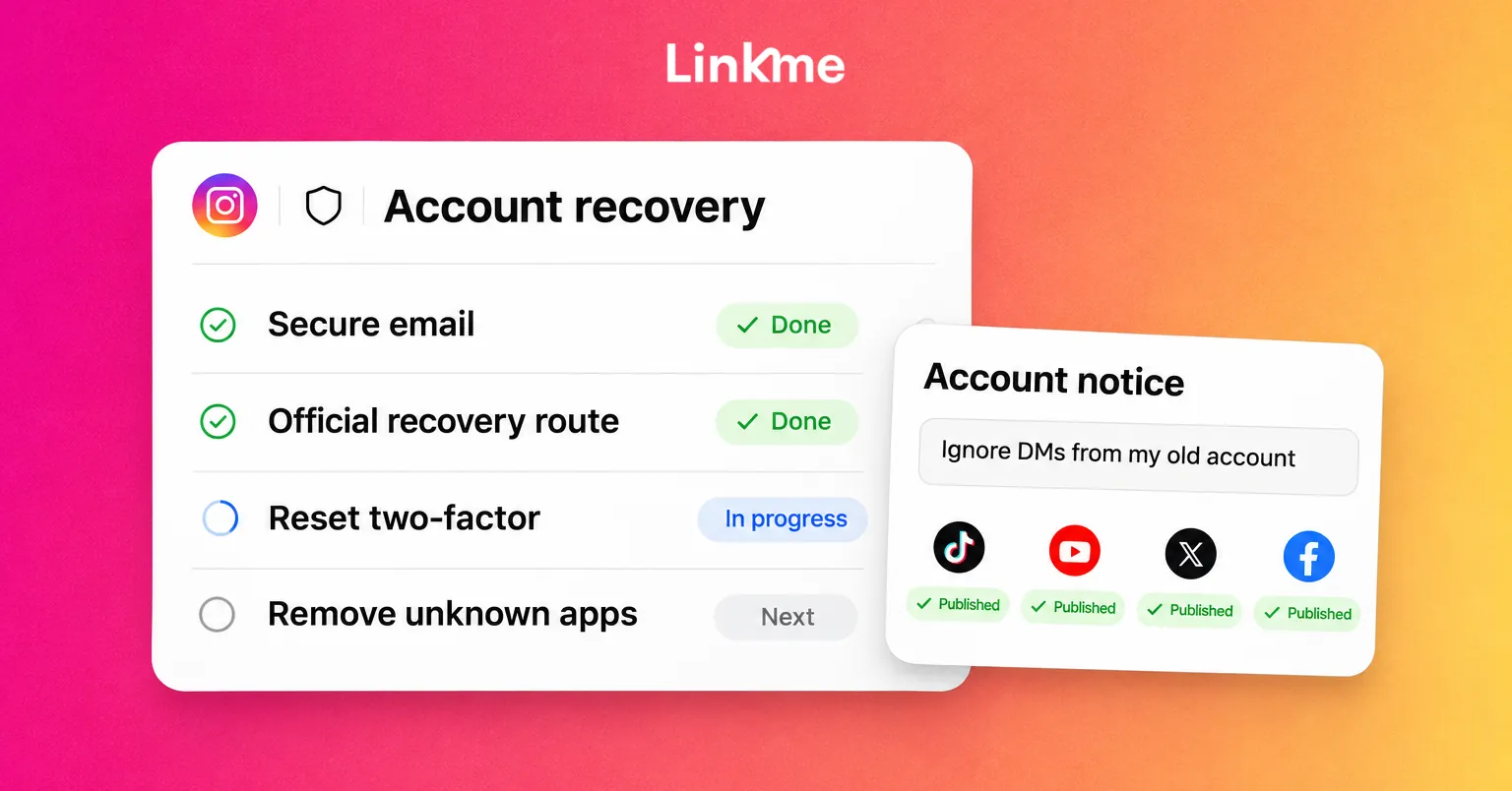
- Recovery owner. Works through each network’s official recovery route, and secures the email and phone linked to the account first.
- Communications owner. Posts a warning on your other channels, updates your website or page, and answers customer questions.
- Finance contact. Checks ad accounts and saved payment methods, and contacts the bank about charges you did not make.
The first hour
- Secure the email account connected to the social account, and change its password.
- Start the network’s official recovery route. Never pay someone who offers to recover the account for you.
- Pause scheduled posts and ads that depend on the account.
- Warn followers on the channels you still control: do not click links or send money in response to messages from the affected account.
- Check who has access to your business tools and ad accounts, and remove anyone you do not recognize.
- Record what happened, with times and screenshots.
After recovery
Review how the attacker got in, close that gap, and update the plan. Post a short note when the account is back, so followers know it is safe again.
Controls that prevent most takeovers
Most business account takeovers exploit a few gaps: shared passwords, missing two-factor authentication, former staff who still have access, and nobody checking what goes out.
- Give every person their own login. Shared passwords cannot be revoked for one person and leave no record of who did what.
- Turn on two-factor for everyone. Prefer an authenticator app or passkey over SMS where the network allows it.
- Remove access the day someone leaves. Include agencies and freelancers.
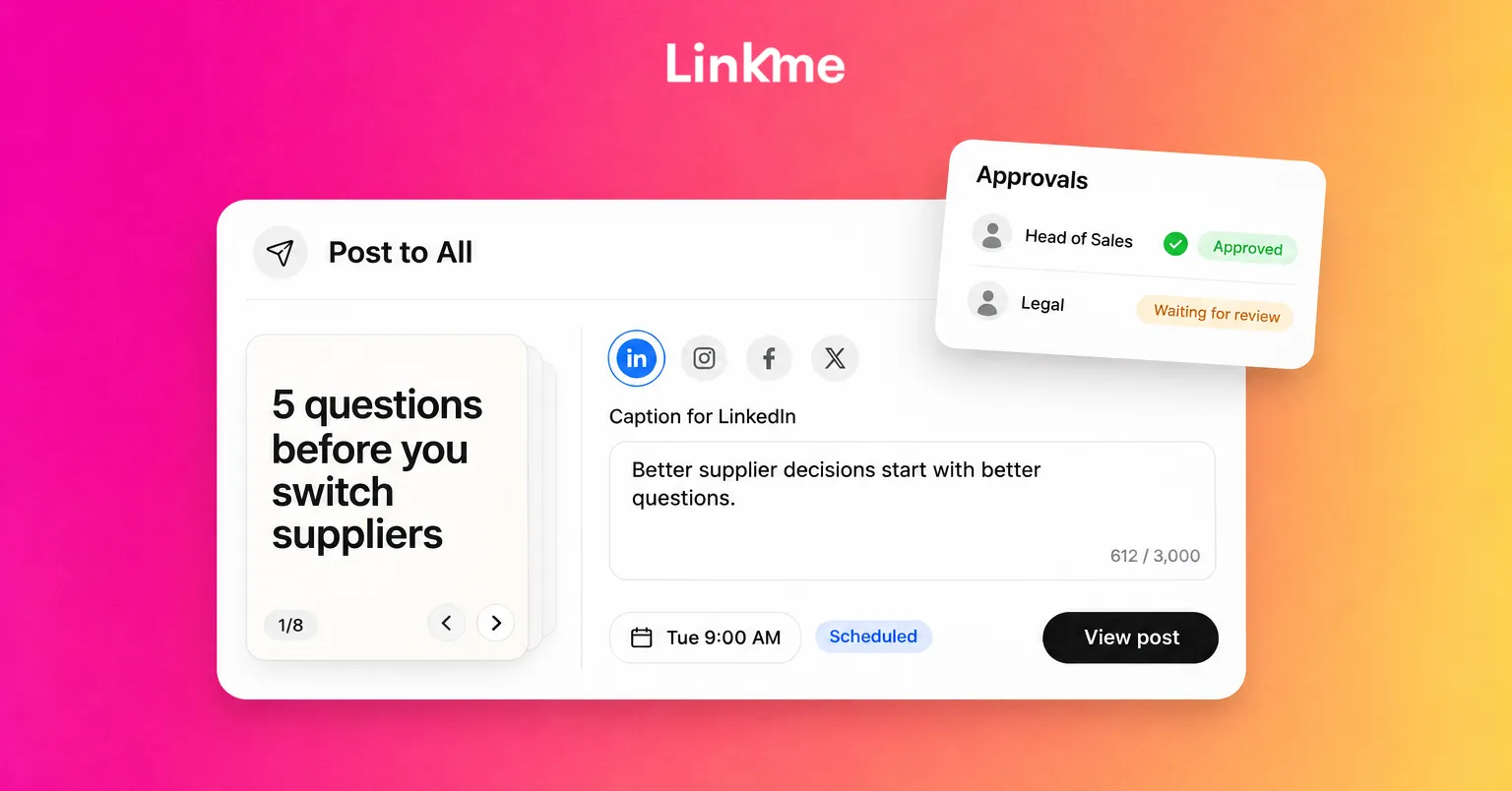
- Put approvals between a draft and the public. A post or ad that needs sign-off cannot go out from a single compromised login.
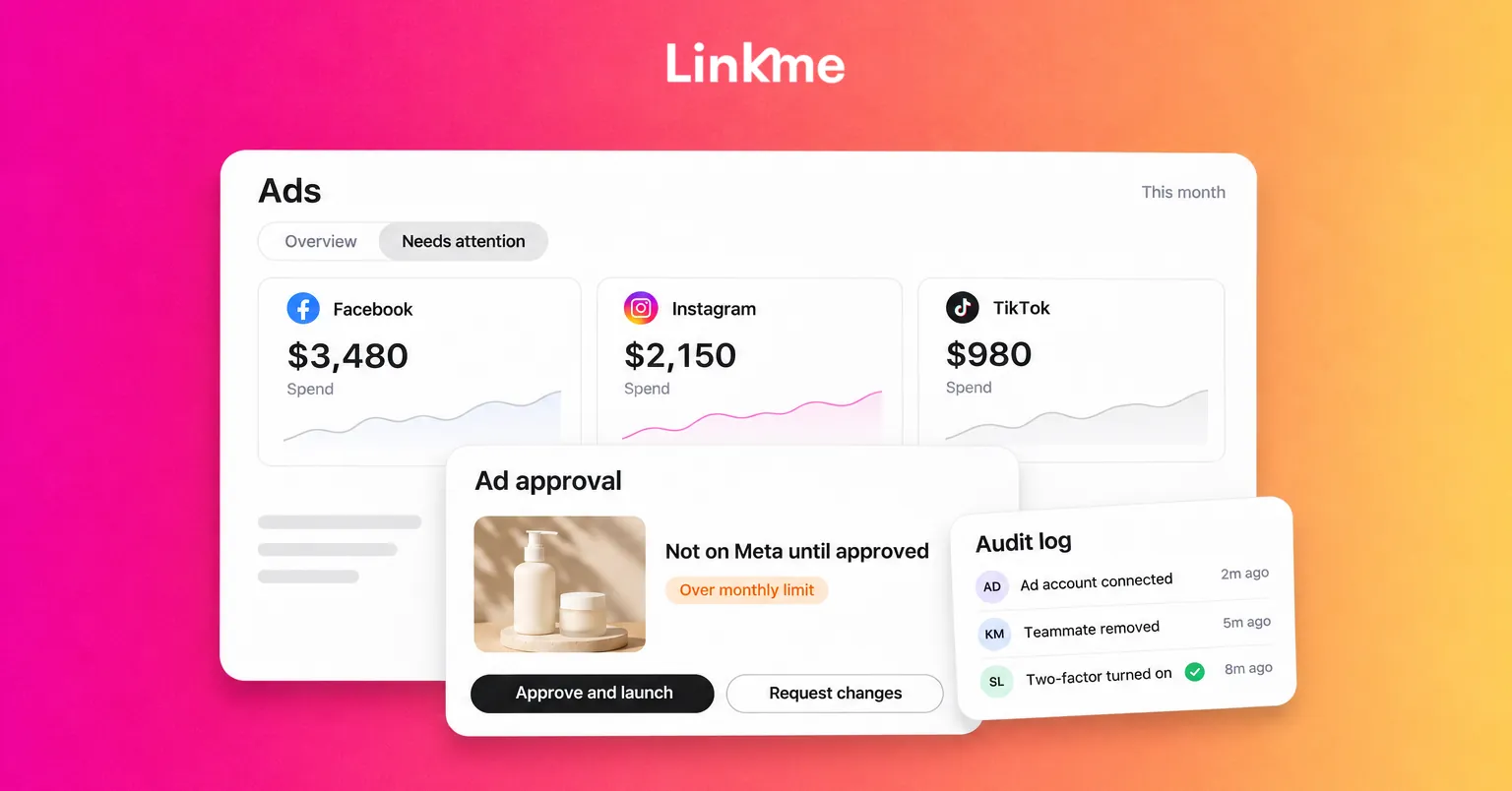
- Set limits on ad spend. Cap what one person can launch without approval.
- Keep an audit trail and alerts. Know who changed what, and get notified when something needs a decision.
On Linkme, Ads, Team & Security brings these together. Every teammate has their own login and a role: Owner, Admin or Manager. Owners and admins can see who has two-factor turned on and review the audit log of who changed what, newest first. Each person picks the alerts that reach them, such as review requests, failed publishes and ad approvals, and can see the devices signed in to their own login under Active sessions and sign any of them out. Ads that need sign-off wait for approval, and the owner can let a teammate launch without approval only up to a monthly limit. Social and ad accounts connect through each network’s own sign in, so nobody shares those passwords either. The team roles guide shows how to invite people and set what each one can do.
Frequently asked questions
What happens when a business social media account is hacked?
The business usually loses access to the account, while the attacker may post scams, message followers, change the handle or run ads. Customer service through comments and DMs stops, and the business has to work through the network’s recovery process while warning customers on other channels.
Can hackers spend money on my ad account?
Yes. If an ad account and its payment method are connected to the compromised login, an attacker can launch ads and charge them to you. Check ad accounts and payment methods immediately, and contact the network’s support and your bank about charges you did not make.
Should we tell customers our account was hacked?
Yes, quickly and on channels you still control. Tell them not to click links or send money in response to messages from the affected account, and post again when it is secure. If customer data may have been exposed, ask legal counsel about any notification duties.
How can a business prevent its social media from being hacked?
Give every person their own login with two-factor turned on, remove access when people leave, require approval before posts and ads go live, cap ad spend per person, and keep an audit log so you can see who changed what.
A social media breach is a business problem, not just an IT one. Plan who does what before it happens, and put individual logins, approvals and alerts in place so one stolen password cannot take the whole account down.