The Role of Brand Ambassadors in Building a Community
Ambassadors turn an audience into a community. How to structure a program, reward people, handle disclosure and find the right fit.
On this page
The role of brand ambassadors is to represent your brand over time, not for a single post. Where an influencer campaign buys a moment of attention, an ambassador program builds a group of real customers and creators who keep showing up: answering questions, welcoming new people, giving honest feedback and making content because they already use what you sell. Done well, ambassadors turn an audience into a community.
This guide covers what ambassadors actually do, how to structure a brand ambassador program, how to reward people fairly, how to handle disclosure and where to find the right people.
What brand ambassadors do in a community
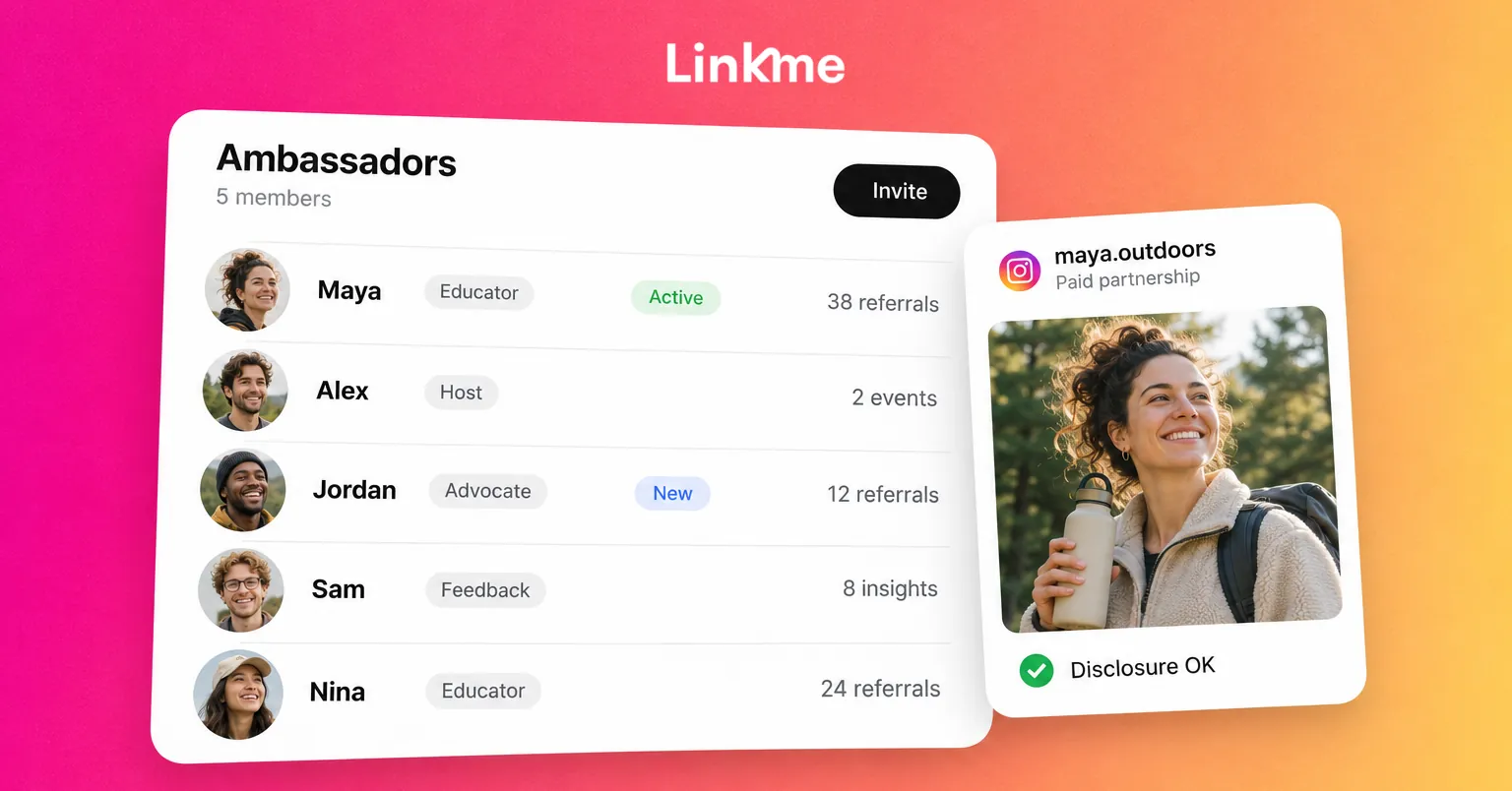
Advocates
The most visible role. Ambassadors talk about your product in their own words, on their own channels and in conversations with friends. Because they use it regularly, they can answer the follow-up questions a one-off sponsor cannot.
Educators
Ambassadors who know the product well can teach. Think of tutorials, setup tips, recipes, training plans or “how I use it” videos. Educational content stays useful long after a launch post is forgotten, and it lowers the number of basic questions your support team handles.
Hosts and connectors
In a community, someone has to start conversations and welcome newcomers. Community ambassadors can run meetups, host live sessions, moderate a group chat or reply to people in comments. This is the role most brands underuse.
Feedback channels
Ambassadors hear what customers say when the brand is not in the room. Give them an easy way to pass it on, such as a monthly form or a short call, and close the loop by telling them what changed because of their input.
Most ambassadors will lean toward one or two of these roles. Ask them which suits them rather than expecting everyone to do everything.
Ambassadors vs influencers
| Influencer campaign | Brand ambassador program | |
|---|---|---|
| Length | One campaign or post | Months or ongoing |
| Who | Chosen mostly for reach and fit | Often existing customers or fans |
| Content | Scripted around a brief | More freedom, more variety |
| Goal | Awareness or sales for a launch | Trust, referrals, community and feedback |
| Payment | Fee per deliverable | Mix of perks, commission and sometimes a retainer |
The two work together. Many brands start with a campaign, then invite the creators whose audiences responded best into a longer ambassador relationship.
How to structure a brand ambassador program
1. Decide what the program is for
Pick one or two goals: referrals, local awareness in specific cities, product education, user-generated content or a stronger online community. The goal decides who you recruit and what you measure.
2. Define who qualifies
Write simple criteria: uses the product, shares your values, active on at least one platform your customers use, and comfortable representing you in public. Audience size can be one factor, but for community roles it often matters less than consistency and tone.
3. Set clear expectations
Spell out what you ask for each month or quarter. Examples include a set number of posts, one tutorial, attendance at an event or hosting a session. Also spell out what you will never ask for, such as fake reviews or claims they do not believe.
4. Build an onboarding kit
Give every new ambassador:
- A short brand guide: what you stand for, how you talk, topics to avoid.
- Product facts and approved claims.
- Their link or code, if you track referrals.
- Disclosure wording for each platform.
- A named contact on your team.
5. Create a place for ambassadors to talk
A private group chat or channel lets ambassadors share ideas and help each other. It also makes them feel part of something, which is often the reason people stay.
6. Review regularly
Check in every quarter. Renew the people who are a good fit, give new people a chance and end relationships politely when they are not working.
How to reward ambassadors
Rewards should match the effort you ask for. Common options include:
- Product and early access. New releases before anyone else, samples to review.
- Commission or referral codes. A share of the sales they drive, tracked through a unique link or code.
- Paid retainers. A fixed monthly fee for ambassadors who produce regular content or host events.
- Experiences. Invitations to launches, behind-the-scenes visits or meetups with your team.
- Recognition. Featuring their content on your channels and crediting them by name.
Be specific in writing about what each ambassador gets and when. Vague promises create resentment, and they are a common reason programs fall apart. Never promise earnings you cannot guarantee.
Disclosure for ambassadors
An ongoing relationship with a brand is a material connection, and in the US the FTC expects it to be disclosed clearly every time an ambassador promotes you. The FTC’s Disclosures 101 for Social Media Influencers guide gives useful specifics:
- Disclose even when the reward is free product or perks, not cash.
- Place the disclosure with the post itself, not only on a profile page or hidden behind “more.”
- Avoid vague terms. A stand-alone “ambassador” is not a clear disclosure, though a brand-specific label like “Acme Ambassador” can work on space-limited platforms.
- In videos, put the disclosure in the video, and repeat it during live streams.
Use the platform’s own labels too, such as the paid partnership labels on Instagram and TikTok. Include disclosure wording in your onboarding kit and check posts regularly. Brands are expected to monitor what ambassadors say about them.
Finding the right ambassadors
Start with the people already talking about you: customers who tag you, regulars who comment on every post, and creators who mentioned you without being asked. They need the least convincing and sound the most genuine.
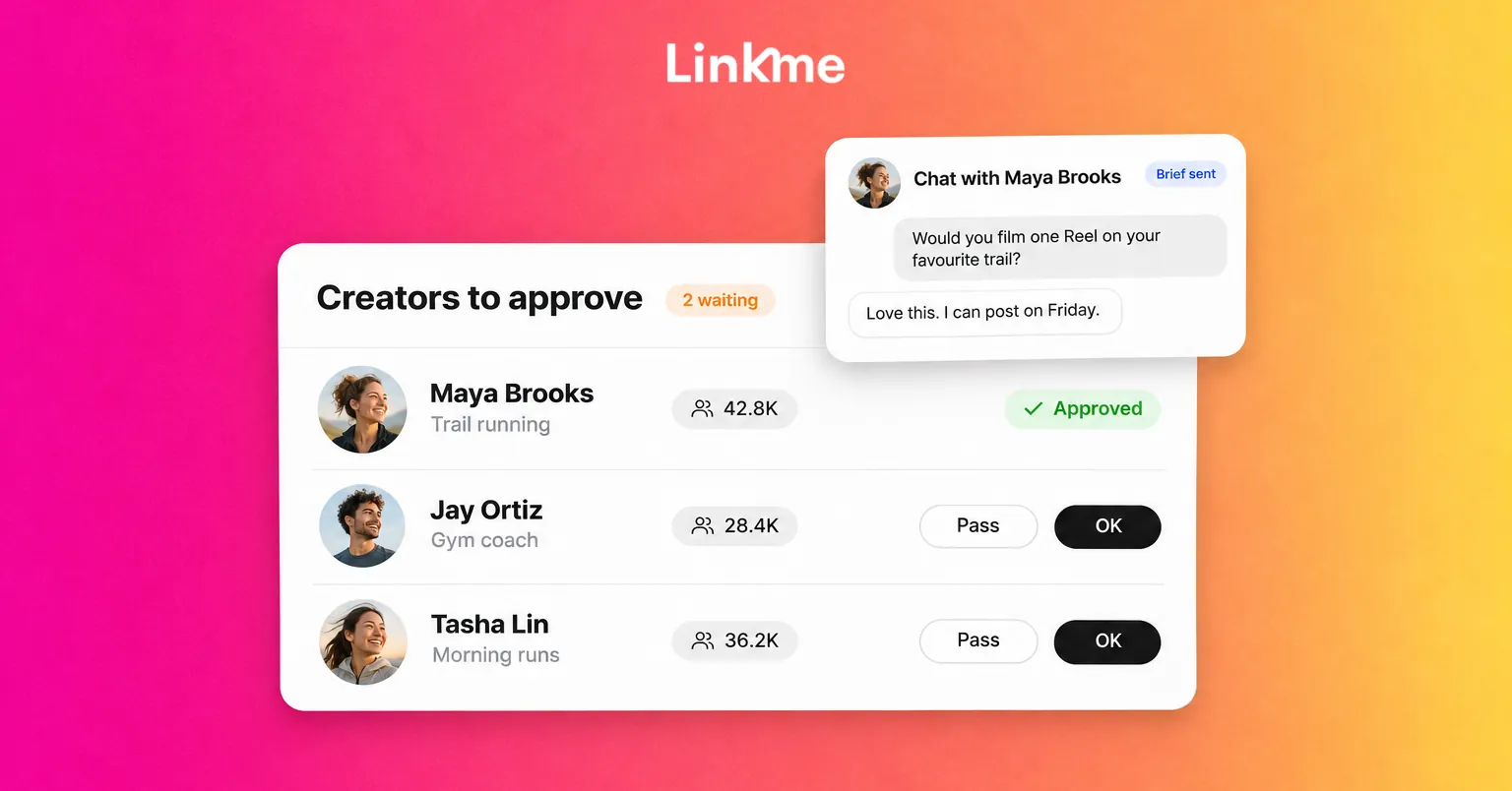
To widen the pool, look for creators whose audience matches your customers. In the Linkme creator marketplace, you can search the creators who run their pages on Linkme by follower count, industry, niche and city from the Business dashboard, or ask Link, the AI social media manager, to find the ones who fit your brand. Link shows you why it picked each creator, sends your brief to the ones you approve and keeps every chat in your dashboard, so you can start with a single campaign and see who is worth inviting into a longer relationship.
Once ambassadors are posting, keep the community conversation in one place. The Social Inbox brings Instagram and Facebook comments and DMs together, so your team can see what people are saying under ambassador content and reply.
Measuring an ambassador program
Track a few numbers per ambassador and for the program as a whole:
- Referral link clicks and code redemptions.
- Sales, sign-ups or bookings you can trace to an ambassador.
- Content produced and how it performed.
- Community signals: questions answered, event attendance, new members.
- Feedback collected and acted on.
Not every ambassador will drive sales. A great host or educator may never top the referral list but still make the community worth joining.
Frequently asked questions
What is the role of a brand ambassador?
A brand ambassador represents a brand over an extended period. Ambassadors promote products they genuinely use, educate other customers, help build community and pass feedback back to the brand, in return for agreed rewards such as product, commission or a fee.
How is a brand ambassador different from an influencer?
An influencer partnership is usually a short campaign built around reach. An ambassador relationship lasts longer, often starts with existing customers or fans, and focuses on trust, referrals and community as much as awareness.
Do brand ambassadors need to disclose the relationship?
Yes. Under FTC guidance, any material connection, including free products and perks, should be disclosed clearly in each post. The word “ambassador” on its own is considered vague, so use clear terms such as “ad” or a brand-specific label.
How many ambassadors should a brand start with?
Start with a number your team can support properly, with onboarding, regular check-ins and prompt rewards. A small group of engaged ambassadors builds more community than a large group nobody looks after.