Social Media Marketing for Restaurants: A Practical Guide
Build a restaurant social media plan with practical post ideas, a sample weekly schedule, guest-response tips and ways to measure useful results.
On this page
- Key takeaways
- Start with a restaurant goal and a specific guest
- Choose social channels your restaurant can maintain
- Make your profiles useful before posting more
- Build a bank of restaurant social media post ideas
- Build a weekly routine that fits around service
- Answer guest questions and keep the handoff clear
- Reach more relevant local diners
- Measure useful results and adjust the next week
- Frequently asked questions
- Put your restaurant’s social media plan to work
A good restaurant post gives someone a reason to visit and makes the next step easy. That might mean showing a new dish, answering a question about the patio or helping a guest find the right reservation link.
The hard part is keeping that work moving around service. Someone has to capture the food, check the offer, publish the post and answer the questions it brings in. When those jobs happen at the last minute, even a strong idea can go out with the wrong hours or an outdated menu.
Social media marketing for restaurants brings those activities into a repeatable routine. This guide covers choosing channels, planning useful content, running a sample week and reviewing results. Linkme connects publishing, guest responses and the page links people need next, with each part supporting that routine.
Start with a restaurant goal and a specific guest
Choose the action you want the next campaign to support
Start with a business need you can describe clearly. Filling a quieter Tuesday evening, promoting takeaway lunches and generating private-event inquiries call for different messages.
For Tuesday dinner, the post needs to help someone imagine that meal and find availability. A private-event post needs to show the space and explain how to contact the events team. A lunch promotion should make the location, collection options and service times easy to understand.
Choose one main action for each campaign. For example:
Help nearby diners discover our Tuesday evening special and find the correct reservation page.
That brief gives you a way to judge content ideas. A preparation video could make the dish appealing. A photo of the dining room could show the setting. Both should make the Tuesday details easy to find.
Match the message to the dining occasion
Think about what the guest is deciding. Someone choosing a quick lunch may need different information from a couple planning an evening out or a visitor organizing a group dinner.
A café can show how to collect an order on the way to work. A neighborhood restaurant can show the room, the food and the practical details of a midweek visit. Regulars may want to know what has changed on the menu; first-time guests may need a clearer introduction to the restaurant itself.
Keep the promotion relevant to the service period you want to support. If Friday is already full, directing every post toward Friday reservations may do little for the quieter nights that need attention.
Choose social channels your restaurant can maintain
Choose channels around your guests, the content you can create and the time available to respond.
| Channel | Useful restaurant content | Question to ask before committing |
|---|---|---|
| Dish photos, short preparation videos, atmosphere and timely updates | Can we regularly capture useful visuals and answer guest questions? | |
| Local updates, event information, menu news and community conversation | Are our guests and local community active here? | |
| TikTok | Short videos built around food, people and preparation | Can we sustain this format and reach people likely to visit? |
| YouTube or another channel | Longer stories or additional video distribution where it fits | Do we have a clear audience and capacity beyond our main channels? |
Look at the conversations and visits your existing accounts generate. Ask guests how they found you. Use that information to choose a manageable starting point, then expand when there is a reason and enough capacity.
A short kitchen clip might work across several channels, but its caption, format and next action still need to fit each one. Some content will belong on only one account.
Keep your Google Business Profile information current alongside this work. Accurate local information supports the guest’s journey, while your social channels give you room to show the food, people and experience.
Make your profiles useful before posting more
Open each profile on a phone and check what a new guest can learn without sending a message.
Can they find your location, current hours and menu? Does the description explain what kind of restaurant you run? Can they reach the correct booking or ordering service?
For a restaurant with several locations, make it clear which menu, hours and booking link belong to each venue. Check special opening hours and old promotions too. An attractive post loses much of its value if the next step leads to a closed service or the wrong restaurant.
Give each promotion a clear destination
Match the destination to the action. Where a post supports a clickable link, a single-purpose reservation promotion can point directly to the relevant booking page. Where guests need to use your profile link, make the advertised option easy to find there.
A page with several choices is useful when guests need a menu, reservations, private-event information or location options. Linkme lets a restaurant organize menus and reservation links in one maintained destination, with bookings and orders handled by the restaurant’s existing services.
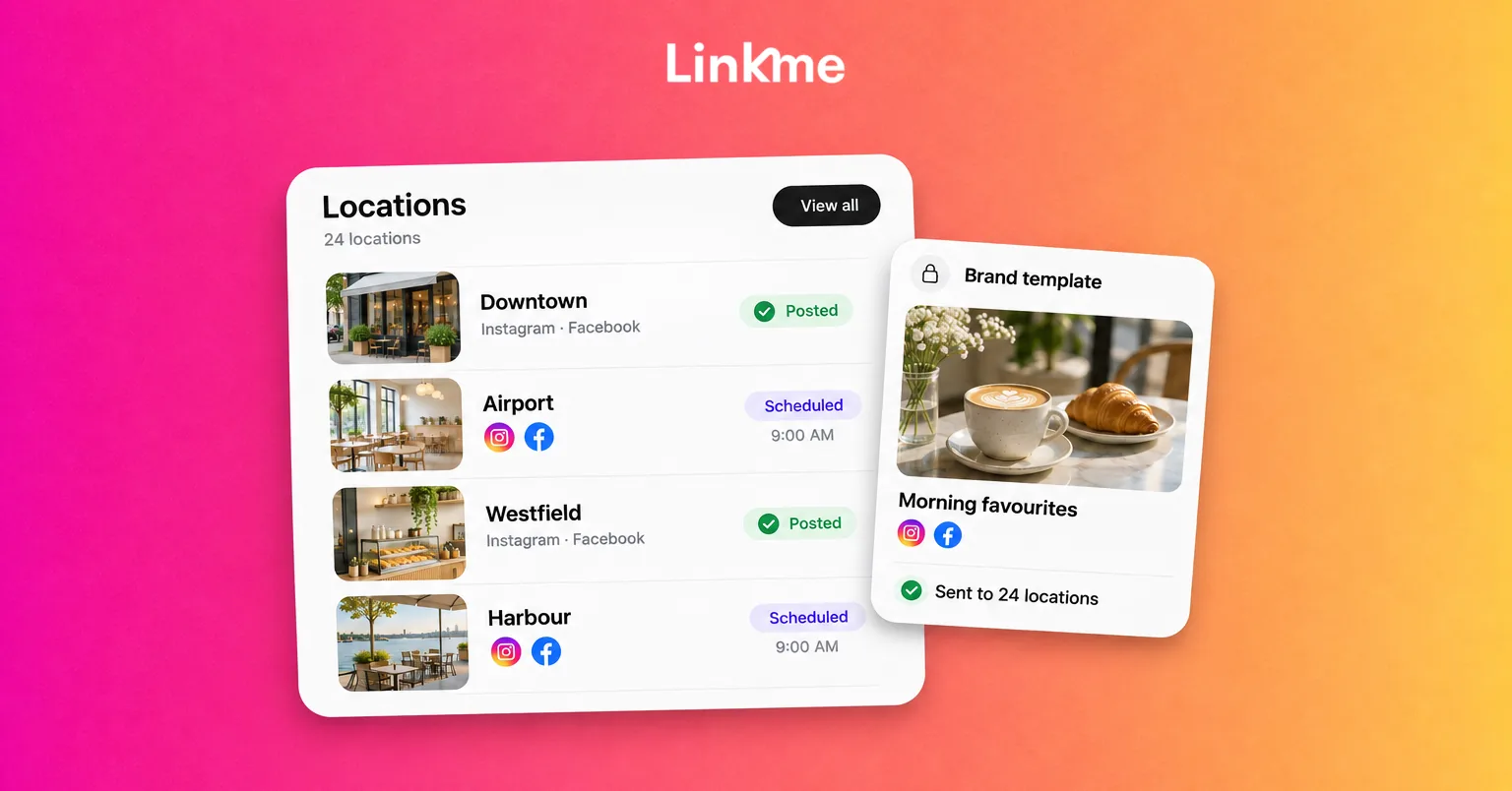
Papi Steak’s restaurant page setup illustrates this approach: Miami Beach and Las Vegas have separate sections containing menus, private-event information and reservation links. The useful lesson is to help guests find the option for the city they intend to visit.
Test the whole journey: open the post, follow its instructions, choose the right location and check the destination on a phone. Keep that path as direct as the task allows.
Build a bank of restaurant social media post ideas
A content bank gives you something useful to publish when the kitchen and dining room need your attention. Start with things guests genuinely want to see or understand.
| Post idea | Asset to capture | Guest question answered | Suitable next action |
|---|---|---|---|
| A signature dish | Clear photo or short plating video | What should I try? | View the current menu |
| A preparation moment | Brief kitchen clip taken at a suitable time | What goes into the food? | Explore the dish or menu |
| Meet a team member | A portrait and short introduction shared with permission | Who creates the experience? | Learn more or ask a relevant question |
| Show the atmosphere | Dining room, patio or seating details | Is this right for my occasion? | View visit or reservation information |
| A time-limited special | Actual dish and clear offer details | What is available, where and when? | Check the details or reserve |
| A local collaboration or event | Agreed partner asset or event image | What is happening nearby? | View event information |
| A guest’s experience | Customer content used with permission | What does a visit look like? | Explore the restaurant |
| A practical visit answer | Simple visual or short explanation | Where is it, when is it open, what should I know? | Open the relevant information |
For food photos, use clear framing and natural light where possible. Show the portion and presentation guests can actually expect. For atmosphere, capture the details that help someone choose: the outdoor seating, the room’s layout or the setting for an evening meal.
Keep text readable on a phone, caption spoken video and add useful image descriptions where supported. Ask permission before featuring identifiable guests or staff, and agree how customer content may be reused. Being tagged in a photo does not give you blanket permission to use it in advertising.
Captions should add information the image cannot supply. These two examples use placeholders for details your restaurant would confirm:
Special announcement
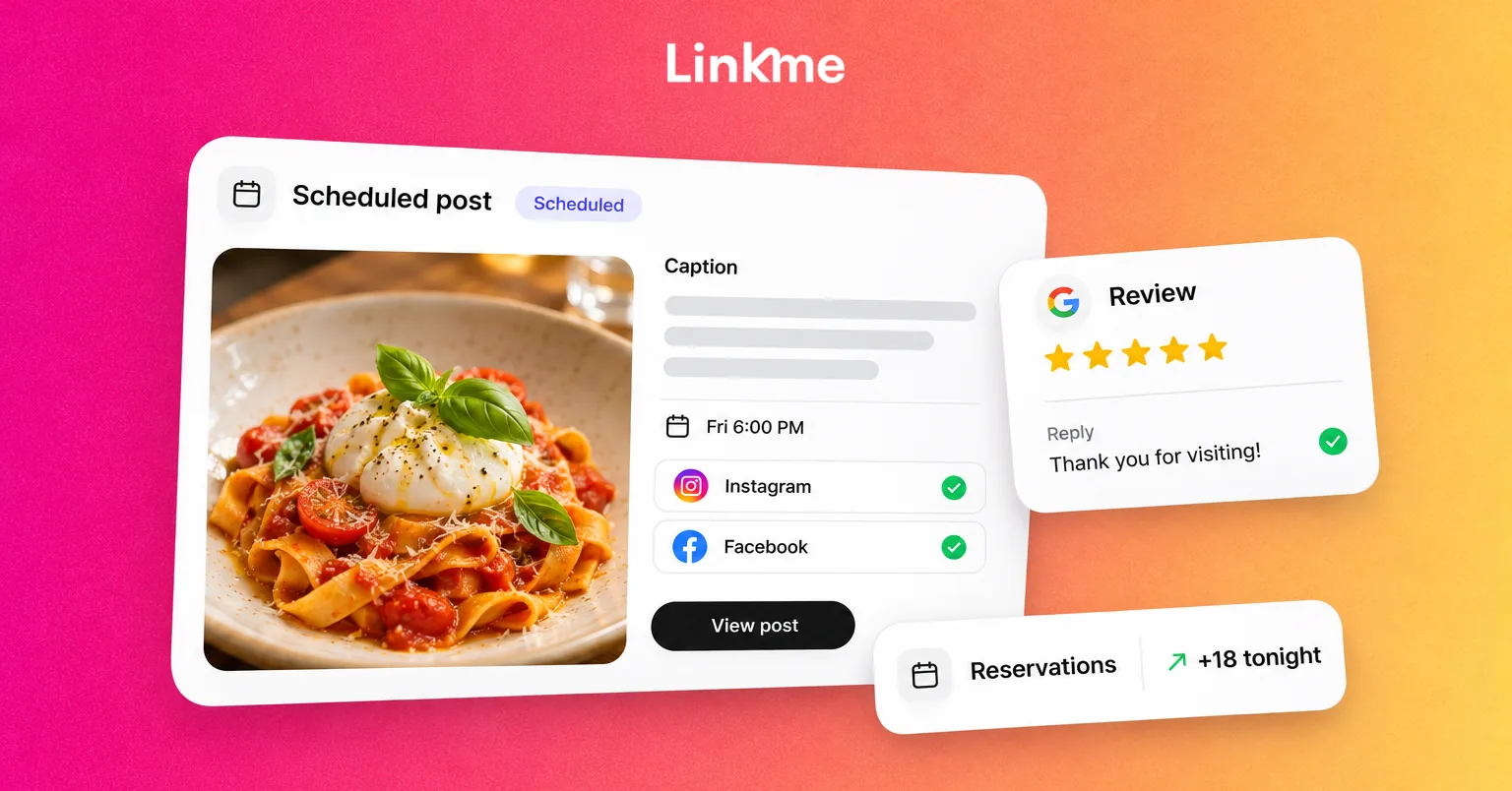
Tuesday dinner at [restaurant]: [dish] is available at our [location] from [start time] to [end time] on [date]. See the menu and reserve through the link in our profile.
Practical visit answer
Joining us at [location]? The entrance is [confirmed entrance detail]. We serve [meal] from [confirmed hours], and you’ll find the current menu through our profile link. Message us if you need help planning your visit.
Adjust the next step to the channel’s available link placement. Give each post a useful purpose, whether that is helping someone decide, answering a question or inviting a conversation.
Build a weekly routine that fits around service
Capture and prepare content before the rush
Choose a planning window that works for the restaurant. Review what is coming up, list the assets you need and capture them when staff can participate without disrupting service.
Keep evergreen content, such as a team introduction, separate from offers with a deadline. Store usable images, permission notes and draft captions together so you can find them again.
Give someone responsibility for creating content, checking restaurant facts and responding to guests. In a small restaurant, one person may handle several roles. The purpose is to make the work clear, rather than require more staff.
Check details, adapt and approve
Before scheduling a promotion, confirm:
- The dish or offer is available for the advertised service.
- Any price, date, time and location are correct.
- The image represents what guests will receive.
- The caption and format fit the selected channel.
- The next step reaches the correct menu, booking or ordering destination.
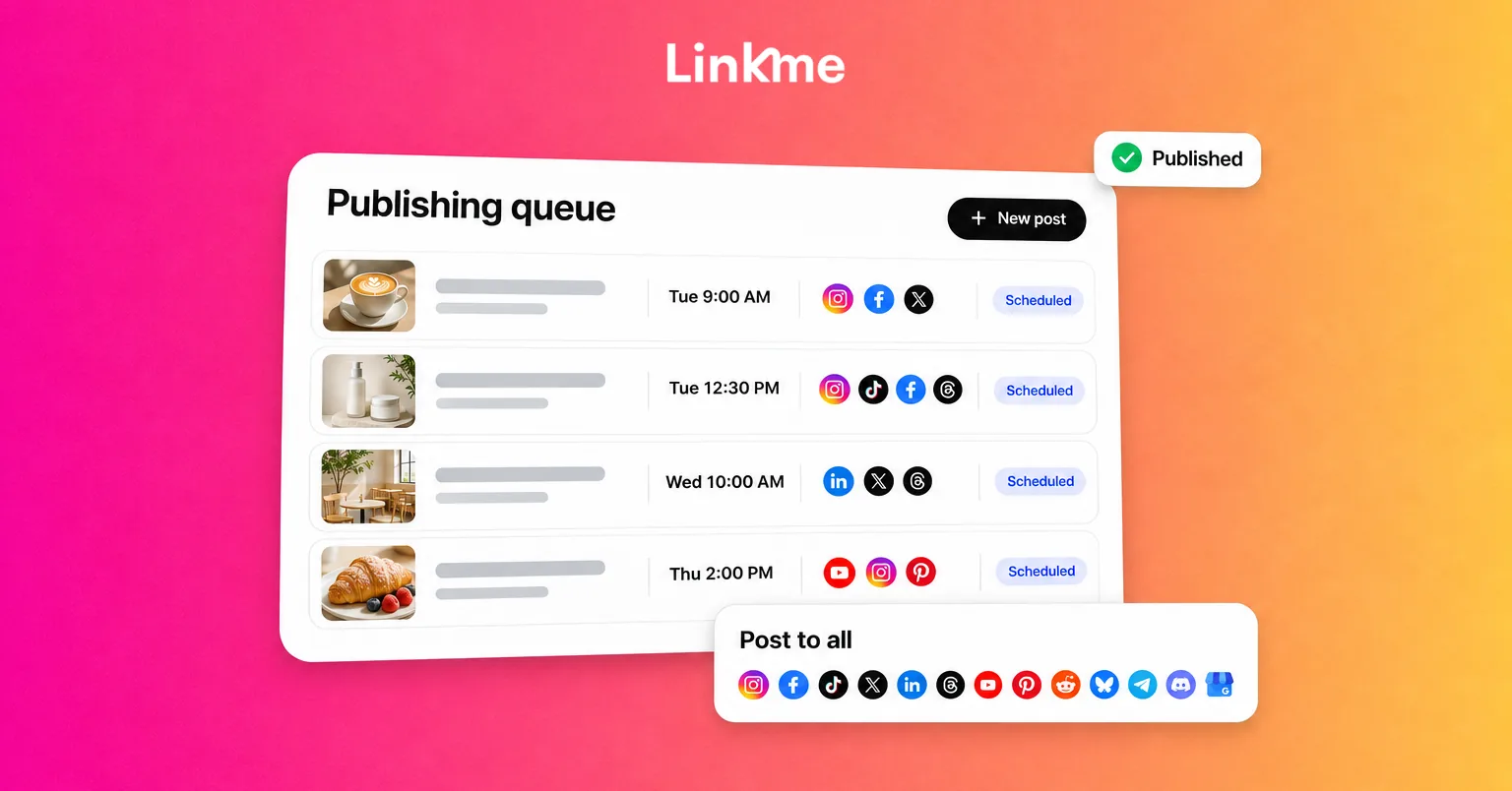
Linkme helps teams plan and schedule restaurant social posts through shared drafts, captions tailored by network, scheduling and publication-status checks. Reviewers can check posts before release, with approval requirements determined by the team’s permissions. If publishing fails on one network, the team can inspect its status and retry that network.
Agree who checks the details and who can release the post. When an approved offer changes, review the revised version before it goes out.
Recheck promotions before they publish
Scheduling leaves time for preparation, but the restaurant still needs to check changing conditions. Someone should review time-sensitive posts when a dish sells out, service hours change or an event is canceled.
Edit, pause or cancel affected scheduled content. If an inaccurate promotion is already live, correct or remove it where possible, update its destination and communicate the change when guests need to know. Use the relevant social platform for changes that require it.
After publication, confirm the post appeared on the intended accounts. This catches a failed post on an individual network before the team assumes the promotion is running everywhere.
A sample week for a neighborhood restaurant
This hypothetical week centers on a Tuesday dinner special. It is a starting example you can adapt to your staffing and service pattern.
| Timing | Content or task | Channel | Owner and check | Destination | Signal to inspect |
|---|---|---|---|---|---|
| Monday, ahead of the promotion | Photo introducing Tuesday’s special | Instagram and Facebook, adapted separately | Marketer; manager confirms offer, date and menu | Current menu or reservation route suited to the channel | Relevant questions and destination clicks |
| Tuesday, before guests decide | Reminder showing the dish and service details | Selected active channel | Duty manager confirms availability before release | Existing booking page through a supported link placement | Booking-link interest, with bookings reviewed separately |
| Wednesday | Short preparation or team story | Channel suited to the format | Staff participant and marketer check the clip | Menu or profile where relevant | Useful comments and saves where reported |
| Thursday | Guest photo or practical visit answer | Selected active channel | Marketer checks permission and visit details, or uses original restaurant content | Correct visit information | Guest questions answered |
| Friday | Review the week and prepare the next one | Internal task | Owner or marketer reviews available records | Native insights, Linkme page metrics and restaurant records | What to repeat, change or stop |
The person responsible for each task should know when it needs attention. For example, the Tuesday reminder depends on a current availability check, even if the asset was prepared on Monday.
Answer guest questions and keep the handoff clear
Set realistic times for checking comments and messages, with someone responsible during staffed periods. Common questions about menus, hours and location should have accurate, consistent answers.
Linkme’s Social Inbox helps a restaurant manage Instagram and Facebook conversations, with saved replies and internal notes to keep useful context alongside the conversation. Agree who is checking the inbox so questions do not depend on someone noticing them by chance.
For a group-booking request, direct the guest to the person or service that can confirm availability. Sending a reservation link or acknowledging a message does not confirm a table.
Handle complaints by acknowledging the concern and moving private details to an appropriate private channel. Questions about allergens or specific dietary needs should go to restaurant staff who can verify the answer. A saved response can explain how to reach that person; it should not replace a checked answer.
Reach more relevant local diners
Help people recognize where you are and why a visit might fit their plans. Use accurate location details, recognizable neighborhood references and relevant descriptions or tags. A clear explanation of the restaurant and occasion is more useful than adding unrelated popular hashtags.
Local partnerships can give you another reason to post. A nearby venue might share information about dining before its events, or a complementary business might collaborate on a promotion. Agree what each partner will publish and where guests should go next.
When working with creators, consider whether their audience and content suit your restaurant. Agree on the content, timing and reuse permissions, and make paid or gifted relationships clear. Judge the fit by the people you want to reach and the quality of the work, rather than follower totals alone.
Paid promotion can support a defined offer once the destination and guest-response process are ready. Choose a budget, the area and audience you intend to reach, and the result you will review. For example, you might promote a local event or a specific dining occasion. Check the available advertising options in the platform you use and keep the initial scope manageable.
Measure useful results and adjust the next week
Review results against the goal you chose. A preparation video and a reservation reminder may serve different purposes, so their numbers need context.
| Question | Evidence to review | Decision it helps you make |
|---|---|---|
| Did the content attract attention? | Available native reach, views and engagement | Which subjects or formats deserve another attempt? |
| Did people seek more information? | Linkme page visits and menu/reservation-link clicks, where used | Which links or menu information should be easier to find? |
| Did useful inquiries arrive? | Relevant messages and inquiry records | Which common questions need clearer answers? |
| Did guests book or order? | Booking/order records and available source information | Did the target service period improve, and what else may have affected it? |
Use Linkme Analytics to see which page links guests open. Review native platform insights for social engagement and your restaurant’s booking or ordering records for completed actions.
A reservation-link click shows interest; it does not establish a completed booking. The available records may also leave uncertainty about which activity caused a sale. Compare similar service periods and note factors such as closures, special events or changes in availability before drawing conclusions from one week.
Suppose your menu link gets attention but the target evening has few bookings. Check whether guests can find availability, whether the offer is clear and whether the booking journey works on a phone. That gives you a practical next action before you decide the content itself needs replacing.
Choose one useful adjustment for the next week. You might clarify a recurring question, simplify a destination or try another view of the dish that attracted interest.
Frequently asked questions
Which social platform should a restaurant start with?
Start where your guests are active and where your team can create useful content and respond consistently. Check existing account activity and ask guests how they found you. Choose a manageable channel first, then add another when there is a clear reason and enough capacity.
How often should a restaurant post?
Choose a rhythm you can maintain with accurate information and useful content. Build around menu changes, service periods, events and available assets. Review what your guests respond to and adjust. The sample week above is an example, rather than a minimum posting requirement.
What can a restaurant post without offering discounts?
Show signature dishes, preparation, staff, atmosphere and useful visit information. You can introduce a team member, explain a dish, share a guest photo with permission or answer a common question. These posts help people understand the restaurant without relying on a price reduction.
Can social media replace a restaurant website or booking system?
Social media can support discovery and guest communication, but it does not replace the service that confirms reservations or takes orders. Keep an accurate destination for menus and visit information, and use the appropriate booking or ordering service to complete those actions. Test the connections between them so guests can finish the task easily.
Put your restaurant’s social media plan to work
Start with one goal, prepare content that helps guests decide and make the next step clear. Give someone responsibility for checking details, responding and reviewing what happened.
If your team repeatedly switches between accounts, chases approvals or loses track of guest questions, explore how Linkme for Business can support your restaurant’s publishing, guest responses and page links. Book a demo.